

Key Takeaways
How To Find Out What Your Banksy Artwork Is Worth
Within the Banksy market, two impressions of the same print can sit at very different values if one is signed and the other unsigned; if one has a Pest Control Certificate of Authenticity and the other does not; or if one has been conservation framed while the other has suffered mount burn, dry mounting, or light exposure.
Recent auction results provide an important public benchmark, but they only tell part of the story. A substantial proportion of Banksy prints trade privately, particularly where the work is rare, highly desirable, hand-finished, or connected to a collector already known to the market. To understand value properly, a specialist has to look beyond visible auction records and assess where real buyers are currently prepared to act.
As Jasper Tordoff, Banksy Specialist at MyArtBroker, explains,
That distinction is central to valuing Banksy today. Public results show where the market has been. Private demand helps indicate where it is now.
What Information Do You Need For A Banksy Valuation?
A strong Banksy valuation begins with documentation and images. Before a specialist can give a meaningful view, they need to understand exactly what the work is, how it has been kept, whether it is authenticated, and whether any condition issues may affect its saleability.
The most useful submission includes:
- A full image of the artwork
- High-resolution images of all four corners
- Close-ups of the blind stamp
- Close-ups of the signature, if the work is signed
- Images of the sheet edges
- An image of the reverse
- An image of the Pest Control Certificate of Authenticity
- Any original invoices, Pictures On Walls receipts, gallery correspondence or early acquisition records
- Any known sales history or ownership history
- Details of whether the work is framed, unframed, hinged, mounted or previously restored
For Jasper, the ideal scenario is clear:
Collectors should not unframe a Banksy themselves. If a work is framed, it should only be opened by a professional framer or conservator. However, where the work can be safely reviewed out of frame, the valuation becomes much more precise. Many of the most important condition factors are only visible at the sheet edges, under the mount, or on the reverse.
Speak to Jasper about your Banksy print, and find out what it’s worth in today’s market.
Why Pest Control Is Central To Banksy Value
No serious Banksy valuation can begin without considering Pest Control.
Pest Control Office is the only body authorised to authenticate Banksy works and issue Certificates of Authenticity. For Banksy prints, this is not a peripheral document. It is the core document that allows the work to move confidently through the market.
A Banksy without a Pest Control Certificate of Authenticity is not treated in the same way as an authenticated Banksy. Even if a collector believes the work is genuine, the absence of a COA will severely limit the buyer pool, reduce confidence, and in most serious sale contexts make the work commercially unviable until authentication is resolved.
That rule exists because Banksy is one of the most heavily faked artists in the contemporary print market. The visual language of many editions is direct, graphic and highly reproducible, and early Banksy prints were sold at a time when the artist’s market was far less formalised than it is today. Pest Control was established to protect buyers and sellers from fraud, misattribution and fake works entering the market.
For a seller, the difference between having and not having a Pest Control COA is material. A work without one may still be worth pursuing if there is strong supporting evidence, but it is unlikely to achieve its full market value until the authentication process is complete. The process can also take time, particularly where the work is more complex, lacks paperwork, or requires detailed checking against Pest Control’s own records.
If a seller knows they have a genuine Banksy but does not yet have a COA, they should gather as much supporting information as possible before applying. Original invoices, early email correspondence, photographs, edition details, purchase history and any related documentation can all help.
What Does A Pest Control Certificate Look Like?
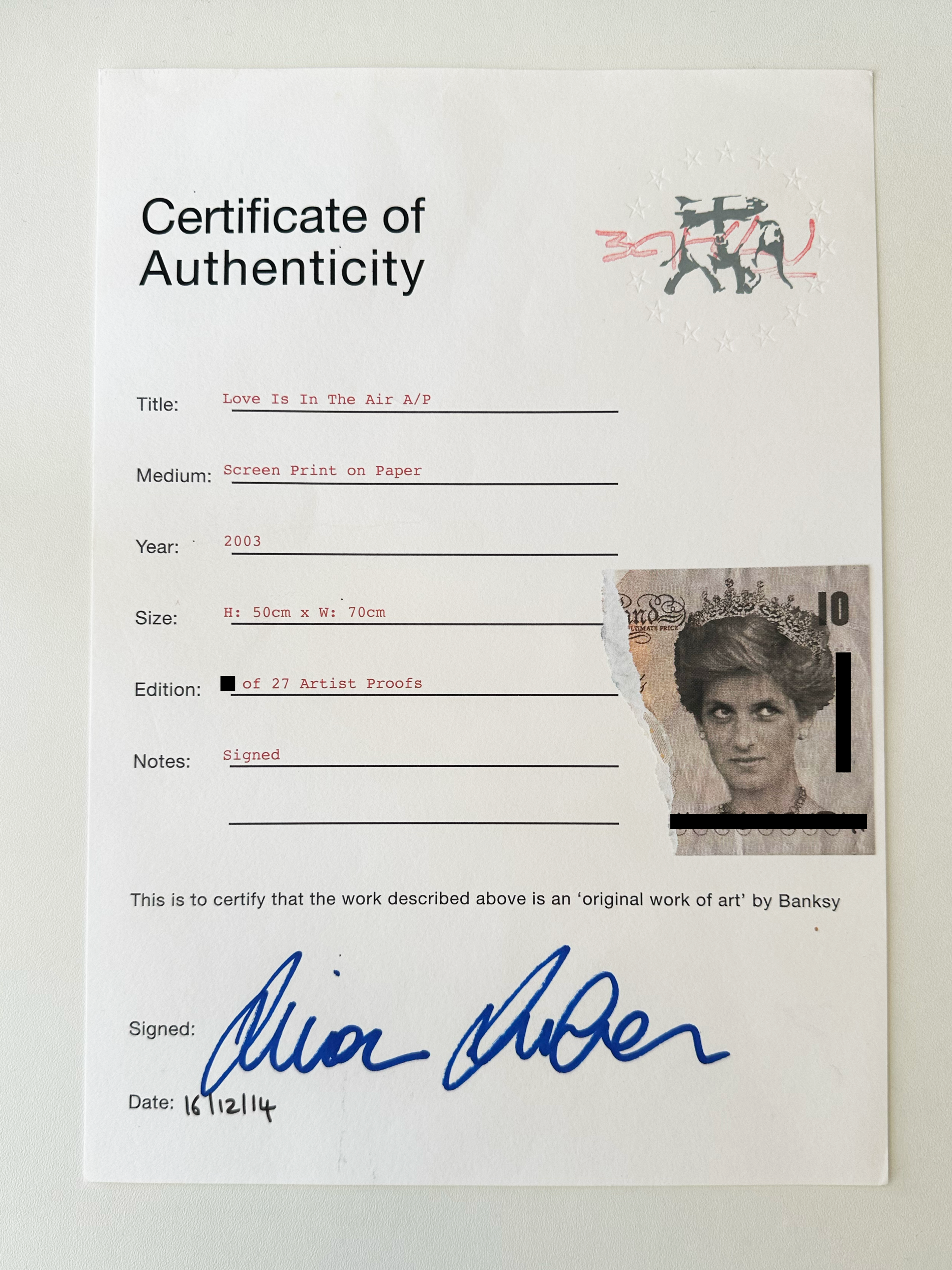
There are two main styles of Pest Control certificate that collectors may encounter.
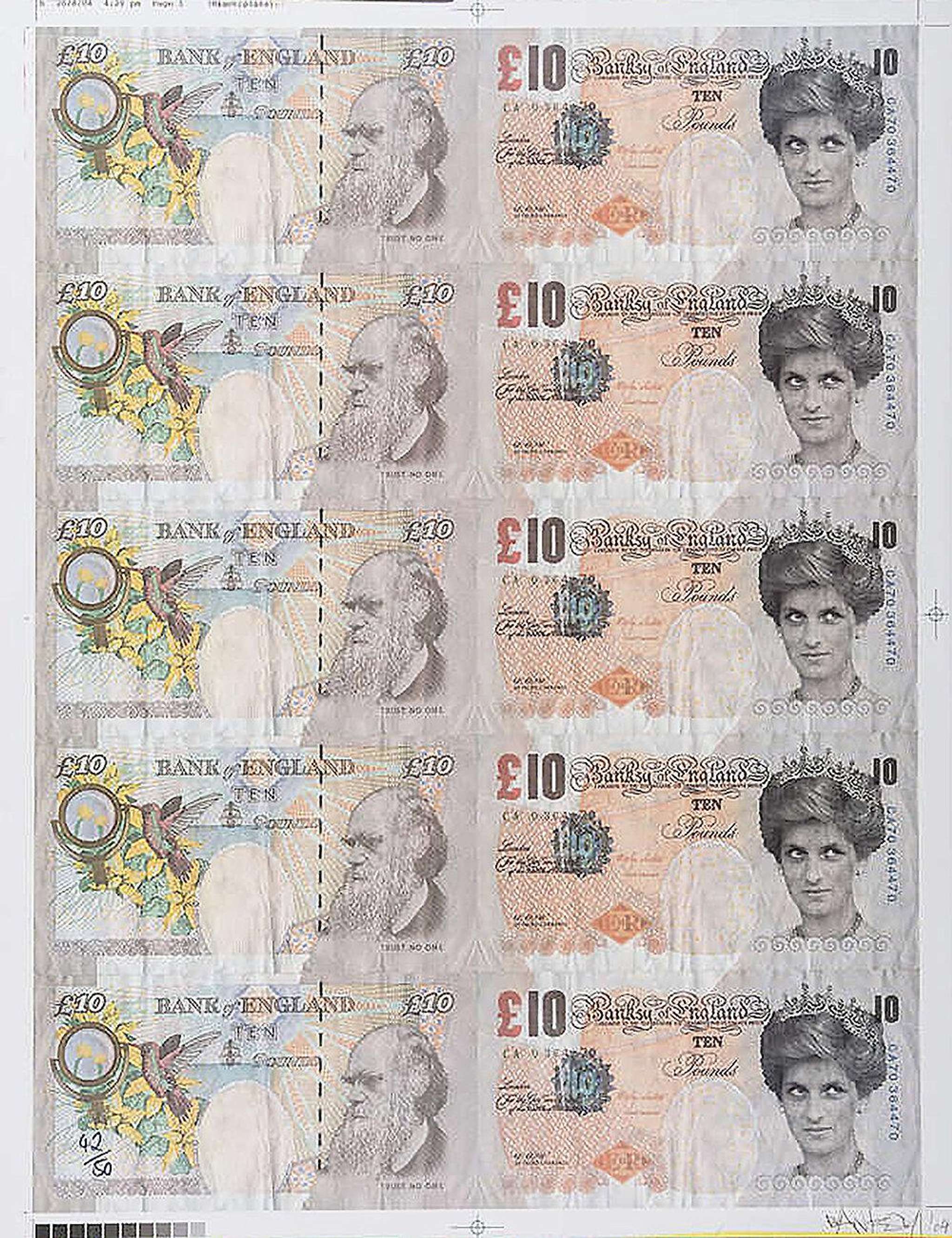
The older style is famously based around a Di-Faced Tenner, cut in half. One half is retained by Pest Control and the other accompanies the artwork. The certificate includes details that correspond to Pest Control’s internal records.
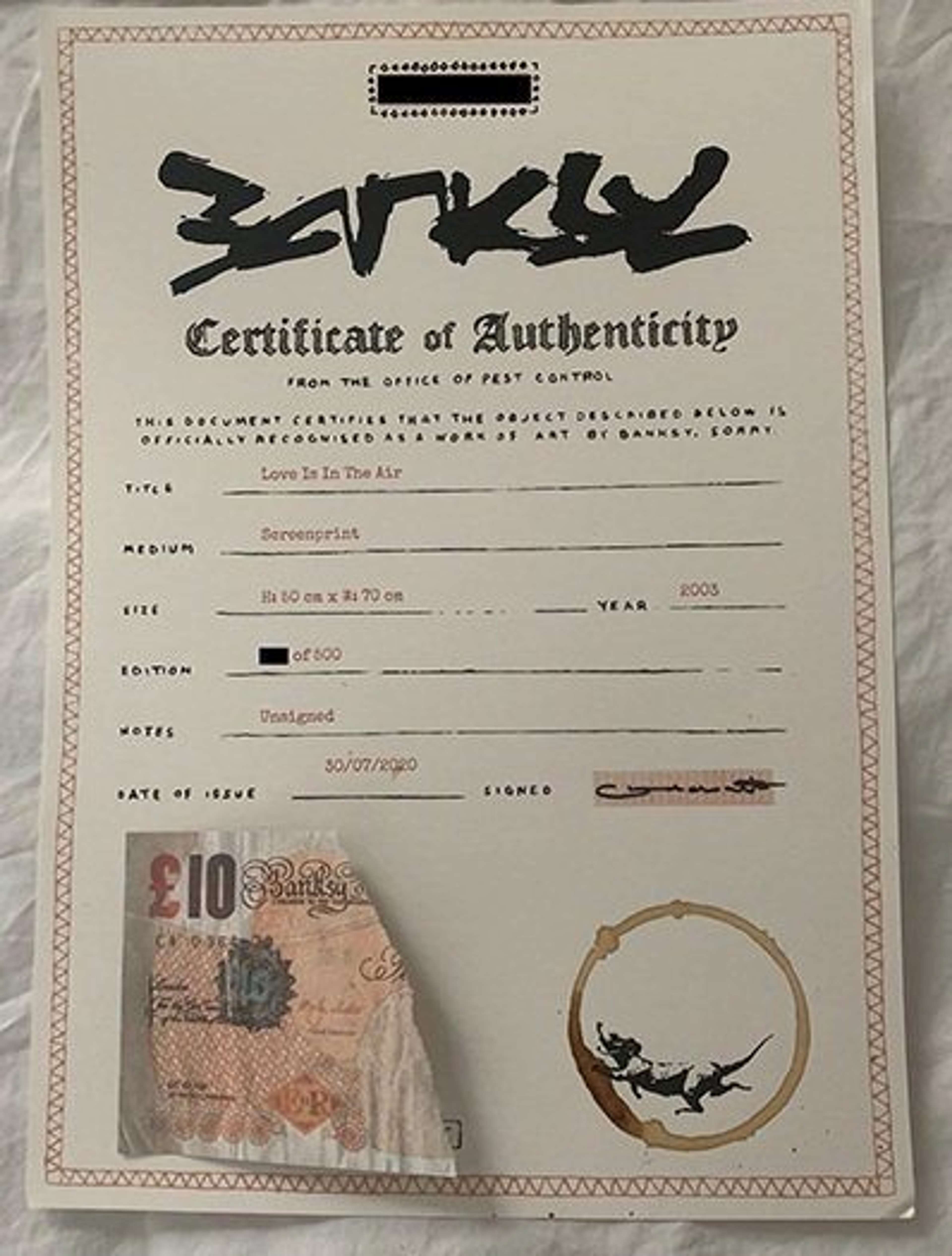
The later style, introduced after the earlier certificate format, retains the same principle of Pest Control verification but is formatted differently. Jasper notes that the newer version includes an orange border and presents the standard artwork details in a slightly different way.
For valuation purposes, the exact style of certificate is less important than whether it is valid, correctly matched to the work, and consistent with the artwork’s details. Buyers may also use Pest Control’s “check before you buy” service where an artwork already has a COA, allowing Pest Control to review the artwork and certificate before funds are exchanged.
A certificate should always be treated as part of the artwork’s value structure. It verifies the work, supports liquidity, and gives buyers the confidence required to transact.
Speak to our specialists about getting a Pest Control COA for your Banksy print.
Signed vs Unsigned Banksy Prints
The Banksy print market is divided into signed and unsigned editions. In general, signed prints command higher values because they are scarcer, more desirable and closer to the artist’s hand. However, the hierarchy is not as simple as “signed is always worth more than unsigned.”
Subject matter can complicate the picture. An unsigned impression of one of Banksy’s most iconic images, such as Girl With Balloon, may achieve a stronger result than a signed impression of a less commercially desirable image. Demand is not distributed evenly across the market.
Signed works are typically more valuable because the edition sizes are often smaller and because the signature creates an additional layer of desirability. For many collectors, the signature matters particularly in Banksy’s market because of the artist’s anonymity. It offers a tangible point of connection with an artist whose identity remains deliberately withheld.
Unsigned works, by contrast, often sit within larger editions and trade at lower price points. They are also more plentiful, giving them a broader and more liquid buyer base. For collectors entering the Banksy market, unsigned prints can offer access to major imagery at a lower level than signed equivalents. For sellers, they can still be highly desirable if the subject is strong, the condition is clean, and the work has the correct Pest Control documentation.
The key point is that a Banksy valuation must account for signature status, but not in isolation. Signature, image, edition size, condition and current demand all need to be read together.
To find out where your signed or unsigned Banksy prints sits within the market, get an Instant Valuation.
Why Subject Matter Matters So Much
Subject matter is one of the strongest drivers of Banksy print value.
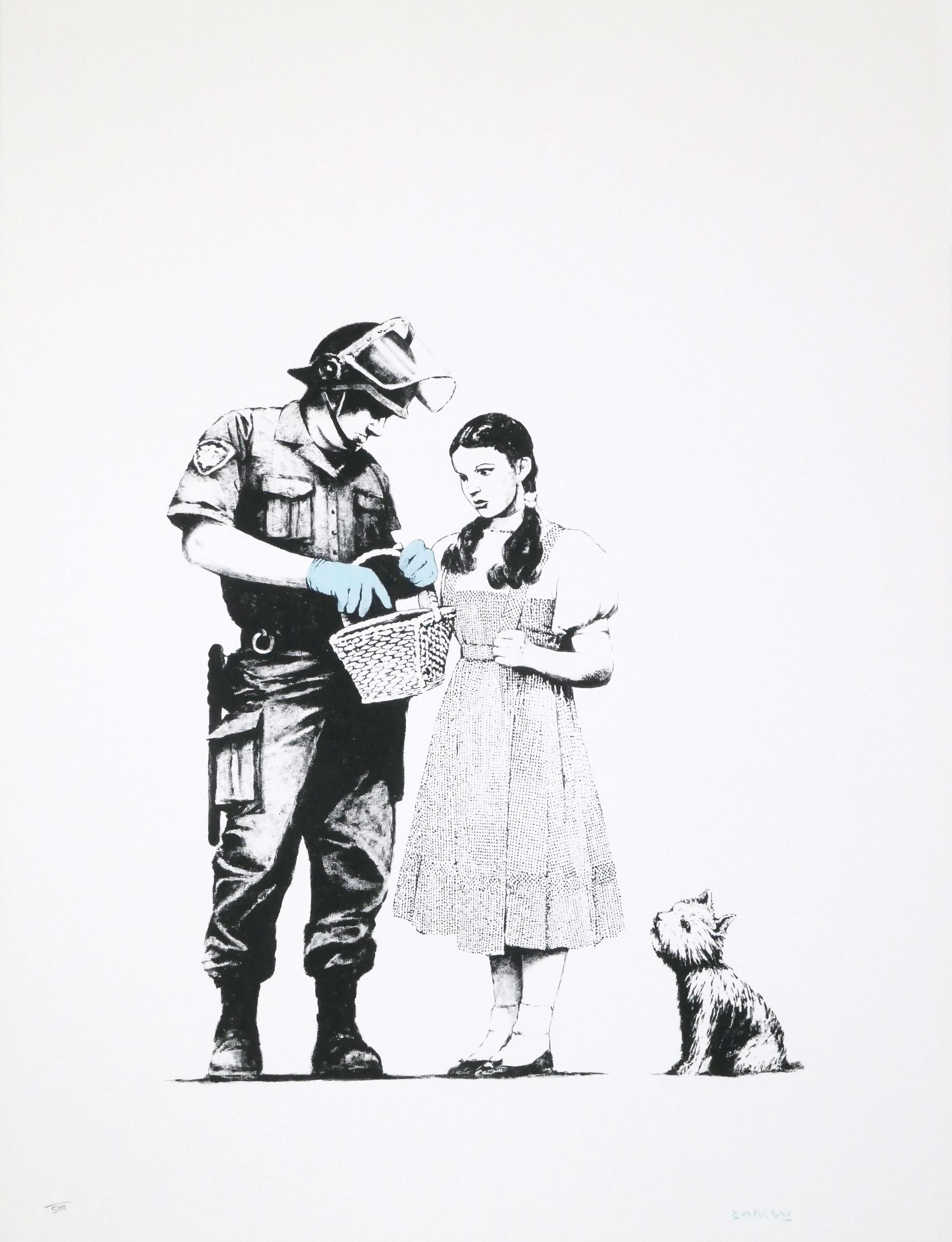
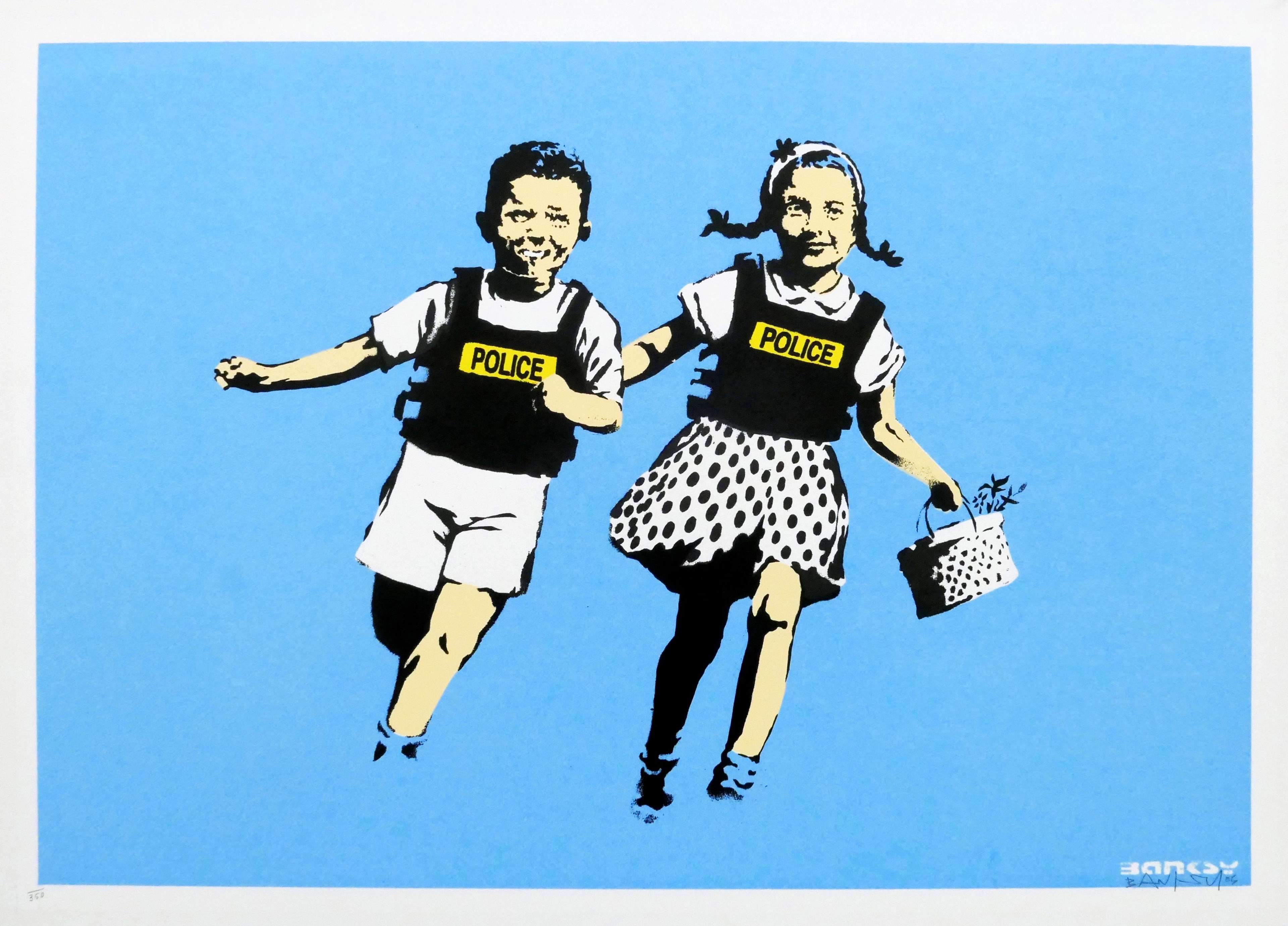
Certain images have become market benchmarks because they are instantly recognisable, culturally embedded and closely associated with Banksy’s public identity. Girl With Balloon remains the clearest example. Other motifs, including rats, monkeys and police imagery, also carry strong market recognition because they connect directly to Banksy’s early visual language and anti-establishment commentary.
As Jasper explains,
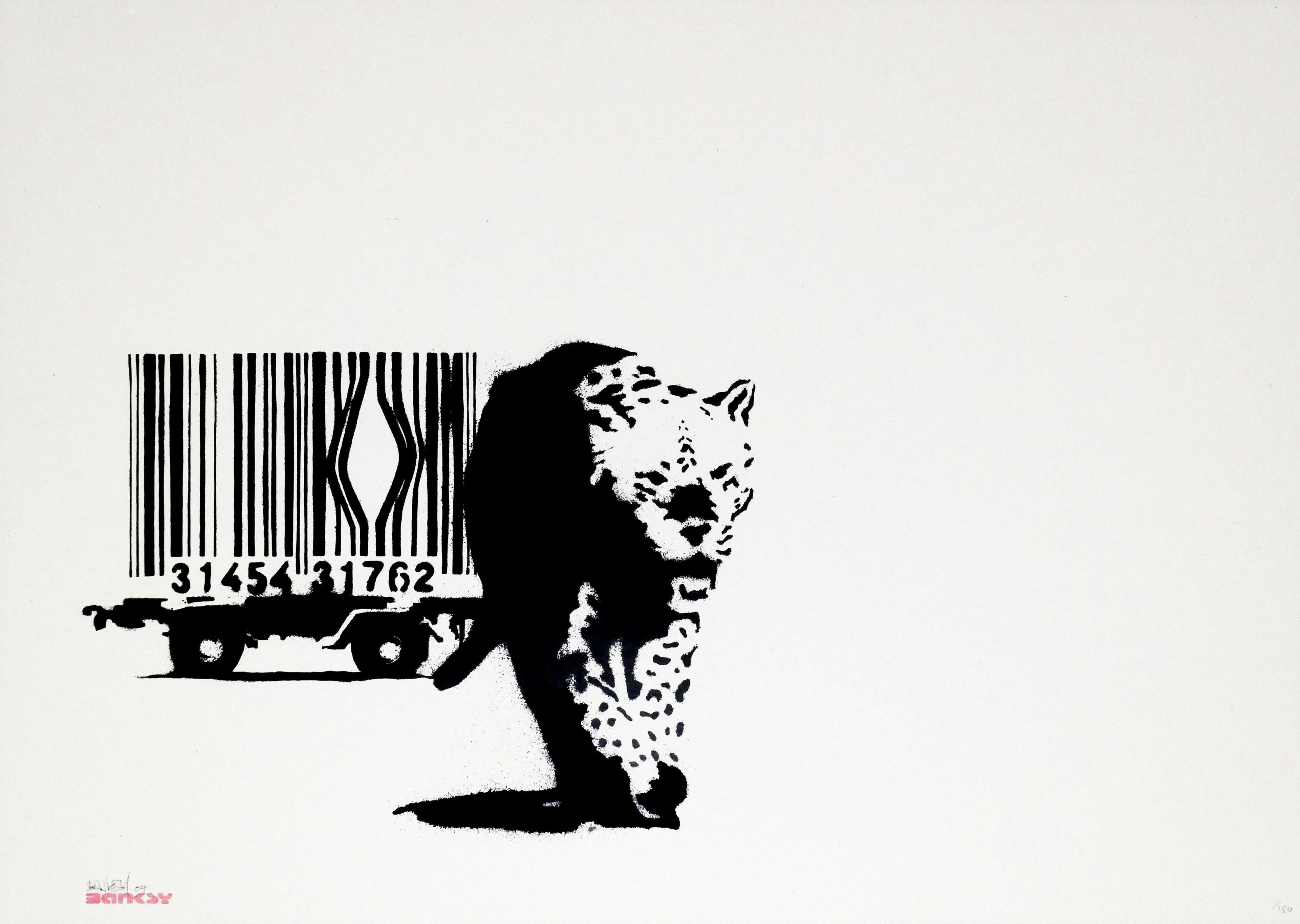
That recognisability translates into demand. Prints with a broad cultural footprint tend to attract a deeper buyer pool, which supports stronger pricing and more consistent liquidity. Less well-known images may still be important within Banksy’s wider practice, but they can command lower prices if they do not carry the same level of collector recognition.
This does not mean that less prominent works are inferior. It means that Banksy’s market, like all mature print markets, has a hierarchy. Value is shaped by how an image sits within the artist’s mythology, how often collectors ask for it, how frequently it appears publicly, and whether there is enough recent comparable data to support the price.
Edition Size, Scarcity And Liquidity
Edition size is another major valuation factor.
Broadly, smaller editions are more valuable because fewer impressions are available. However, Banksy’s market again requires a more nuanced reading. A small edition of a less desirable image may not necessarily outperform a larger edition of an iconic subject. Scarcity matters, but liquidity matters too.
Unsigned Banksy editions are often larger, with some produced in editions of 500 or 600. These works tend to have more regular market activity, giving specialists a stronger base of repeat sales data. Signed editions are often smaller and therefore more scarce, but their value can be more sensitive to condition, timing and buyer competition.
Then there are rarer variants: Artist’s Proofs, Printer’s Proofs, hand-finished works, unusual colourways and special editions. These works often sit above the standard edition hierarchy because they are scarcer, more individual and more closely connected to the production process.
The most valuable Banksy prints are often those that combine several value drivers at once: iconic subject, signed status, low edition size, rare variant, clean condition and strong Pest Control documentation.
Hand-Finished Banksy Prints
Hand-finishing can have a major impact on Banksy print value.
A hand-finished print introduces an element of uniqueness into an otherwise editioned object. In Banksy’s market, this is particularly meaningful because collectors are often drawn to anything that appears to bring them closer to the artist’s direct intervention. The more substantial the hand-finishing, the more important it may be to the valuation.
Jasper describes it as “getting very close to having an original work,” because the hand-finished element is unique and artist-applied. However, he is also clear that hand-finishing has to be assessed on a case-by-case basis. The level, visibility and desirability of the intervention all matter.
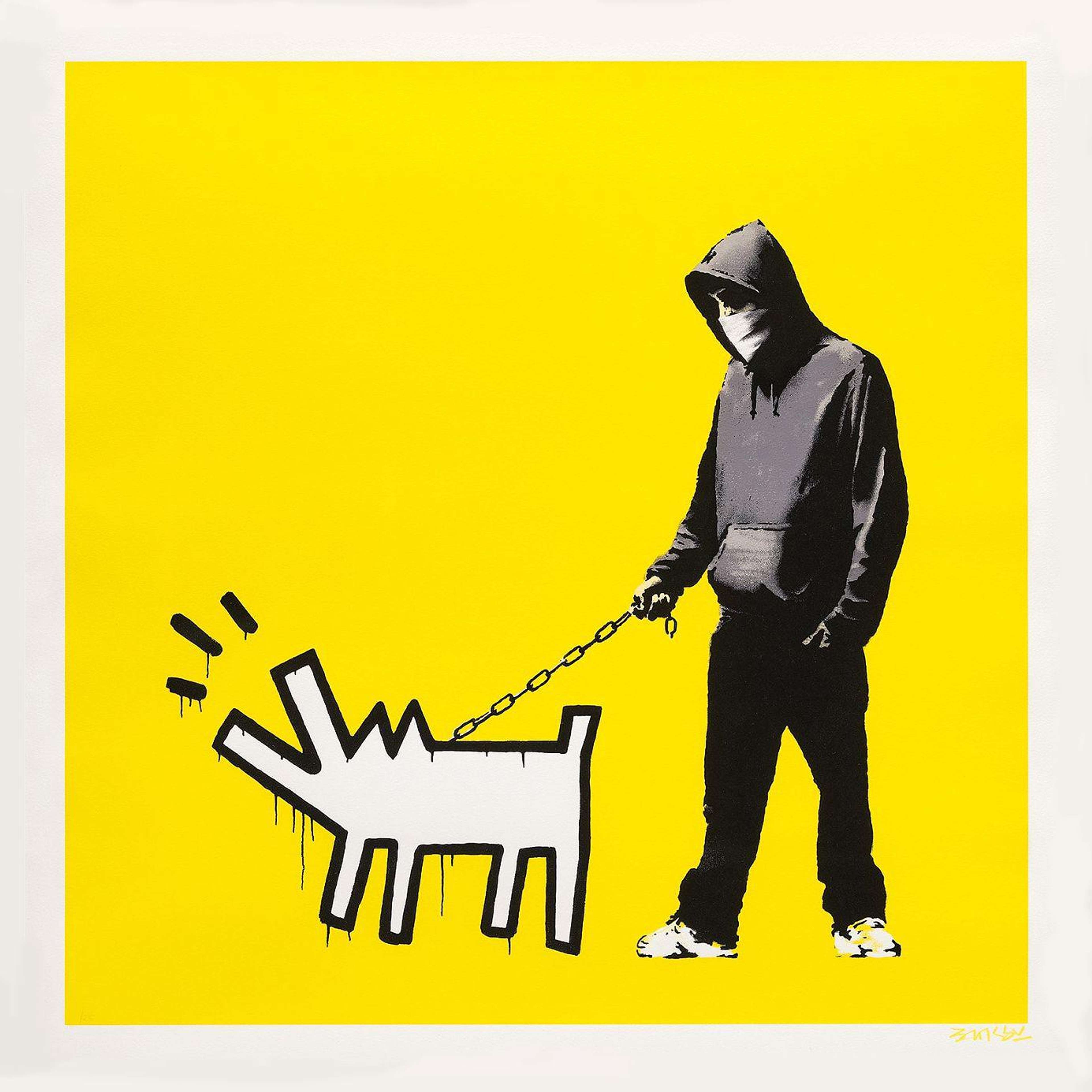
Hand-finishing is generally associated with signed works, not unsigned editions. It can appear across more sought-after parts of the market, including works such as Choose Your Weapon and other rare or special edition prints.
For valuation, a specialist will assess where the hand-finishing appears, how extensive it is, how it compares with other known examples, whether it is recorded in the Pest Control documentation, and whether the image itself is already in strong demand.
Artist’s Proofs, Printer’s Proofs And Special Editions
Artist’s Proofs and Printer’s Proofs can carry a meaningful premium in the Banksy market. These impressions are typically produced in much smaller numbers than the standard edition and can include subtle differences, annotations, studio marks or production-related details.
In Banksy’s case, these proof impressions can be especially attractive because of the artist’s anonymity. A proof can feel closer to the studio process, and in rare cases may include evidence of how the image was worked through, tested or adjusted.
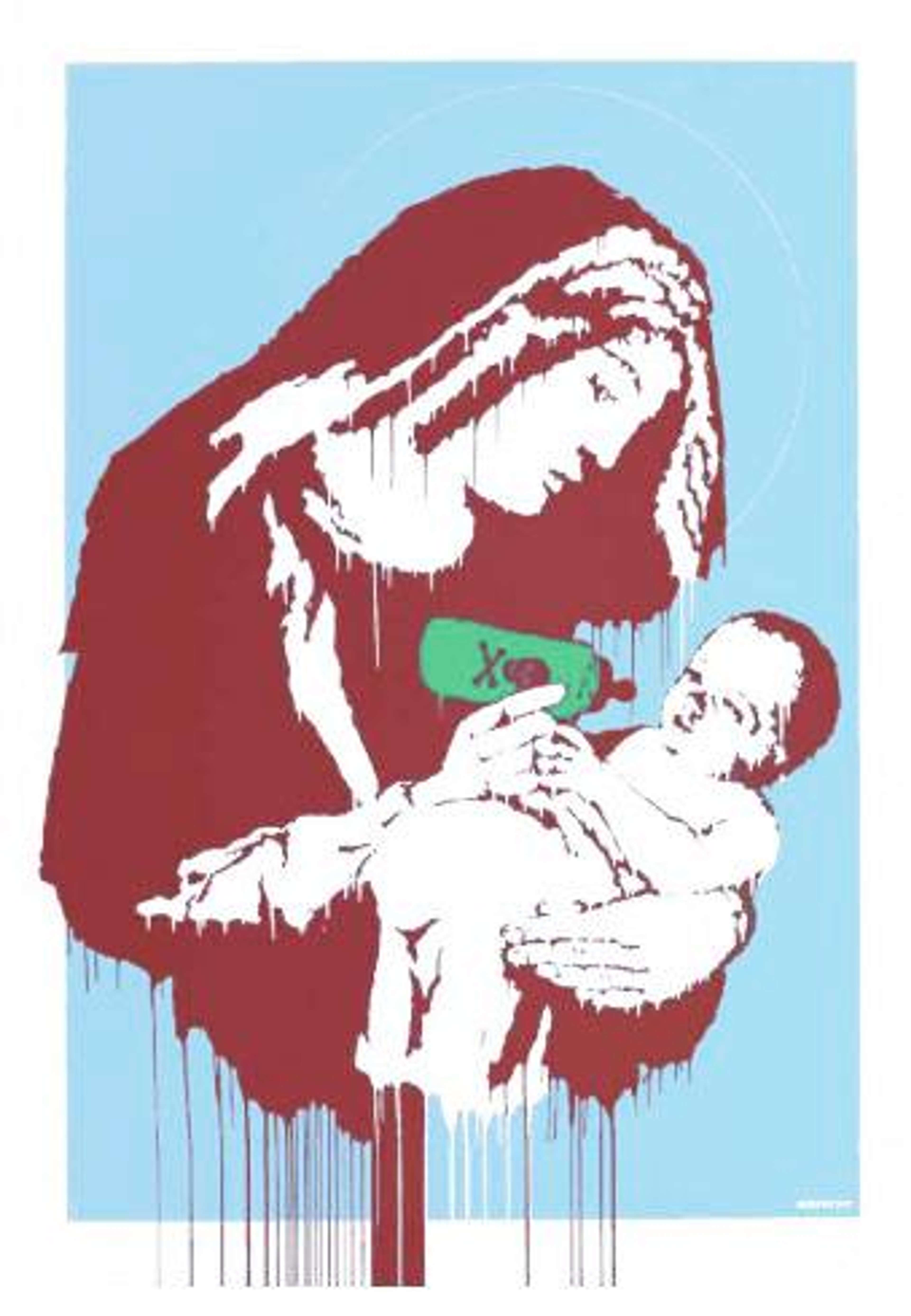
That said, the premium is not automatic. A proof still needs to be assessed against subject matter, condition, documentation, rarity and current demand. An Artist’s Proof of a highly recognisable image will usually be more desirable than a proof of a less active subject. A Printer’s Proof with unusual annotations may generate additional interest, but only where those details are properly understood and authenticated.
Condition Issues Specific To Banksy Prints
Condition is critical in every print market, but Banksy works present some recurring issues because of how they were originally bought, framed and handled.
Many early Banksy prints were not treated as high-value assets when first acquired. They were often inexpensive at the point of release and, as a result, some were placed into low-cost frames or mounted using non-archival materials. Today, those early framing decisions can have a direct impact on value.
Mount Burn
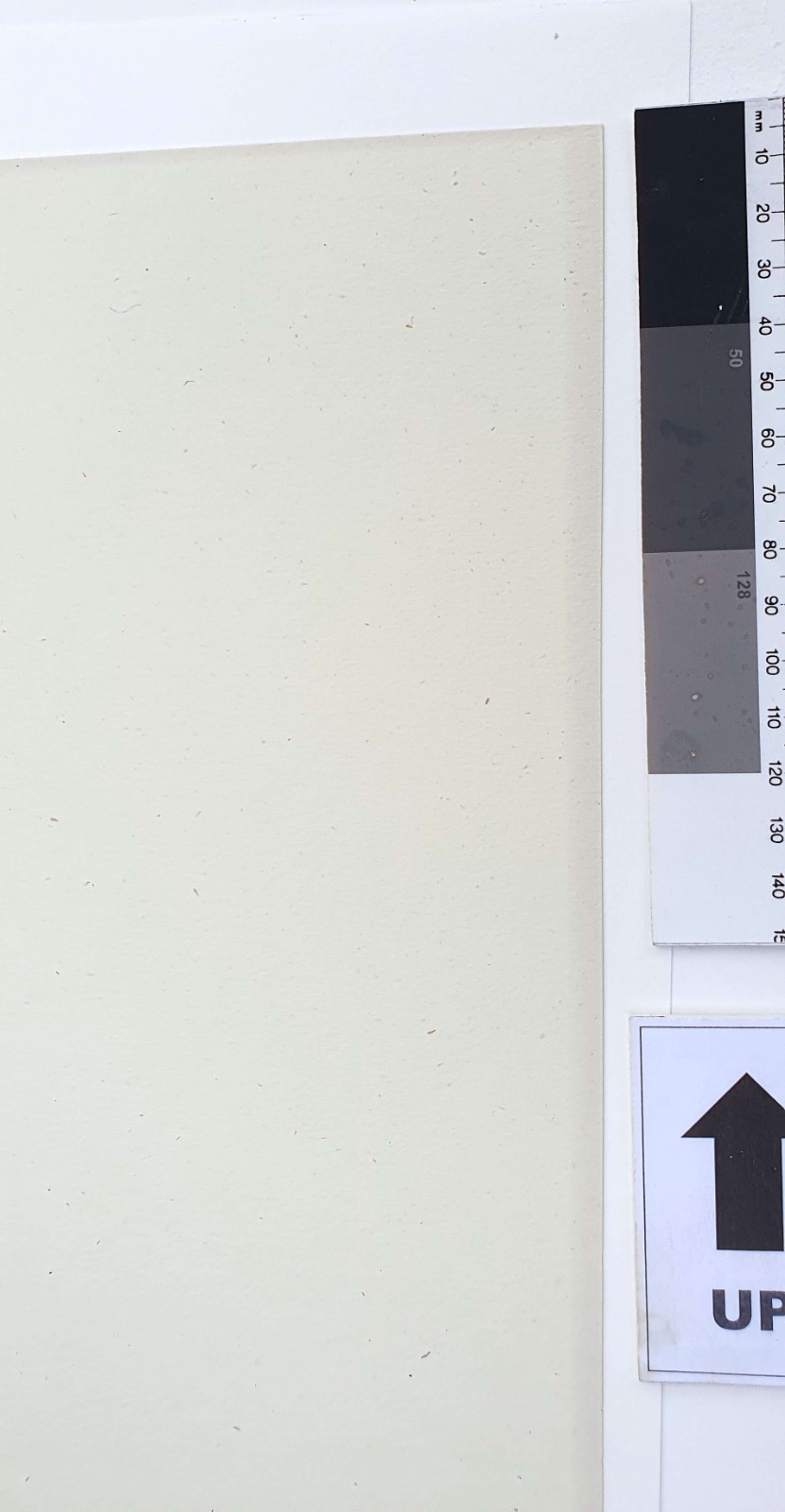
Mount burn is one of the most common condition issues in Banksy prints. It occurs when a print has been framed with a non-archival mount. Over time, materials from the mount can transfer into the paper, creating discolouration where the mount has touched the sheet.
Visually, this often appears as a darker band around one or more edges of the print. The paper should ideally have an even tone across the sheet. Where mount burn is present, the border area may look stained, yellowed or uneven.
Mount burn is not necessarily catastrophic, but it will affect value. The level of impact depends on severity, visibility, whether it can be treated, and how it compares with other examples of the same work. Even on highly desirable prints, including Girl With Balloon, mount burn can affect what a seller can realistically ask.
Dry Mounting
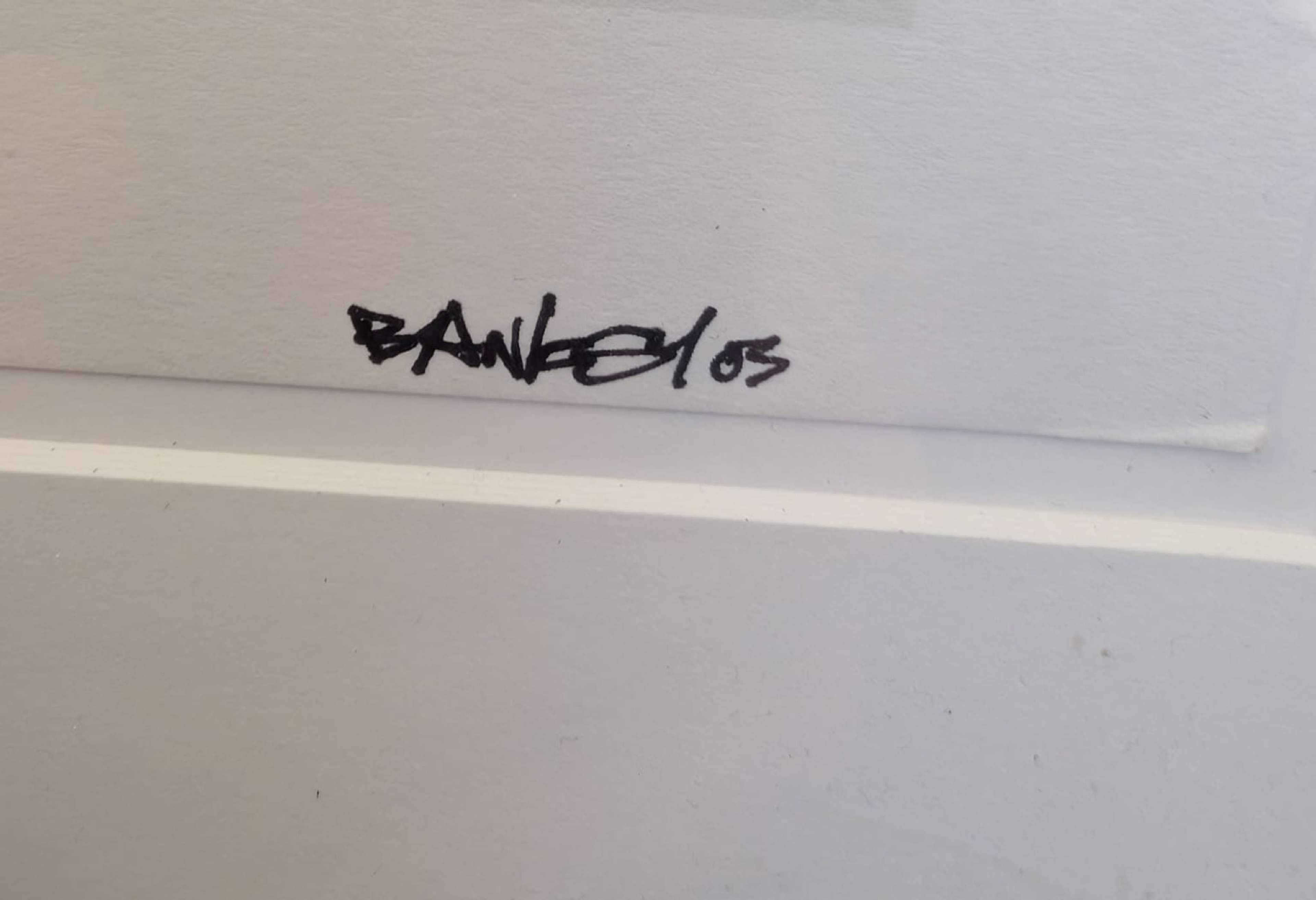
Dry mounting is more serious. This involves attaching the work to a backing board, often using adhesive. It was a more common framing practice in the early 2000s but is not considered appropriate for valuable prints today.
For Banksy works, dry mounting can be highly problematic. Removing the work from the board may be expensive, risky or impossible without causing damage. There is also a concern that adhesive may deteriorate or migrate through the paper over time.
Dry-mounted Banksy prints can still sell, but usually at a significant discount. The buyer is taking on both current condition risk and future conservation risk.
Cockling And Paper Movement
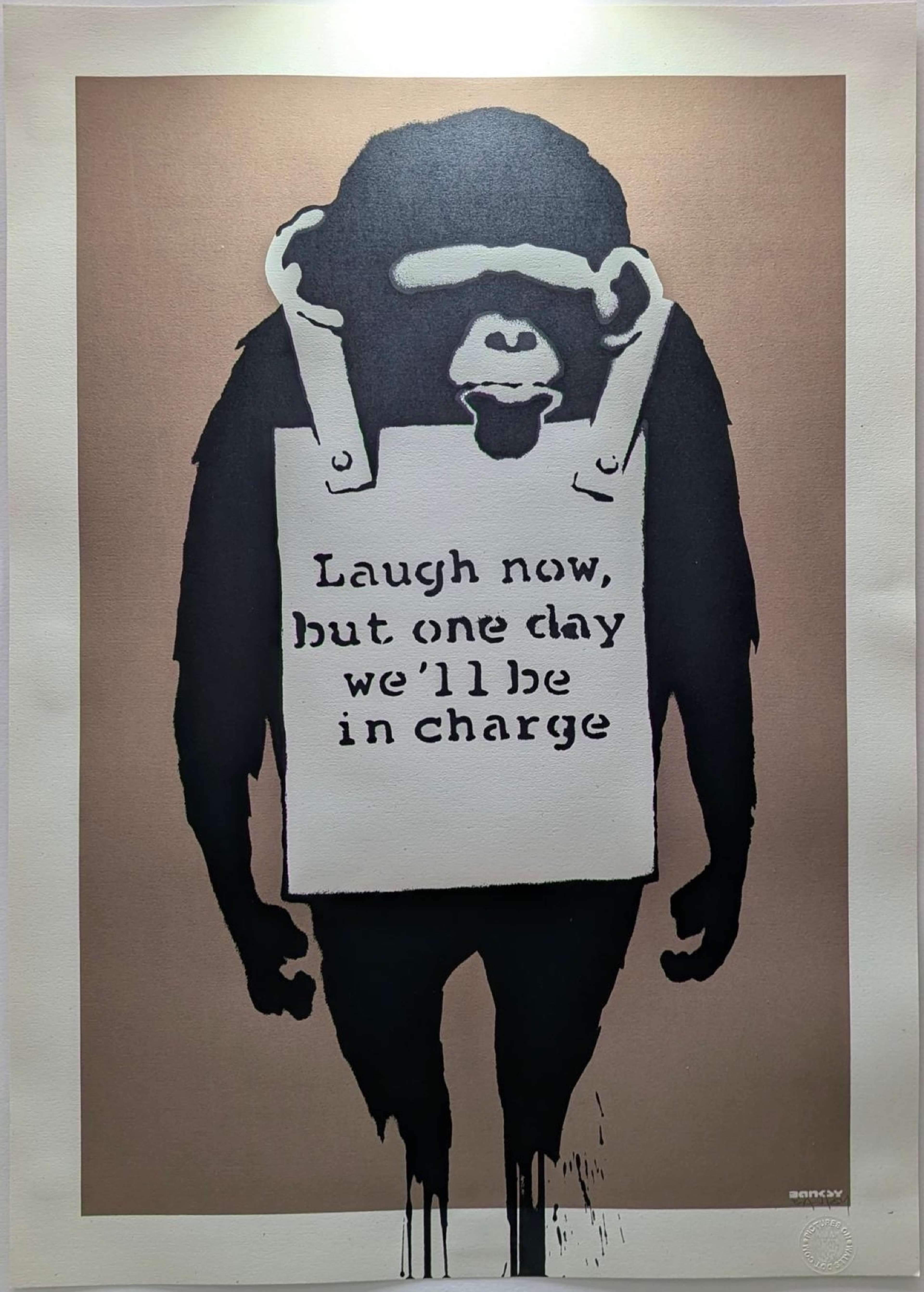
Not all visible movement in the sheet is necessarily negative. Light cockling, or gentle waviness in the paper, can indicate that the work has been hinged rather than stuck down. This may mean the sheet has been allowed to move naturally with changes in temperature and humidity.
In some cases, cockling can be reduced or improved by a conservator before sale. It should always be assessed professionally, but it is not the same as staining, adhesive damage or heavy handling.
Light Exposure And Framing
Banksy prints should ideally be conservation framed using UV-filtering glazing, acid-free mounts and appropriate hinging. Uneven light exposure can affect paper tone and ink vibrancy, particularly where the mount has protected one area of the sheet while another has been exposed.
A valuation will therefore consider not only the image but how the print has lived: whether it has been framed correctly, displayed in direct sunlight, stored flat, exposed to humidity, or previously restored.
Blind Stamps, Paper And Physical Details
Physical details matter when assessing a Banksy print.
Many Banksy editions were published by Pictures On Walls, and the blind stamp can be an important early indicator when reviewing a work. Specialists will look at whether the blind stamp is present, correctly positioned, consistent with known examples and appropriate for the edition.
Paper type is also important. Banksy used specific papers across different periods, including Arches paper in some editions. Deckled edges, sheet dimensions, paper texture and ink characteristics can all help establish whether a work is consistent with known authentic examples.
However, there can be variation. Jasper notes that some genuine works may show slight differences in blind stamps or production details because Banksy’s early print operation was not always as formalised as a traditional publisher’s studio. That is why physical review is important, but not a substitute for Pest Control.
In valuation terms, these details help a specialist determine whether the work appears consistent, whether any questions need to be raised, and whether the condition and authenticity picture is strong enough to support a sale.
Provenance And Original Paperwork
In most blue chip print markets, provenance can be central to value. With Banksy, it is still useful, but the Pest Control COA remains the decisive document.
Original invoices, Pictures On Walls receipts, Santa’s Ghetto documentation, gallery correspondence or early acquisition emails can add useful history. They can help support an authentication application and can be appealing to buyers, particularly those interested in Banksy’s early market and cultural context.
However, such paperwork does not usually transform the value of an already authenticated Banksy print. It is an enhancement rather than the foundation. The foundation is the Pest Control certificate.
Collectors should still keep everything. Even if an original invoice does not materially alter the valuation, it can strengthen the work’s story, support confidence, and make future sale or insurance processes easier.
Why Auction Results Only Tell Part Of The Story
Auction data is important because it is public, visible and difficult to ignore. It gives sellers a sense of where similar works have sold and helps establish a benchmark for comparable prints.
But auction data can also mislead.
A single strong result may reflect two determined bidders rather than a durable market shift. A weak result may reflect poor timing, conservative bidding, condition concerns, estimate strategy or a quiet sale room. Auction estimates may also be deliberately set to encourage bidding rather than to reflect the full private-market value of a work.
That is why a Banksy valuation should not be based on one auction result alone. Specialists look for consistency: repeated sales of the same work, in similar condition, over a relevant period. They also compare public results with private offers, collector demand and known off-market activity.
Jasper explains that consistency is key:
For Banksy, this is especially important because the public auction market represents only one part of the total trading environment. Many works, particularly rare signed prints, proofs and high-demand editions, may sell privately without appearing in public records at all.
How Market Timing Affects Banksy Valuations
Banksy’s print market has experienced a pronounced boom-and-correction cycle. Demand surged sharply around the 2018–2021 period, driven by global visibility, the Sotheby’s shredding of Girl With Balloon, widening collector participation and a broader pandemic-era appetite for contemporary editions.
From 2022 onwards, the market corrected. This did not mean demand disappeared. Rather, it became more selective. Iconic images retained stronger support, while less recognisable works and more speculative purchases softened more visibly.
By 2025 and into 2026, Banksy’s market is better understood as a hierarchy than a single rising or falling category. The strongest works continue to attract attention, but buyers are more price-sensitive and more focused on condition, authentication and image strength.
That means timing matters. A valuation has to account not only for historical performance, but also for current buyer appetite. A work that was highly contested two years ago may have cooled; another series may have renewed demand because of scarcity, a recent sale, cultural relevance or collector focus.
Specialist knowledge is essential here because not every shift is visible in auction data. Some of the clearest signals come from private conversations with active buyers: what they are asking for, what they are prepared to offer, and which works they are avoiding.
Use our Instant Valuation tool to benchmark the value of your Banksy print today.
Why A Specialist Valuation May Differ From An Auction Estimate
A Banksy auction estimate and a specialist valuation can differ because they serve different purposes.
An auction estimate is often designed to position a work for sale within a public auction context. It may be set conservatively to encourage bidding, or shaped by the auction house’s strategy for that sale. It also exists within a fixed timetable, with public exposure and the risk of a work failing to sell.
A specialist valuation is designed to assess what the seller can realistically expect to achieve in the current market, taking into account condition, authentication, recent public sales, private demand, buyer appetite and route to sale.
At MyArtBroker, that valuation is also informed by the Trading Floor: live demand from collectors actively looking to buy. This gives the valuation a practical commercial basis, not just a theoretical comparable range.
As Jasper explains,
What Makes A Banksy Print More Valuable?
The strongest Banksy valuations usually involve a combination of the following:
- Pest Control Certificate of Authenticity
- Signed status
- Iconic subject matter
- Smaller edition size
- Artist’s Proof, Printer’s Proof or special edition status
- Hand-finishing
- Strong condition
- No mount burn, staining or dry mounting
- Correct blind stamp and paper type
- Clean provenance or original purchase documentation
- Strong current buyer demand
- Recent comparable private and public sales
- Scarcity within the current market
No single factor determines value on its own. A signed work in poor condition may underperform. An unsigned work with iconic subject matter may outperform a less recognisable signed print. A rare proof may carry a premium, but only if the image, condition and authentication support it.
The best valuations weigh all of these factors together. Request a valuation from one of our specialists.
What Can Reduce The Value Of A Banksy Print?
Several factors can reduce the value of a Banksy print:
- No Pest Control Certificate of Authenticity
- Mount burn
- Dry mounting
- Fading or light damage
- Staining or foxing
- Tears, creases or handling marks
- Poor framing history
- Incomplete documentation
- Weak subject demand
- Overreliance on an isolated auction result
- Misaligned seller expectations after the 2021 market peak
For sellers, condition issues do not necessarily prevent a sale, but they do affect where a work sits within a valuation range. A clean, authenticated impression will usually sit at the upper end. A work with visible or structural condition concerns will sit lower, even if the image is desirable.
Should You Get A Banksy Valuation Before Applying To Pest Control?
If you believe you own a genuine Banksy but do not have a Pest Control COA, it is worth speaking to a specialist before starting the process. A specialist can help identify whether the work appears consistent with known examples and what documentation may support an application.
This does not replace Pest Control. Only Pest Control can authenticate Banksy’s work. But a specialist can help a collector understand whether the work is likely to warrant the time, documentation and effort involved in applying.
Because authentication can take months, and sometimes longer, it is best to prepare thoroughly. Strong images, clear provenance, original receipts and accurate edition information can make the process more efficient.
How To Prepare Your Banksy For Valuation
Before requesting a valuation, gather as much information as possible:
- Photograph the work in natural light
- Include close-ups of all corners
- Photograph the blind stamp
- Photograph the signature, if present
- Photograph the Pest Control COA
- Photograph the reverse, if accessible
- Do not remove the work from its frame yourself
- Keep all invoices, receipts and correspondence
- Record where and when the work was acquired
- Note any known conservation or framing history
The more complete the submission, the more accurate the valuation.
Banksy Value Depends On Trust
Banksy’s market is built on contradiction: an anti-establishment artist whose prints now sit within one of the most structured and closely scrutinised segments of the contemporary art market. That makes trust essential.
A strong Banksy valuation depends on authentication, condition, data and demand. Pest Control establishes whether the work can be recognised as genuine. Condition determines where it sits within the market. Public auction data provides a benchmark. Private sales intelligence reveals where real buyers are currently active.
For sellers, the most important step is to speak to a specialist before making assumptions based on online estimates or isolated auction results. Banksy’s market is liquid, but it is not uniform. The difference between a strong valuation and a misleading one often comes down to understanding the specific edition, the specific impression and the specific buyers currently looking for it.
At MyArtBroker, every Banksy valuation is approached individually, combining live market data with specialist knowledge of the artist’s print market. Whether the work is a signed Girl With Balloon, an unsigned edition, a rare proof, or a hand-finished print, the aim is the same: to give sellers a clear, realistic and commercially grounded view of what their Banksy is worth today.