
But I think there is something else at work. Hockney wasn’t simply a great artist with a great body of work behind him. He remained an artist in motion. Even in his late eighties, he was still experimenting, still learning, still finding new ways to see the world.
I didn't know him. I never met him. My relationship with Hockney was the strange, second-hand intimacy of someone who has spent much of their life inside his market. As many of us did, I studied him first at school, where he felt far off and unconnectable. Then, through Christie's and later through MyArtBroker, I found myself standing in front of so many of his works, mesmerised, writing about them, listening to collectors and genuine specialists talk about them, watching how people respond to them. It isn't the relationship a curator or a biographer has. But it's a real one. You learn a lot about an artist by watching what people do when they decide they can't part with something, or when they finally can.
That, really, is the vantage point this piece is written from. Not the wall, but the market around the wall, and what the market tells you about an artist is its own kind of biography. Hockney's market is one of the deepest and most liquid in the field of prints and editions. He is a permanent fixture in the MAB100, the index we use to track directional movement across the blue chip print market, and for good reason. Across six decades he produced a dozen different collectable bodies of work, and each one trades on its own terms. Few artists give a market that much to hold on to.
The discovery of The Arrival of Spring and The Weather Series was a moment for me. They felt alive in a way that a great deal of work simply doesn't.
The Weather Series: Restlessness, Early
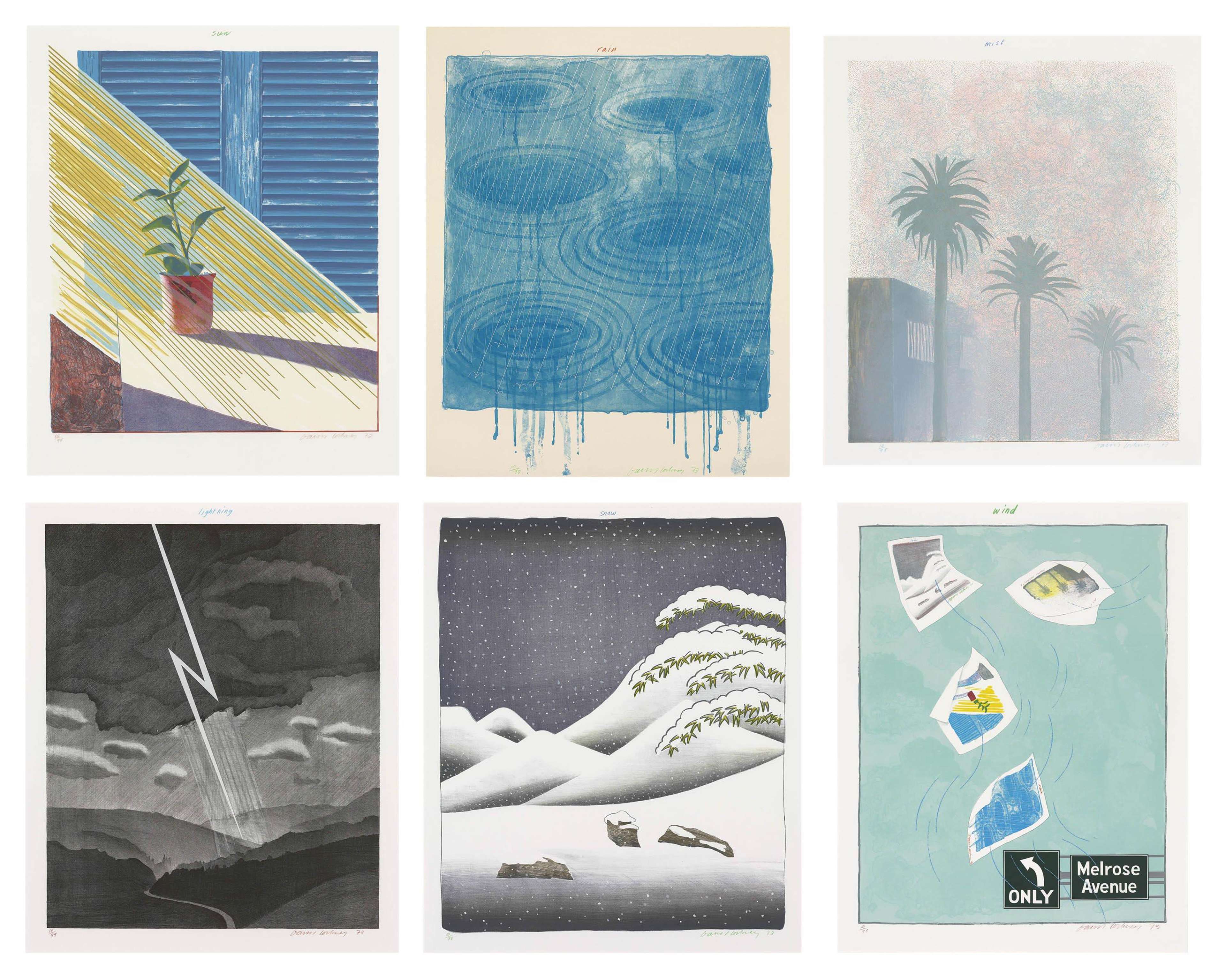
The Weather Series, 1973. Hockney is in his mid-thirties, already famous, already the painter of the pools. He could have spent the next decade painting California light for an audience that wanted nothing else. Instead he's in a print studio in Los Angeles, fresh from a trip to Japan, making lithographs and screenprints of rain and snow and mist. Weather, of all things, filtered through Hiroshige and the language of the Japanese woodblock. In Rain, the ink itself seems to dissolve down the sheet. It's playful and rigorous at the same time, and it has nothing to prove. That restlessness was there from the start.
The series runs to six images, and the market treats them as anything but equal. Rain and Snow tend to carry the set, and a complete portfolio of all six commands a clear premium over any single sheet, because intact sets so rarely come up. This is the first lesson the Hockney market teaches you, and The Weather Series teaches it cleanly: scarcity and the hierarchy between the images do most of the pricing work here, well before condition or colour come into it.
The Arrival of Spring: Restlessness, Late
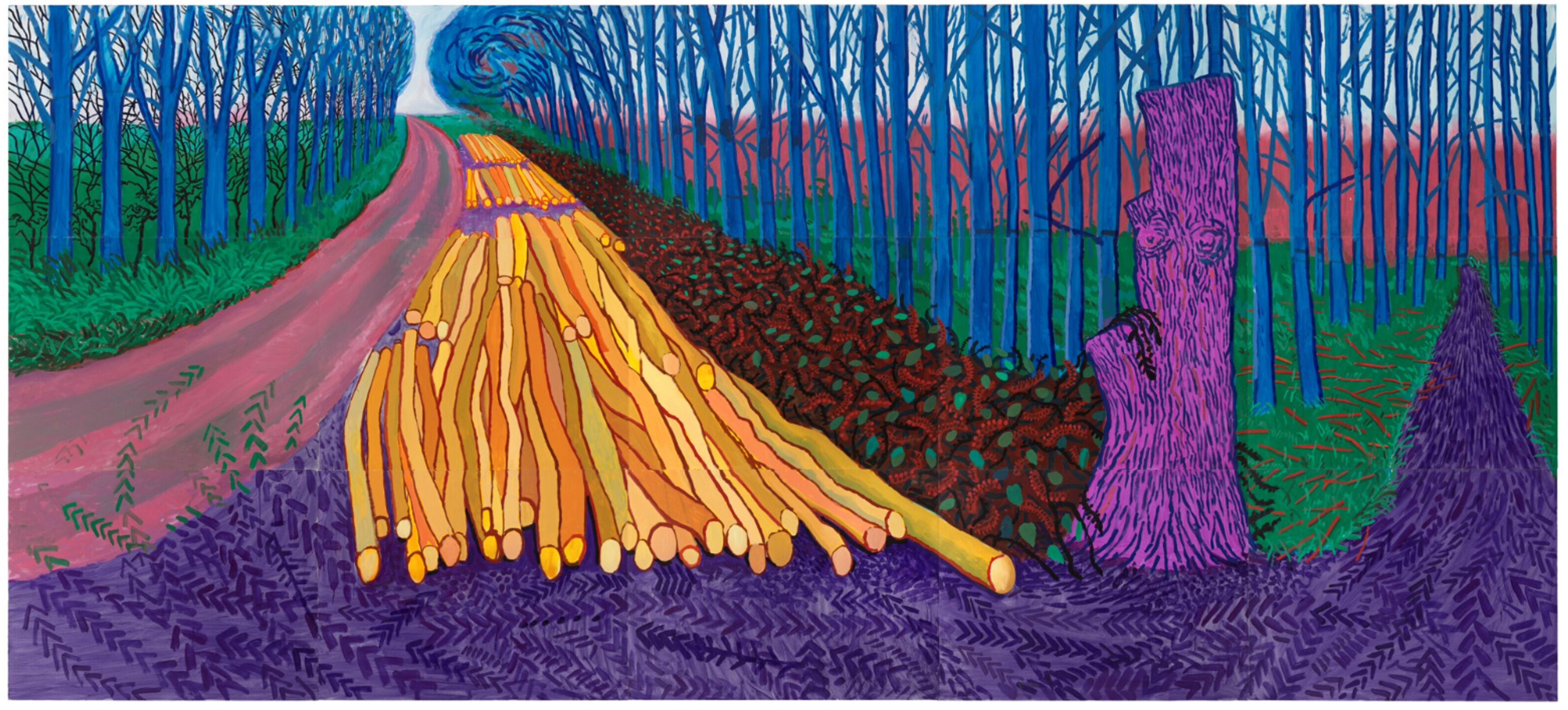
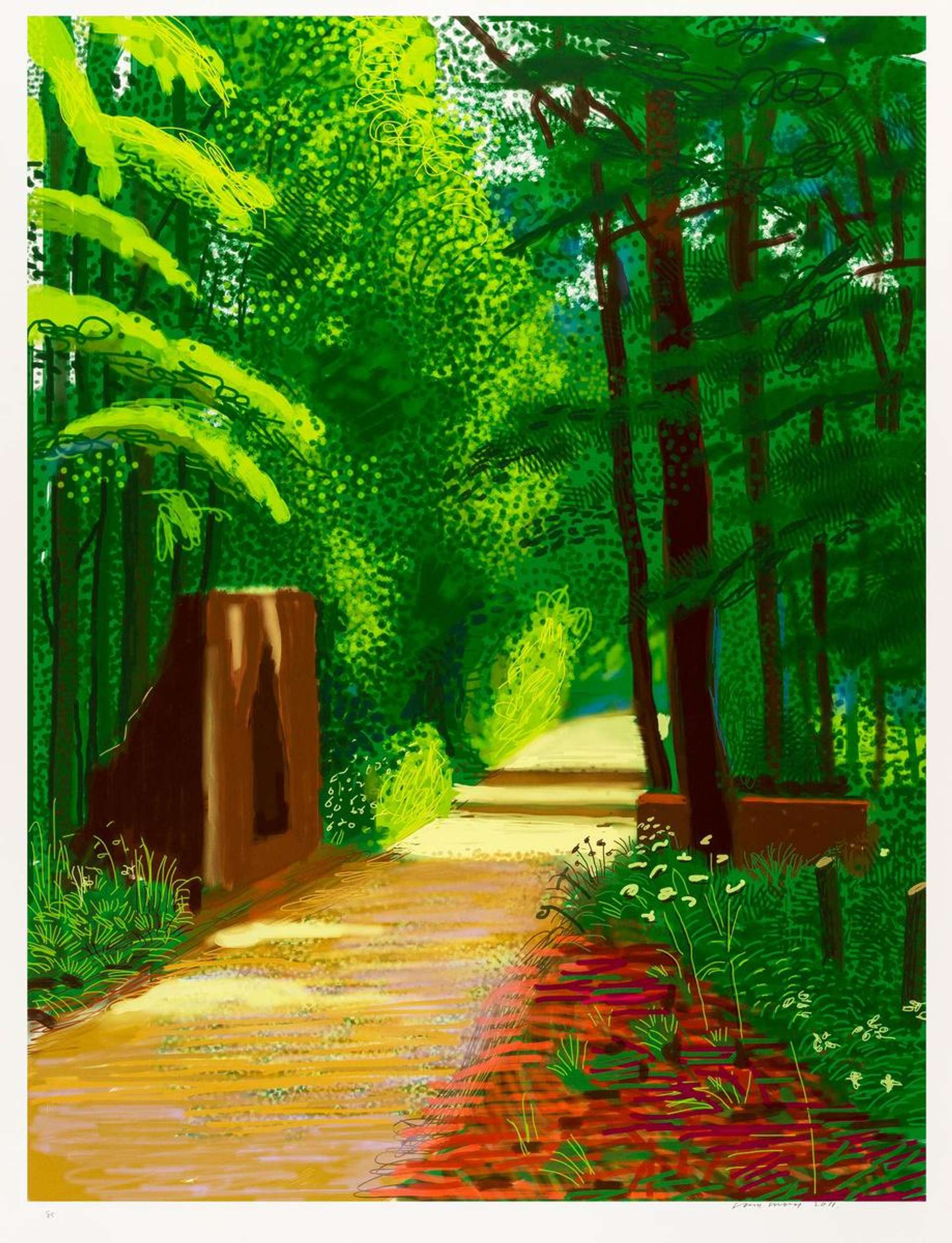
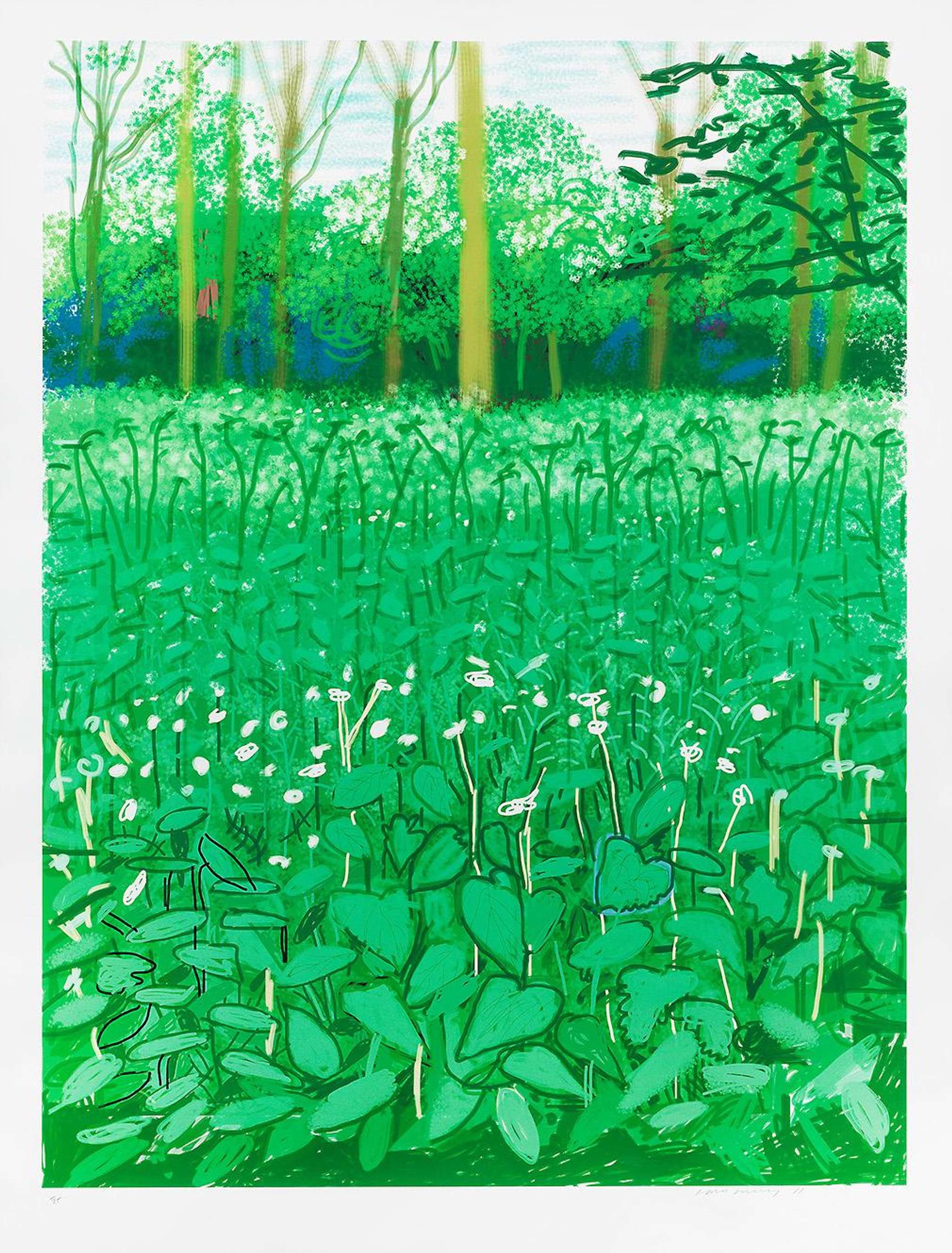
Then jump nearly 50 years to The Arrival of Spring: an artist in his eighties, in lockdown in Normandy, drawing the same stretch of countryside day after day on an iPad, a device most of his peers wouldn't touch, and producing some of the most quietly joyful images of his entire career.
"Do remember they can't cancel the spring," he wrote that year. It landed because he meant it, and because it reached me at the right time of life.
Most people see technology as a way of speeding things up. Hockney used it to slow people down. He took an iPad, arguably the ultimate distraction machine, and turned it into an instrument for prolonged observation, drawing the same hedgerow morning after morning until you could feel the season turning under his hand. That's an unusual achievement.
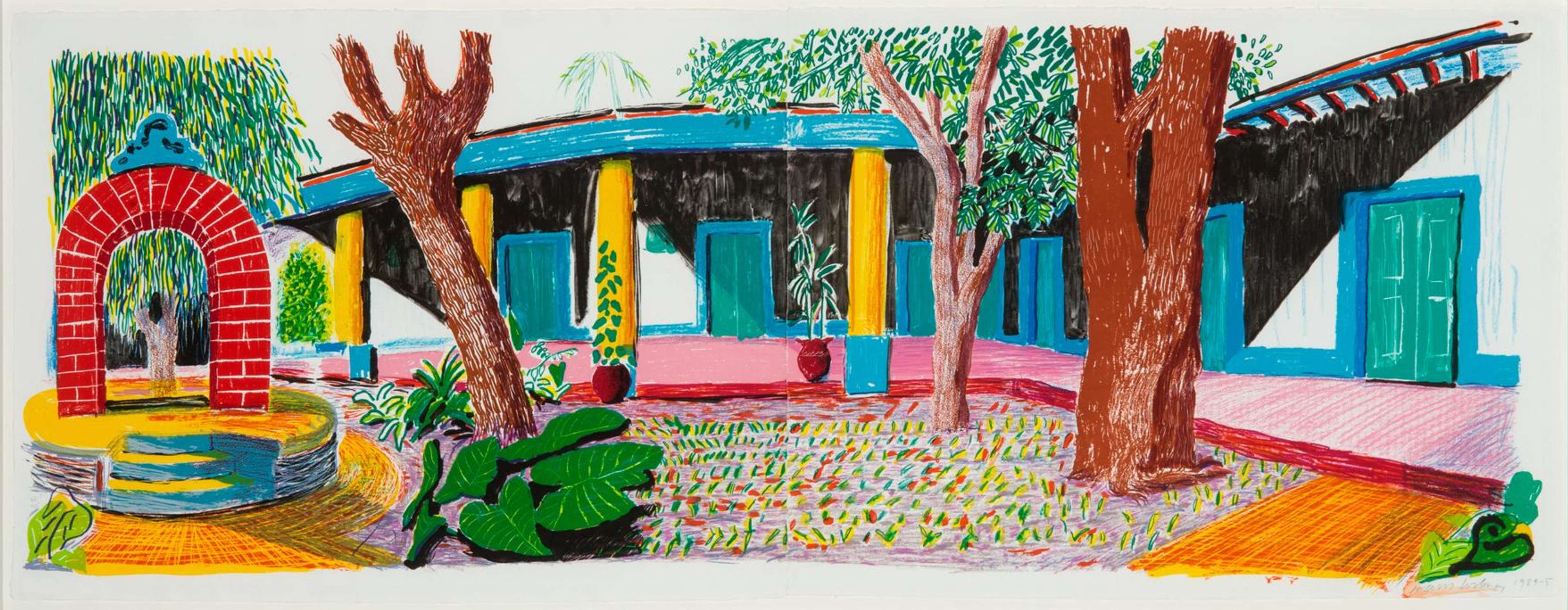
It's worth being precise about what these are, because the market is. There are, in effect, two arrivals of spring. The first is The Arrival of Spring in Woldgate, East Yorkshire in 2011, the iPad drawings that anchored the Royal Academy's A Bigger Picture in 2012. The second is the Normandy body of work made in 2020 and shown at the RA in 2021. They are inkjet prints on paper, issued in editions, and they behaved unusually for late-career work, the demand arrived quickly rather than over decades, which almost never happens (more on that below).
That these two series sit half a century apart and rhyme so exactly, the same fascination with how to make a flat surface hold weather and light and time, tells you most of what you need to know about how he worked.
The thing the market keeps trying to do
His work aside, and I'm probably in the minority here, choosing as I will, the most important part of Hockney for me wasn't the work itself. It was his ability to keep moving.
Most artists reach a point where they become their own legacy. They spend their later years on the same motifs and the same mediums, typecast, often happily, in their lane. The market wants the thing they are famous for, and so does everyone else, the museums reaching for the greatest hits and the collectors for the recognisable version. I see this in almost every print market we track. It's the gravity every major artist's market exerts, pulling everything back towards the iconic image.
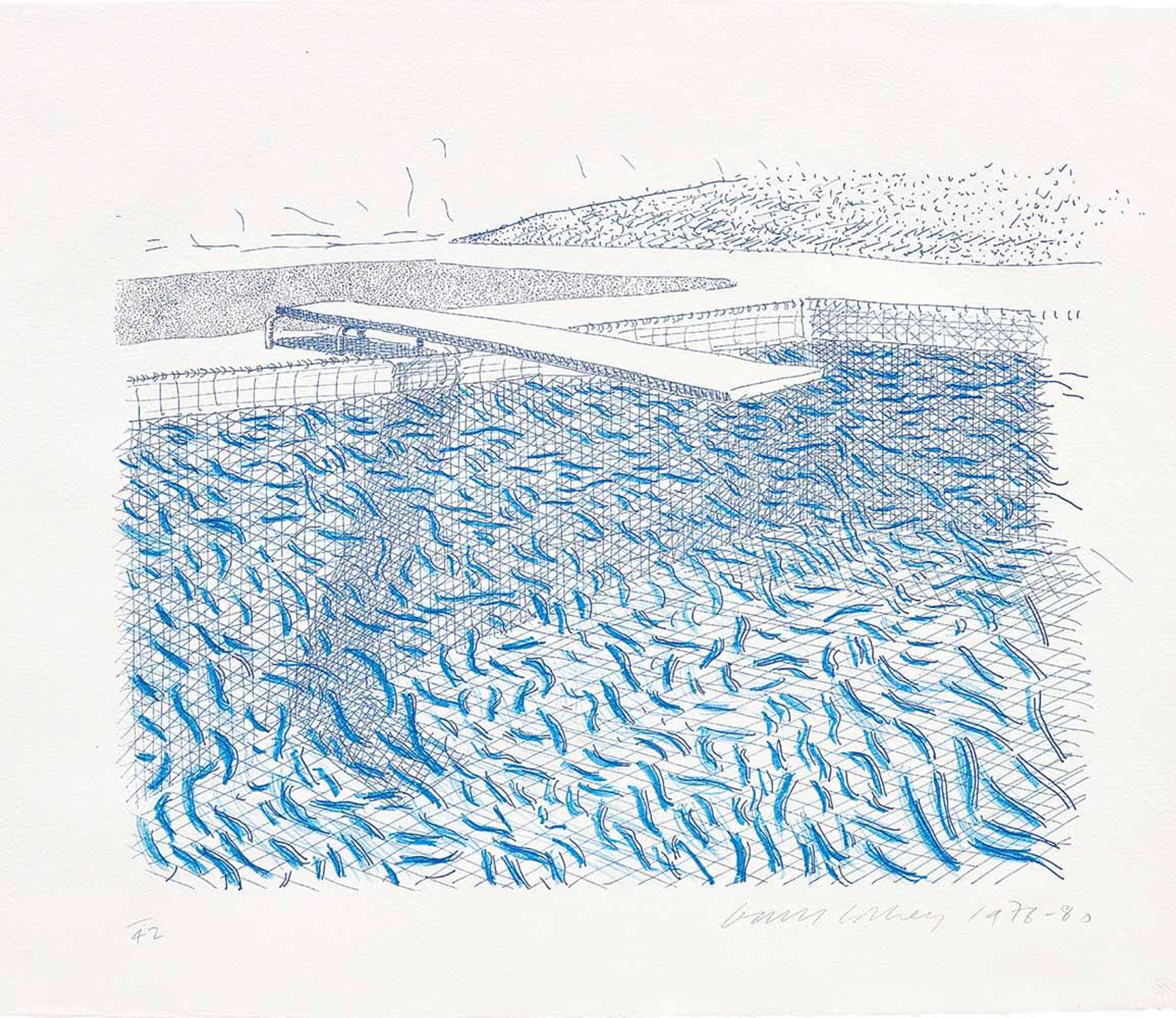
With Hockney you can watch that gravity working and watch him resisting it at the same time. The pool is still the centre of it all. When Portrait of an Artist (Pool with Two Figures) sold at Christie's in 2018 for $90.3 million, setting the record for a living artist at the time, it confirmed what the secondary market already knew, which is that the pool is the image the most money is chasing. You feel the same pull in the editions, where the pool-related works and the Moving Focus series carry a recognition premium that his more difficult, cerebral work simply doesn't.
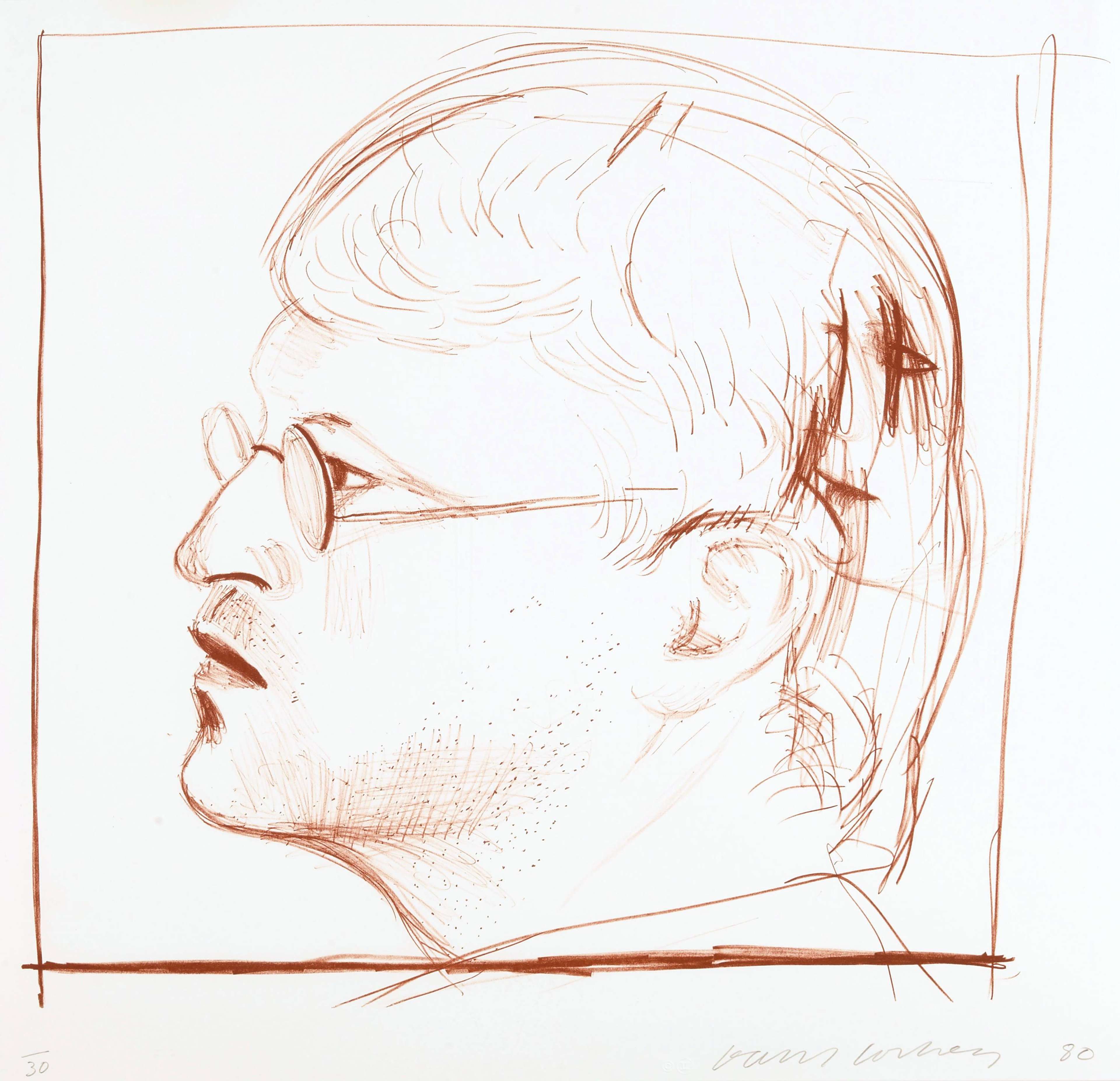
Hockney never seemed particularly interested in staying still for any of it. He was fanatical about reinvention, forever finding new ways to look at the world. Paint, Polaroid, photocopier, fax machine, iPhone, iPad: he treated each new tool as something to test rather than something to fear. The print record reads like a list of those tests. The etchings of A Rake's Progress and the Illustrations for Six Fairy Tales from the Brothers Grimm. The Cubist-inflected experiments of Moving Focus. The Wallace Stevens riff of The Blue Guitar, the Paper Pools. And, decades on, the iPad and iPhone drawings, the Untitled works that began as something close to a private joke and ended up on collectors' walls. Each one is a distinct series with its own market, which is exactly why his work suits the way we organise it, series by series.
Why the late work actually sold
What I find most remarkable, from where I sit, is that the new work found its audience. That almost never happens.
Late-career experiments are usually a footnote the market politely ignores while it goes on trading the early masterpieces. They tend to take years, often until well after an artist's death, to register with any real depth, because the market is slow to grant authority to anything that isn't already canonical. Hockney's collectors followed him in real time. The iPad works had a lightly suspicious reception at first, and then they were simply demanded. People who came to him through a swimming pool in 1967 ended up living with a Yorkshire roadside, or a Normandy hedgerow, drawn on a screen. He kept reinventing himself and somehow kept persuading the rest of us to come along. I'm not sure he even had to try.
This matters commercially, not just romantically. An artist whose new work is absorbed by the market while he's still making it builds an unusually broad and self-renewing base of demand. It's part of why the Hockney market runs as deep as it does, and part of why it tends to settle after a correction rather than fall away, because there is always another series and another way in for a new collector.
Even in his eighties, there was always the feeling that he was engaged with what was happening around him. He embraced technology when others dismissed it, moving between mediums without worrying whether people would approve. He seemed genuinely curious about what was possible. That's incredibly rare for anyone of that age.
What we're actually grieving
What makes his death so unbelievably sad for me, and for all of us, is that with Hockney there was always a sense of anticipation. Not just the possibility that he would surprise us again, but almost a faith that he would. A new series or medium. A new idea or show, a new collaborator, right up to the very end. You never felt the story was finished.
I think that's what feels different now.
The work and the influence remain. His place in art history was secured long ago, that isn't what we're grieving today, however much we'll phrase it that way. What's gone is the question of what's next. And that, it turns out, is a particularly sad thing to lose.