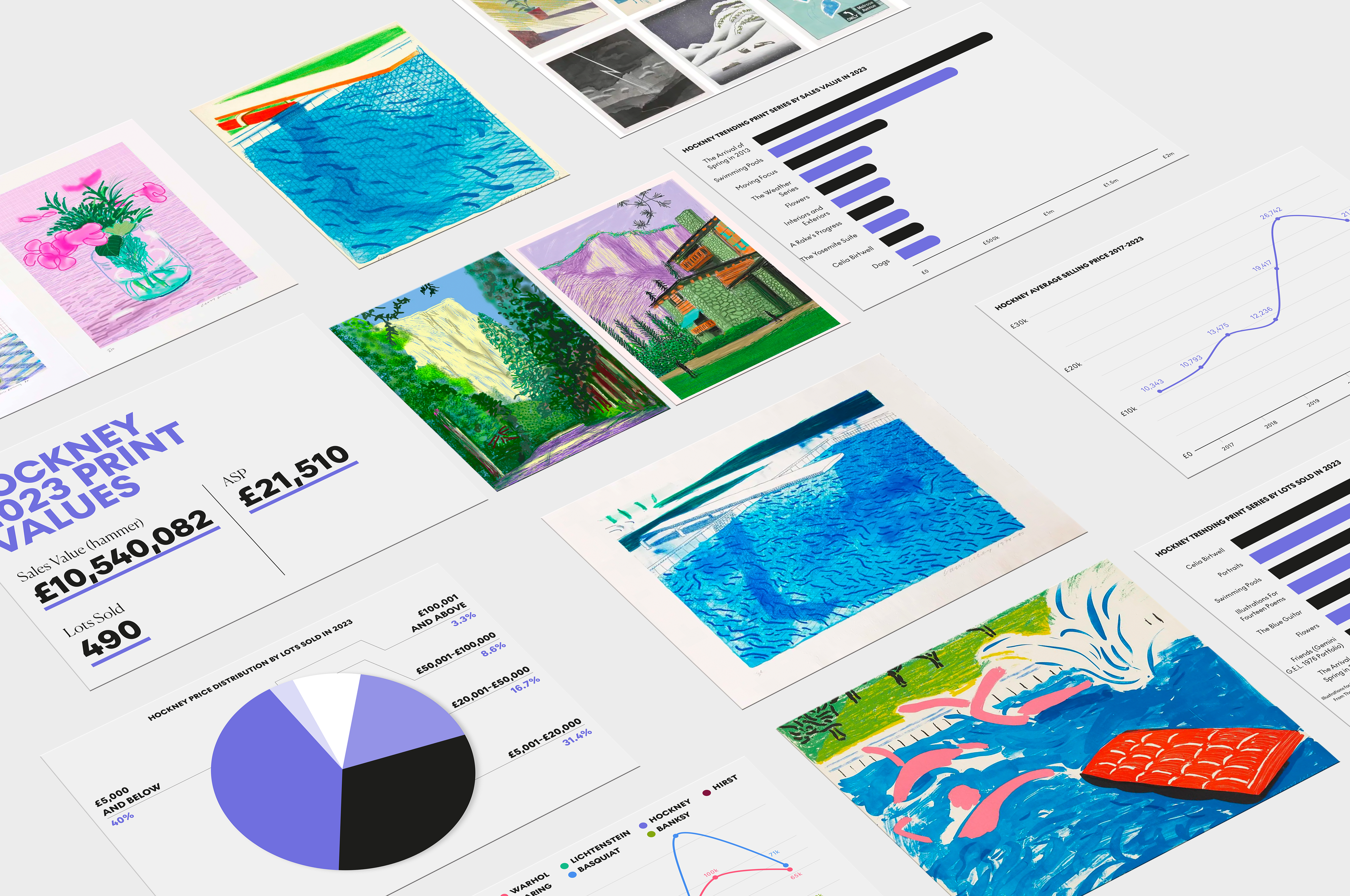

Key Takeaways
For collectors, however, headline market growth does not automatically determine what an individual Hockney print is worth. Valuation depends on the specific work: its series, image, edition type, condition, provenance, recent comparable sales, and current buyer demand. A Hockney valuation must also take into account the circumstances behind comparable results: whether a work sold in a major auction, a named single-owner collection, a regular day sale, or through private sale.
This guide explains how David Hockney prints are valued, why estimates can vary, and how different valuation routes compare.
How Is A David Hockney Print Valued?
A David Hockney print is valued by assessing where the work sits within the artist’s wider print market. This includes the strength of the series, the desirability of the image, the edition structure, the condition of the sheet, provenance, recent comparable sales, and current buyer demand.
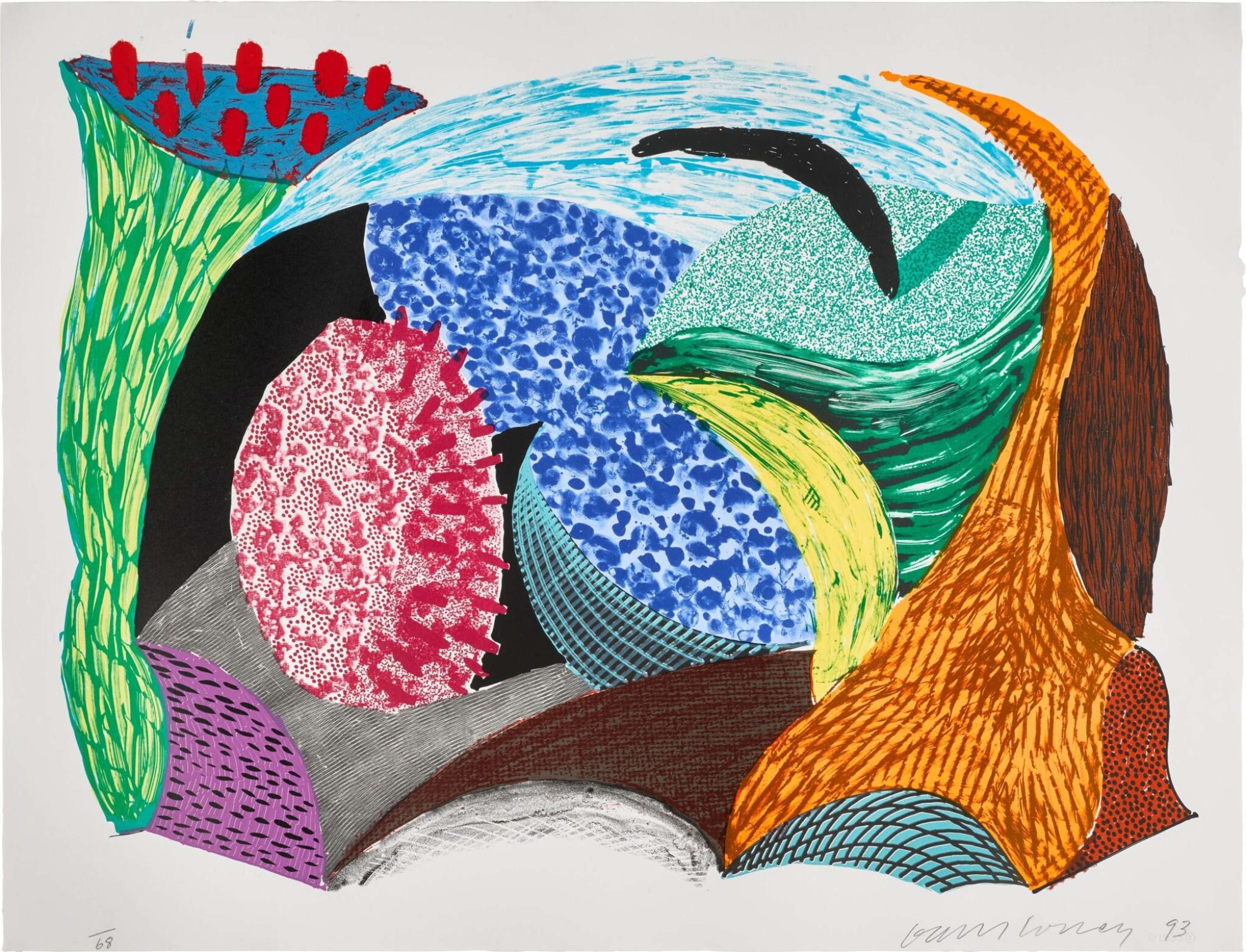
With Hockney, this is rarely a matter of medium alone. His printmaking spans etching, lithography, photographic works, handmade paper, paper pools, iPad drawings, inkjet prints, and digital editions. Yet valuation often depends less on broad medium category and more on how that work sits within a particular series, period, subject and collector narrative.
Series And Image
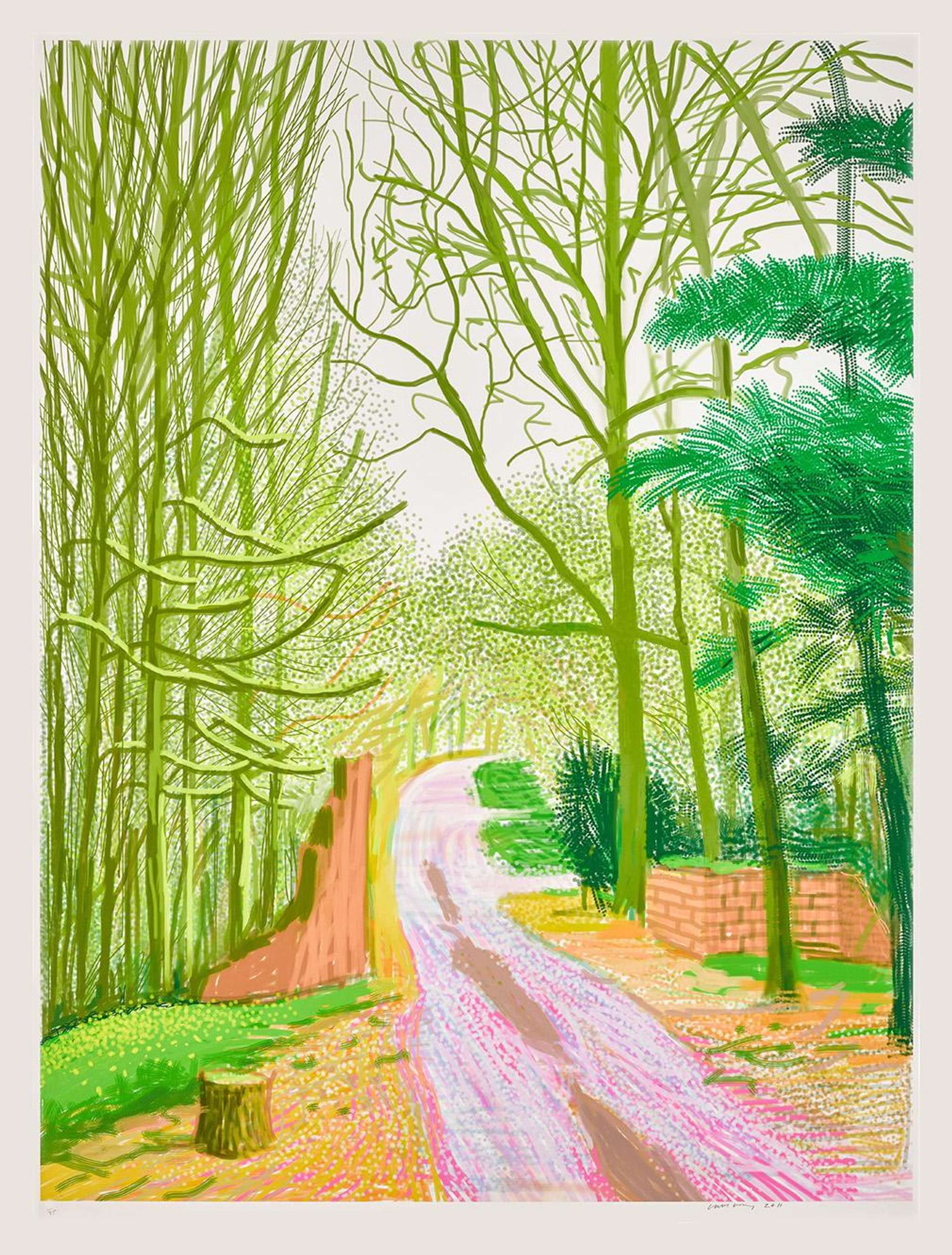
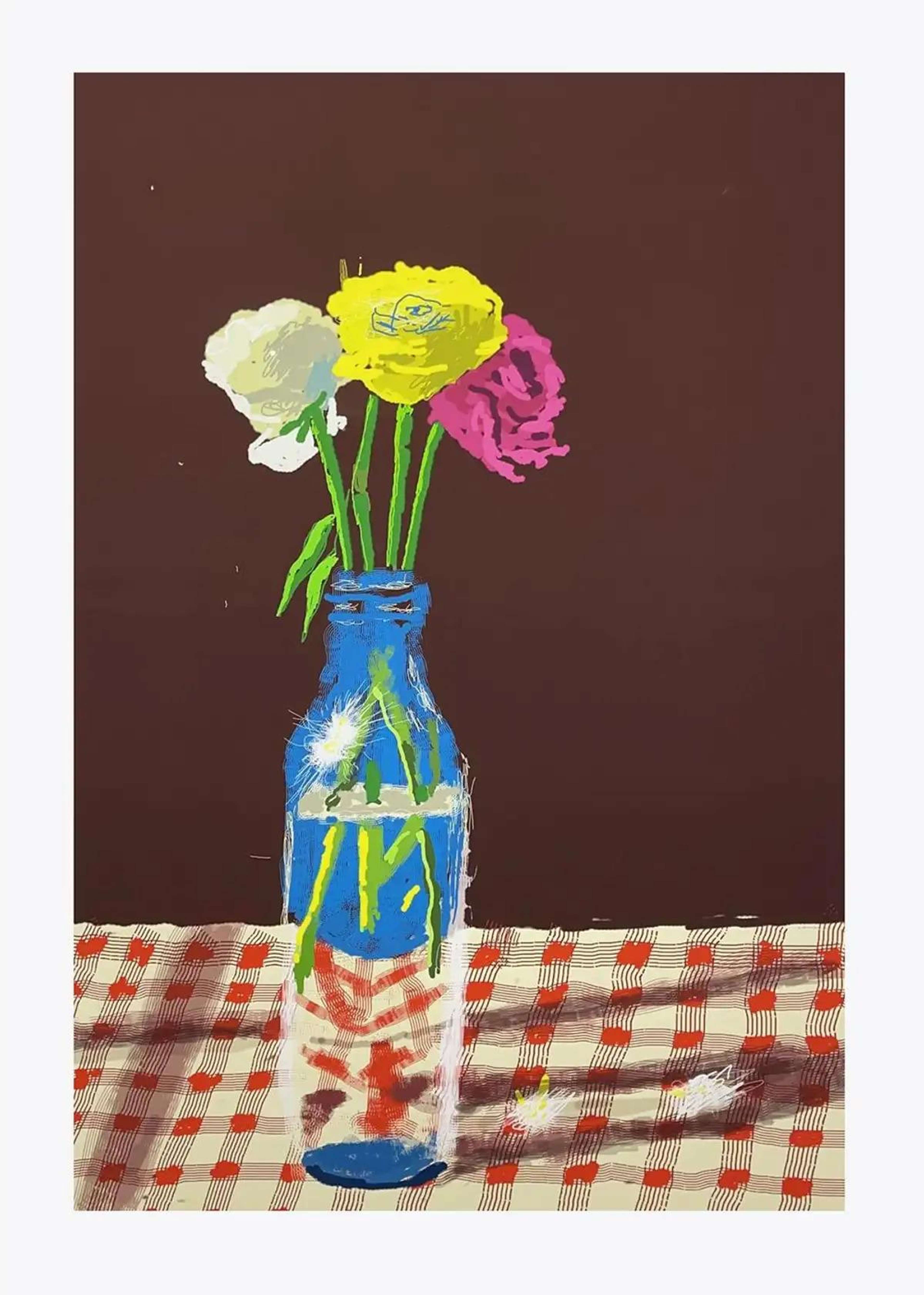
Not all Hockney series perform in the same way. Some, such as The Arrival of Spring, have benefited from concentrated auction activity, renewed institutional attention, and clear collector appetite for Hockney’s later digital landscapes. Others, such as Swimming Pools, are anchored by their status as one of Hockney’s most recognisable motifs. Moving Focus, by contrast, is an older and broader body of work, with more established auction history and more varied demand across interiors, architectural works, portraits and Acatlán compositions.
Within each series, individual images can vary significantly in value. Composition, scale, colour, subject matter, recognisability and recent demand all matter. In Hockney’s market, the difference between two works from the same series is not always obvious at first glance, but it can be substantial when viewed through the lens of trading history and buyer behaviour.
With The Arrival of Spring, for example, headline results from Sotheby’s single-owner sales have created visible benchmark moments. However, the same edition may perform differently outside that highly curated sale context. This is why a valuation has to distinguish between the work itself and the conditions under which a result was achieved.
Find out where your Hockney print sits within its wider series - speak to a specialist today.
Edition Size And Scarcity
Edition size has a direct effect on scarcity. Smaller edition works tend to command stronger pricing where demand is active, particularly if the image is well known or has limited recent supply. However, scarcity alone does not guarantee value. A rare work still needs buyer demand, clear documentation, and appropriate market positioning.
Hockney’s edition sizes vary across periods and processes, but scarcity becomes especially important when a work has not appeared at auction for some time, or when public data is limited. That absence can support a premium, but it can also make valuation more complex.
The important point is that absence from the market is not the same as automatic value growth. If a work has not traded for many years, a specialist must look to adjacent comparables, private demand, series performance, condition, scale and composition to determine whether a higher current value is justified.
Proof Status
Artist’s proofs, trial proofs, printer’s proofs, and other proof works can command premiums, but their value depends on context. In some print markets, particularly Warhol, trial proofs can be central to valuation because of their different colour combinations and high collector demand. Hockney’s proof market operates differently.
Grace’s view is that proof status can be attractive, but it is not always a decisive value driver in the way it can be for Warhol. Hockney does not tend to operate with trial proofs in the same highly colour-variant way. As a result, an artist’s proof, printer’s proof or BAT inscription may be a selling point, but it does not automatically transform value.
Where proof status does matter, it is usually because it intersects with other factors: image strength, rarity, provenance, documentation, condition and collector interest.
Signature, Numbering And Publisher Details
The vast majority of Hockney prints were released as signed editions, and signed impressions form the recognised secondary market for his work. Signature, edition number, publisher details, blind stamps and paper type are therefore central to valuation. Unsigned works may still have market relevance in limited cases, but they are generally not treated as equivalent to signed editions.
For valuation, close-up images of the signature and edition number are essential. These details allow specialists to check whether the numbering aligns with known edition structures and published references, and whether the signature appears consistent with the relevant period.
Grace also notes that edition numbering across Hockney’s prints is not uniform. Some works may carry AP, PP or BAT inscriptions rather than standard numbering. A close review of these details can help confirm that the work is consistent with the expected edition structure.
Hockney’s prints often carry physical details that help support identification and valuation. These can include publisher blind stamps (such as Gemini) paper watermarks, inscriptions, edition numbers, and specific production markers associated with particular workshops.
Condition
Condition can materially affect value. Margins, fading, foxing, paper tone, surface disturbance, trimming, poor framing, and restoration history all influence buyer confidence. With Hockney, condition must also be assessed in relation to the process and period of the work, as his printmaking spans traditional and experimental formats across more than six decades.
Older Hockney prints from the 1960s, 1970s and 1980s are more likely to have condition issues than works produced in the past 10 or 20 years. For early lithographs, etchings and works on paper, framing history can be especially important. Poor-quality mounts, prolonged light exposure, or inappropriate backing materials can affect the sheet and, in turn, market confidence.
Even where a work appears strong in images, a final valuation may depend on physical inspection. A framed work may look clean from the front, but can still have hidden issues such as being stuck down, trimmed, or affected by the mount.
Grace is also clear that condition is not only assessed on the work being valued, but also on the comparables used to support that valuation. A previous auction result is only useful if the condition of that comparable work is properly understood.
Provenance And Documentation
Provenance is especially important in the Hockney market because Hockney’s works are not typically accompanied by certificates of authenticity in the same way as some other blue chip print markets. Unlike Banksy, where Pest Control certification carries formal market weight, Hockney valuations rely more heavily on provenance, documentation, edition structure, publisher history and recognised market standards.
This makes the paper trail particularly important. Works acquired through major auction houses, recognised galleries, publishers or long-standing Hockney representatives carry greater confidence. Invoices, prior sale records, ownership transfers, publisher documentation and gallery paperwork can all support valuation.
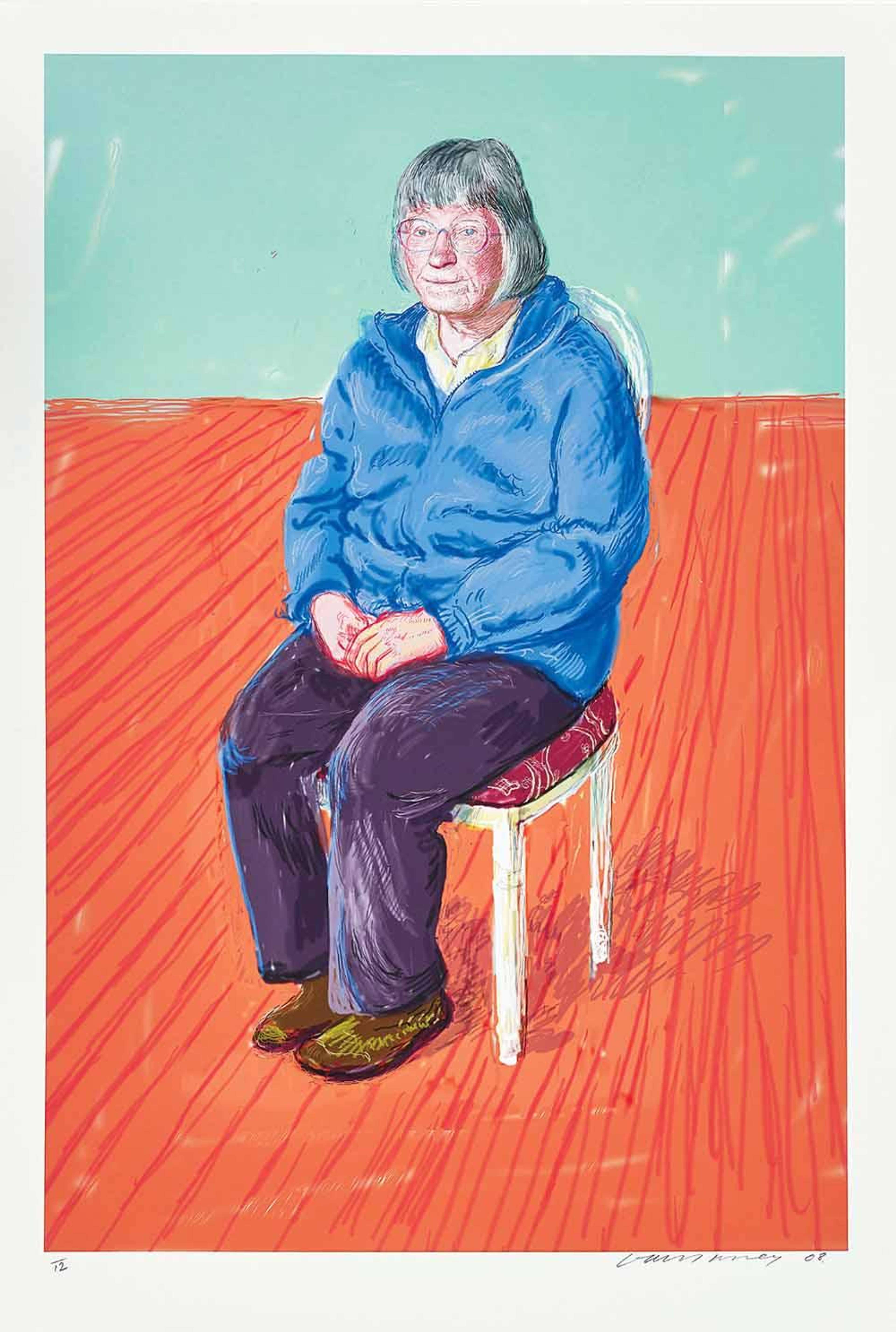
Works acquired through long-standing representatives such as L.A. Louver, Annely Juda Fine Art, or Galerie Lelong carry significant weight. Publisher records, invoices, framing history, and prior valuation documents can all support confidence, particularly for post-2000 works that are not covered by earlier published print catalogues.
Why Do David Hockney Print Prices Vary So Much?
David Hockney print prices vary because his print market is not a single, uniform category. It spans multiple decades, techniques, publishers, subjects, and edition structures. A lithograph from the 1960s, a Tyler Graphics work from the 1980s, and a later iPad print do not behave in the same way commercially.
Two Hockney prints may appear similar in subject or date but sit in entirely different value bands. Differences in edition size, signature status, image desirability, condition, colour, scale, provenance, and market timing can all materially affect price.
The wider sale context also matters. A Hockney print sold as part of a named single-owner collection at a major auction house may achieve a stronger price than the same edition appearing in a regular auction. That does not mean the lower result is wrong, or that the higher result applies universally. It means the circumstances of sale shaped the outcome.
This is particularly relevant to The Arrival of Spring, where highly visible auction results have created headline benchmarks. Those benchmarks are useful, but they need to be interpreted alongside average performance, private demand, edition details and the difference between exceptional sale conditions and normal market activity.
For this reason, valuation should always be specific to the individual print. The most accurate assessment looks beyond artist name and headline auction results, and instead considers how the work is likely to perform within its exact market segment.
Auction Comparables, Private Demand And Why Estimates Differ
Auction results are essential to Hockney valuation, but they do not tell the whole story. A specialist will look not only at the hammer price, but at the estimate range, the sale context, the condition of the work, whether the result was part of a named collection, and how the result compares with private demand.
When an exact edition has appeared at auction, that result provides a useful starting point. However, the hammer price alone is not enough. Specialists also look at whether the work sold below, within, or above estimate, and whether the result suggests genuine demand.
Grace gives a clear example: a work achieving £30,000 against a £10,000–15,000 estimate indicates a different level of demand from a work achieving £30,000 against a £30,000–50,000 estimate. The same hammer price can tell a different story depending on expectation, estimate strategy and bidding behaviour.
Auction estimates can also be deliberately positioned to generate bidding. If a work is estimated conservatively and then exceeds expectations, that can indicate strong demand. But it may also reflect the auction house’s strategy for creating competition.
At MyArtBroker, valuation also considers private sale comparables and live demand. This matters because private prices and public auction results do not always align. Public auction data provides transparency, but private demand can reveal where buyers are actively looking, especially for works that have limited auction history or have not appeared recently.
The strongest valuation is therefore not the highest possible number, but the most realistic market position: one that achieves the best outcome for the seller without pricing the work beyond buyer confidence.
What Information Do You Need For A David Hockney Valuation?
Before seeking a David Hockney print valuation, owners should gather as much information as possible about the work. Complete documentation helps establish confidence, accelerates assessment, and allows the print to be benchmarked accurately.
The most useful details include:
- full title
- year
- medium
- sheet size and image size
- edition number
- signature details
- publisher, printer or workshop
- proof designation, if applicable
- purchase invoice or gallery documentation
- provenance history
- framing details
- condition images
- any previous valuations, appraisals or auction records
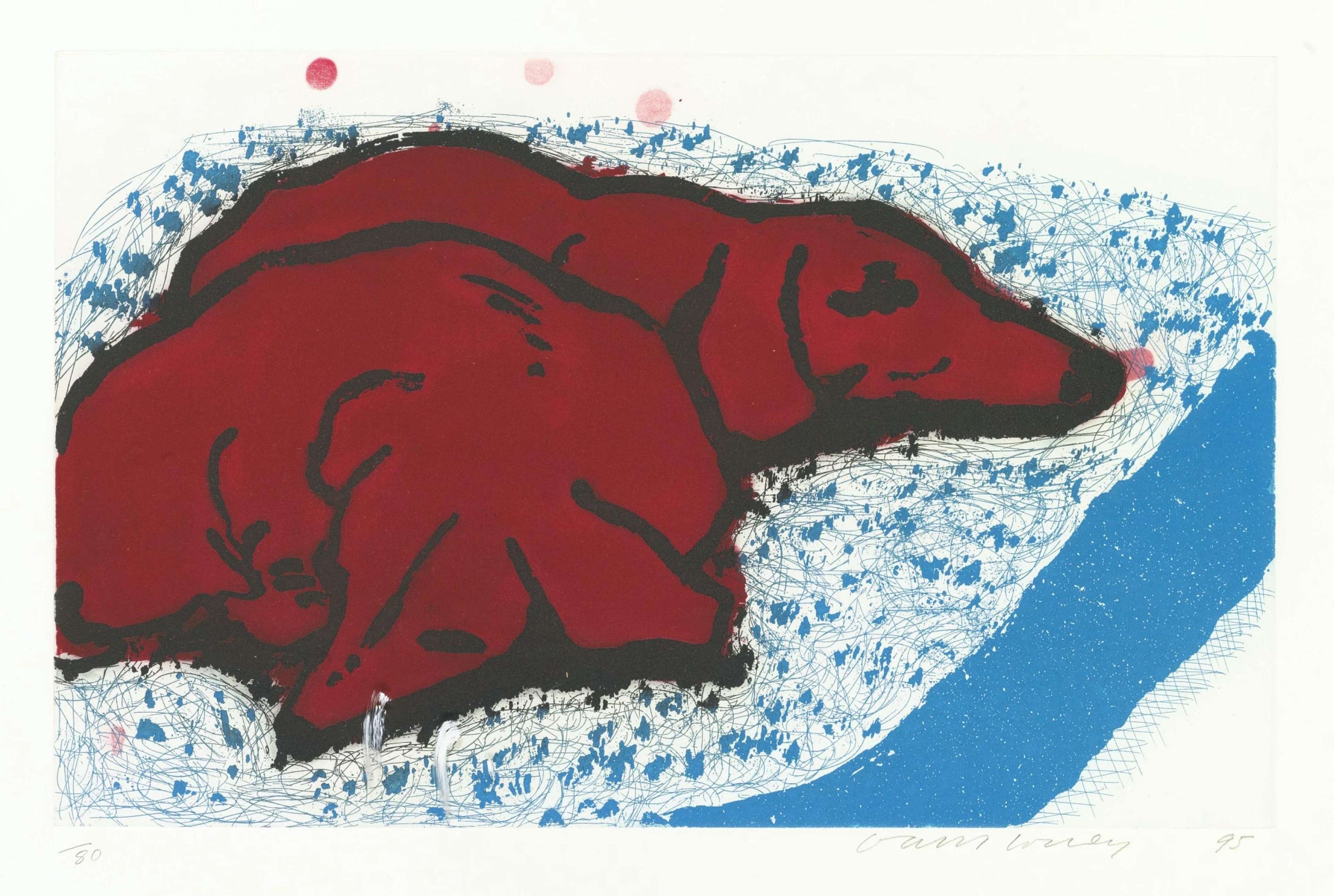
Images are especially important. Ideally, specialists need to see the work unframed, with front and back images, close-ups of the signature, numbering, blind stamps, inscriptions and any visible condition issues. In reality, many works are framed, but even framed images can reveal important information.
Speak to a member of the team for advice if you're considering consigning a Hockney print.
Close-up images of the signature and edition number are particularly important, but so are sheet edges, paper details, blind stamps and watermarks. If a work should have a deckled edge and does not, or if a watermark expected for that paper is absent, those details may require further investigation.
Where Should I Get A David Hockney Print Valued?
Collectors seeking a David Hockney print valuation will usually encounter several different routes: major auction houses, commercial galleries, specialist dealers, and print-focused platforms. Each can provide useful information, but they do not all answer the same question.
Some valuations are designed to establish an auction estimate. Others reflect retail pricing, gallery placement, private sale potential, or an achievable resale range. Before comparing figures, it is important to understand what each valuation is actually measuring.
For sellers, the key distinction is purpose. An auction house estimate, a gallery consignment view, and a MyArtBroker valuation may all be legitimate, but they are not necessarily measuring the same outcome. A strong valuation should make clear whether it reflects auction estimate, retail positioning, private sale range, fair market value, or expected net return.
Get A David Hockney Print Valuation
If you own a David Hockney print, an accurate valuation begins with understanding where the work sits within his wider print market. Series, edition type, condition, provenance, recent comparable sales, and current demand all affect value.
MyArtBroker provides specialist David Hockney print valuations using auction data, private sale comparables, and live buyer demand from across our network. Whether you are considering sale, benchmarking a collection, or trying to understand how your work compares to recent market results, our team can provide a clear, evidence-led view of current value.
Grace’s approach to Hockney valuation is clear: the goal is not simply to reach the highest theoretical figure, but to position the work at a level that reflects the market and supports a successful sale.
Request a David Hockney print valuation today, or speak to a specialist to understand the best route to market for your work.