Cage Grid I Single Part N
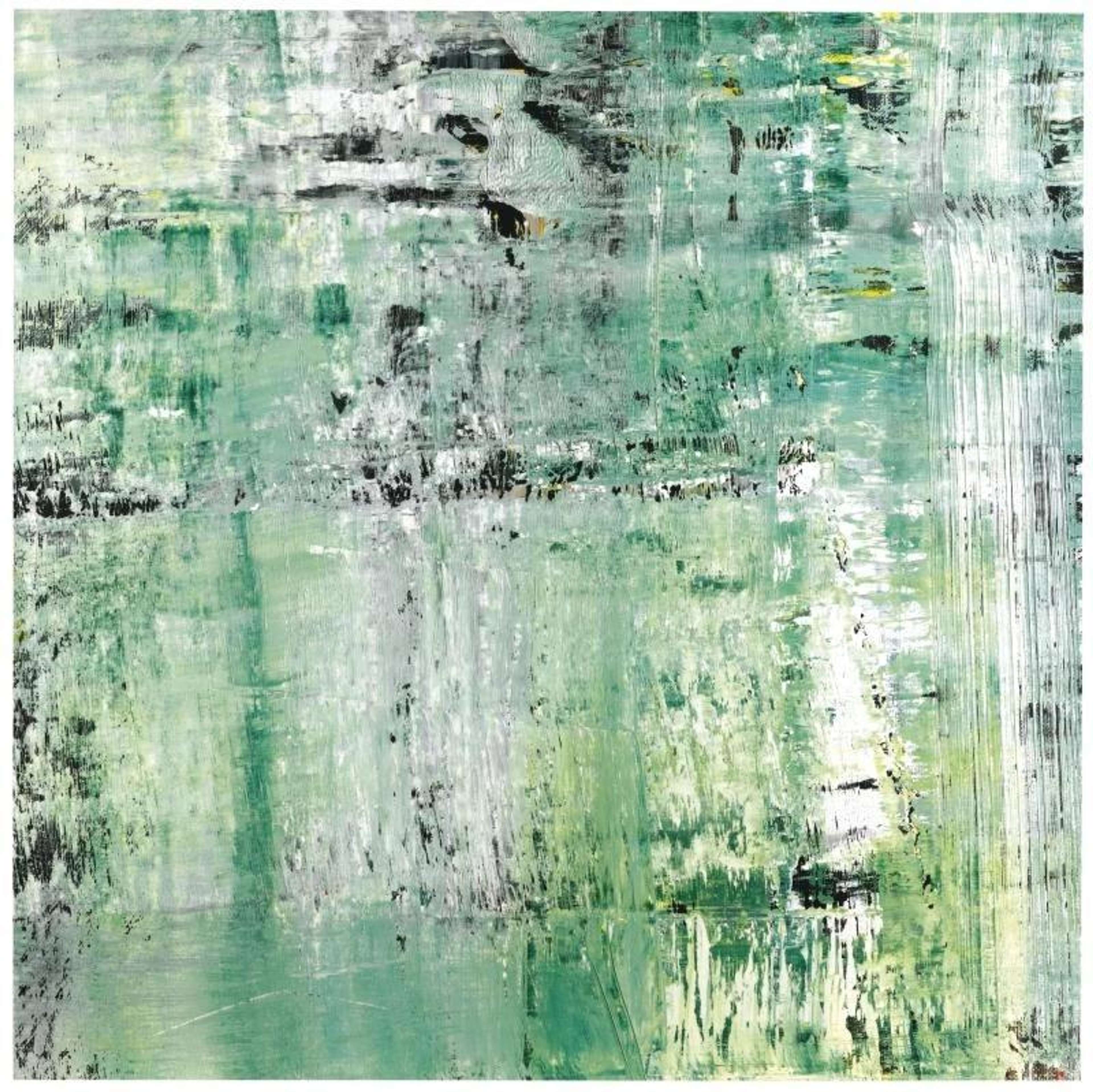
Cage Grid I Single Part N
Signed Print
Gerhard Richter
75 x 75cm, Edition of 4, Giclée print, 2011
£110,000-£160,000
$210,000-$300,000 Market Value Indicator
$210,000-$300,000 Market Value Indicator
¥1,000,000-¥1,450,000 Market Value Indicator
€130,000-€190,000 Market Value Indicator
$1,170,000-$1,700,000 Market Value Indicator
¥22,850,000-¥33,240,000 Market Value Indicator
$150,000-$220,000 Market Value Indicator
There aren't enough data points on this work for a comprehensive result. Please speak to a specialist by making an enquiry.
Track auction value trend
Meaning & Analysis
Cage Grid I Single Part N is a giclée print reproducing one of the sixteen component panels of Richter's Cage Grid I (2011). This panel is one of the most restrained in the series – predominantly soft greens and grey-whites, with white creating luminous passages across a surface of teal, sage and mint, and minimal yellow or black incident. It is signed in an edition of 4, among the most limited prints in Richter's catalogue.
The Cage Grid prints derive from Richter's Cage paintings (2006), six large-scale abstract canvases produced through his squeegee method in response to his long-standing engagement with John Cage's thinking about chance, silence and the deliberate displacement of compositional intention. The squeegee generates marks that are consistent in their method and unpredictable in their specific outcomes – painting produced, in Richter's own framing, without a painter's decisions.
Single Part N sits in the green-to-grey register that characterises the left-hand and lower-left portion of the complete grid. The surface is built from overlapping layers of teal and mint, with grey-green as a unifying ground and white cutting across as bright, near-luminous passages. A small amount of black punctuates the upper area; yellow is present only as the faintest trace at the upper right. The overall effect is cooler and more contained than the yellow-dominant panels at the right of the grid – quieter in chromatic temperature, more atmospheric in quality, the white passages giving the surface a diffuse, almost illuminated presence. Within the edition of 4, each print offers essentially identical but individually produced copies of this specific cell in the grid.