
At first glance, those figures suggest a market becoming stronger despite lower supply. But they don’t mean every print was equally well positioned to sell.
Timing is one of the most important considerations when selling a print because market conditions are never uniform. A work’s position depends on the artist, the series, the individual print, the level of competing supply and the buyers active at that particular moment.
The shift extended beyond a handful of exceptional sales. The distribution of prices changed as well. The proportion of works achieving more than £100,000 nearly tripled, increasing from 2% to 6%, while the share of prints selling below £10,000 fell from 66% to 59%. Fewer works came to auction, but a greater proportion of market activity was concentrated in higher-value prints.
On the surface, these figures point to a stronger market. But they don’t answer the question that matters most to sellers. The issue isn’t whether the print market is performing well. It’s whether the market for your specific print is.

Is the Overall Print Market a Good Indicator of When to Sell?
One of the most common misconceptions is that the print market moves as a single entity.
In reality, the broader market is simply the combined performance of many individual artist markets, each following its own cycle. Some experience periods of rapid growth, others trade with relative stability, while others undergo consolidation before demand strengthens again.This is why market headlines can be misleading.
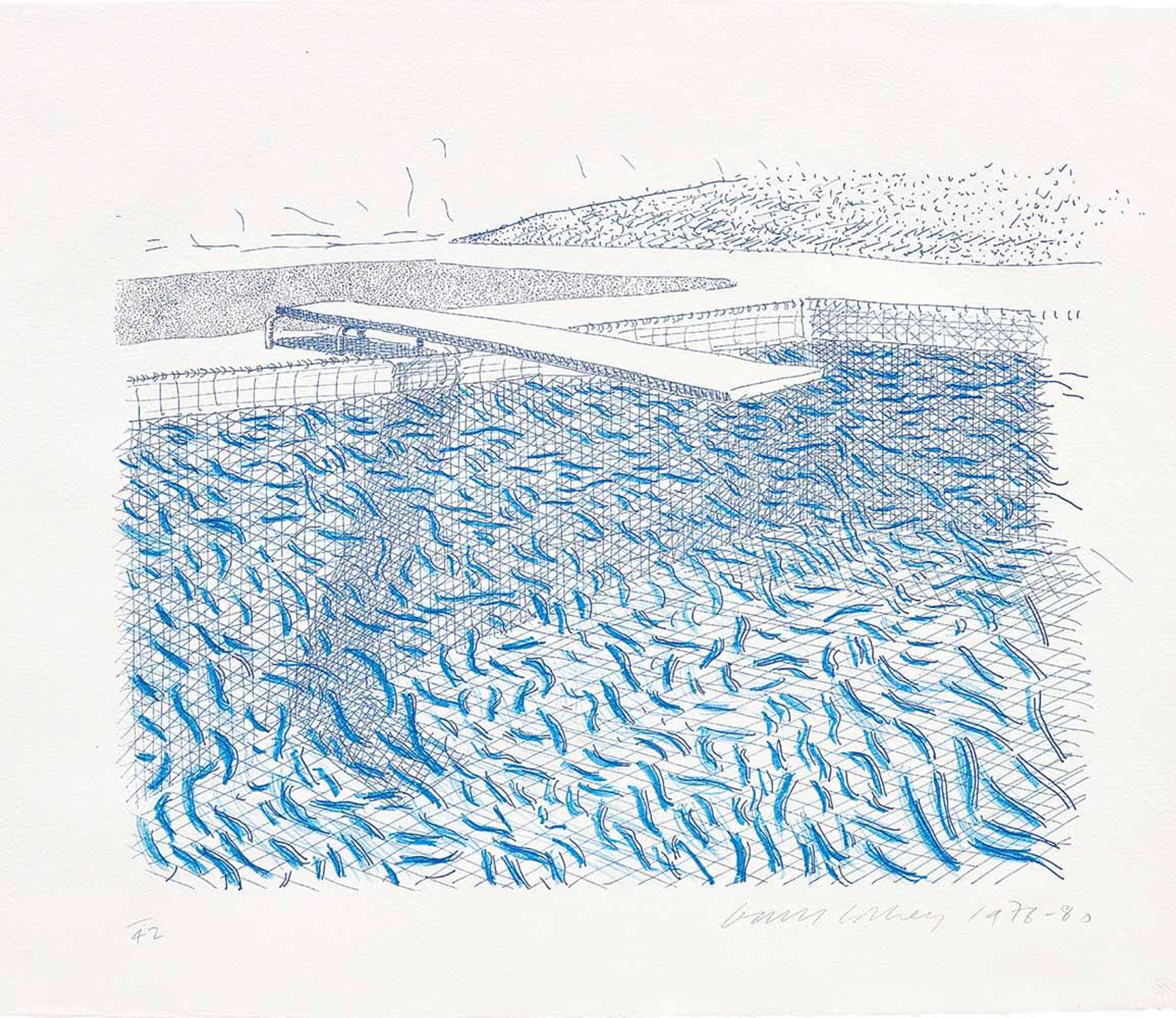
Record prices for David Hockney may encourage collectors to consider selling, but they do not necessarily indicate stronger demand across every Hockney print. Different series, editions and price points often perform very differently, even within the same artist’s market. Equally, quieter public auction activity does not automatically signal weakening demand if supply has tightened or transactions have shifted into the private market.
As markets mature, performance becomes increasingly driven by the dynamics of individual artists, series and even specific editions, rather than broader movements across the print market.

Why David Hockney and Banksy Tell Two Very Different Stories
David Hockney demonstrates why a strong market doesn’t automatically mean every print is equally well timed to sell.
His market has attracted extraordinary attention over the past eighteen months, fuelled by sustained institutional recognition, landmark exhibitions, exceptional auction results and renewed appreciation for the breadth of his printmaking practice. Interest intensified further following Hockney’s death in June 2026, prompting many collectors to reassess both the significance and value of his editions.
However, that doesn’t mean every Hockney print should come to market today. The strength of Hockney's market isn't confined to one iconic image or one successful series. Strip Arrival Of Spring out of the picture entirely, and the rest of his market still saw its average auction price rise 75% and its median rise 136% over the same period. Demand has broadened across multiple periods of his career, creating a deeper and more resilient market than one driven by a single headline result.
Banksy’s market presents a different timing conversation altogether. Over the same 2025–2026 period, it has been characterised by consistent liquidity rather than a single repricing event. Banksy prints recorded 207 auction sales in 2025, one of the highest volumes of any major print artist, while the median price remained relatively stable, rising from £11,921 to £14,000 year-on-year. Signed and unsigned editions continue to change hands throughout the year, supported by one of the largest and most active buyer bases in the contemporary print market.
For Banksy sellers, the decision is often less about waiting for the market to strengthen and more about choosing the right moment within an already active market. That means considering competing supply, buyer demand for a particular image and how the work is positioned when it comes to market.

Why Headlines Rarely Tell the Full Story in the Print Market
Auction headlines tell us what happened. They rarely explain why it happened.
A record price doesn’t reveal whether several comparable works were competing in the same season, whether bidding came from multiple determined collectors, or whether the work benefited from exceptional provenance or condition. Nor does it explain how much comparable material is currently available.
Rather than trying to anticipate where prices might be in twelve months' time, specialists work from what's happening right now: how much comparable material has sold recently, what's scheduled to come to market next, and whether buyers are actively competing for a particular series or simply waiting for the next opportunity.
That approach gives collectors something more valuable than a prediction – it gives them a valuation grounded in current market conditions rather than speculation.
So, Is Now a Good Time to Sell?
The answer depends on the print.
Strong market conditions don’t automatically guarantee the strongest result, just as quieter headlines don’t necessarily mean the opportunity has passed. Timing is ultimately a question of how a specific work is positioned within its own market.
The strongest sales happen when three things align: the right work, the right buyers and the right moment. Those conditions can’t be read from a headline or a record price alone. They have to be assessed in the context of the individual print, the competing supply and the buyers active in the market today.
Methodology: Figures in this report are drawn from auction results recorded between January 2025 and April 2026 across major international and regional auction houses in the blue chip prints and editions market. This period was chosen to reflect the most current and relevant view of market conditions.
While every effort has been made to ensure accuracy, this report may contain errors or inconsistencies. It is intended for research and informational purposes only and should not be relied upon as financial or investment advice. MyArtBroker accepts no liability for any loss or damage arising from reliance on the information contained within this report.