Stadt
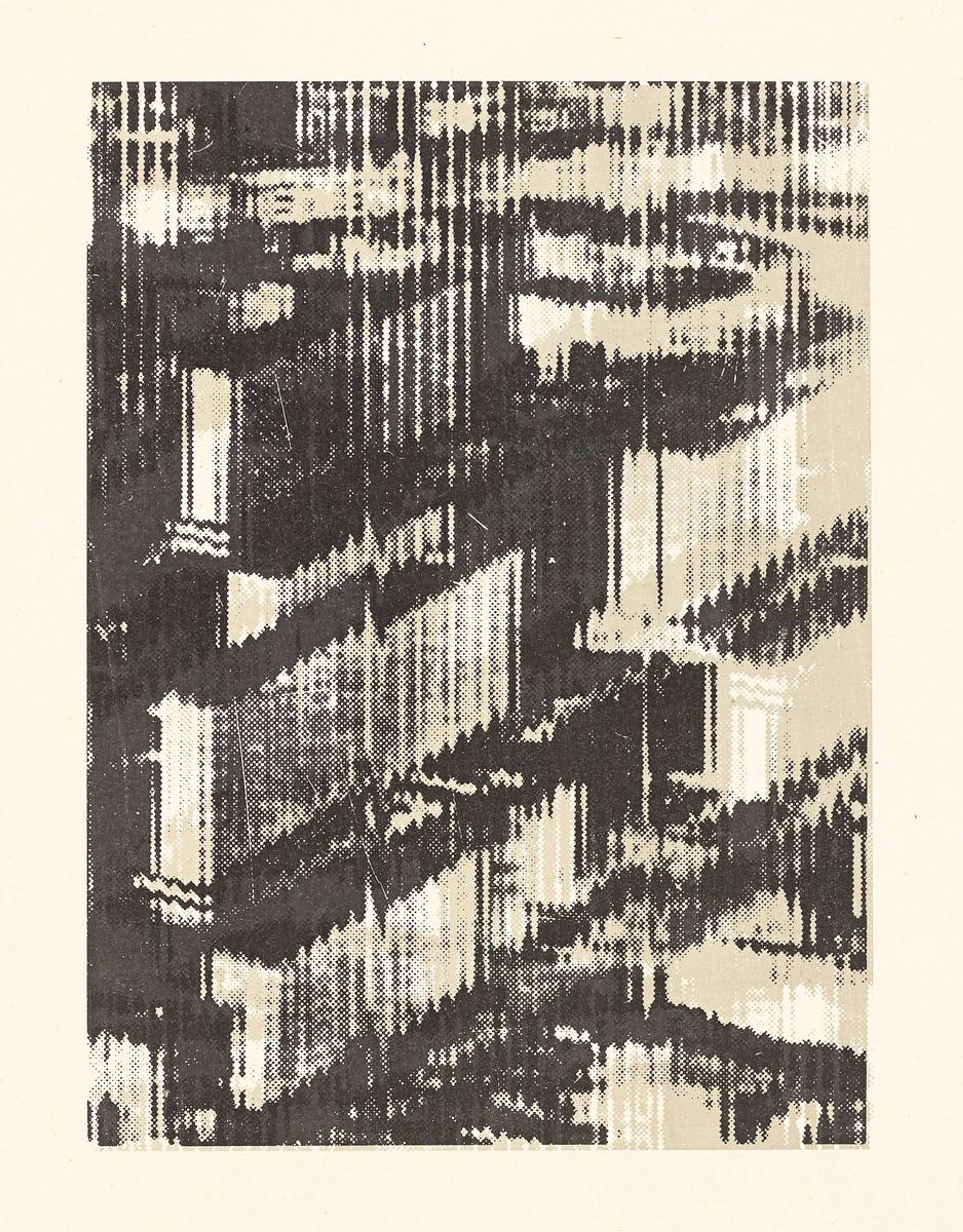
Stadt
Signed Print
Gerhard Richter
36 x 27cm, Edition of 200, Screenprint, 1968
£2,750-£4,100
$5,000-$7,500 Market Value Indicator
$5,000-$7,500 Market Value Indicator
¥25,000-¥35,000 Market Value Indicator
€3,200-€4,800 Market Value Indicator
$29,000-$45,000 Market Value Indicator
¥570,000-¥850,000 Market Value Indicator
$3,700-$5,500 Market Value Indicator
There aren't enough data points on this work for a comprehensive result. Please speak to a specialist by making an enquiry.
Track auction value trend
Meaning & Analysis
Stadt (City) is a screenprint by Gerhard Richter, made in 1968. One of the earliest works in Richter's printed output, it depicts an extreme close-up of an urban scene – buildings, shadows, and architectural geometry compressed almost to pure abstraction through tight framing and the grainy texture of a halftone dot screen. Printed in black on an off-white ground, this signed edition of 200 belongs to a foundational moment in Richter's engagement with the printed medium.
By 1968, Richter had spent several years translating found photographs onto canvas in his Photo Painting series – press images, amateur snapshots, reproductions from magazines – and Stadt transfers that same impulse into screenprint. Here the halftone process itself becomes a visual material. Viewed closely, the image dissolves into a field of dots; at distance, those dots cohere into diagonal masses of shadow, building edge, and compressed urban geometry. The specific subject – a city scene taken from a tight angle, its architectural elements folded into one another – is legible as urban fabric but resists precise identification.
That resistance was intentional. Richter's halftone grain functions here as photographic blur does in his paintings: it marks the distance between image and referent, between what a photograph records and what a viewer can recover from it. Stadt does not describe a city so much as record what remains of one when the image is pushed to the edge of readability. As one of the earliest prints Richter produced, and one of the few to engage directly with the urban subject matter that preoccupied his paintings of the same period, it holds a distinct position within his graphic work.