Vermalung (braun)
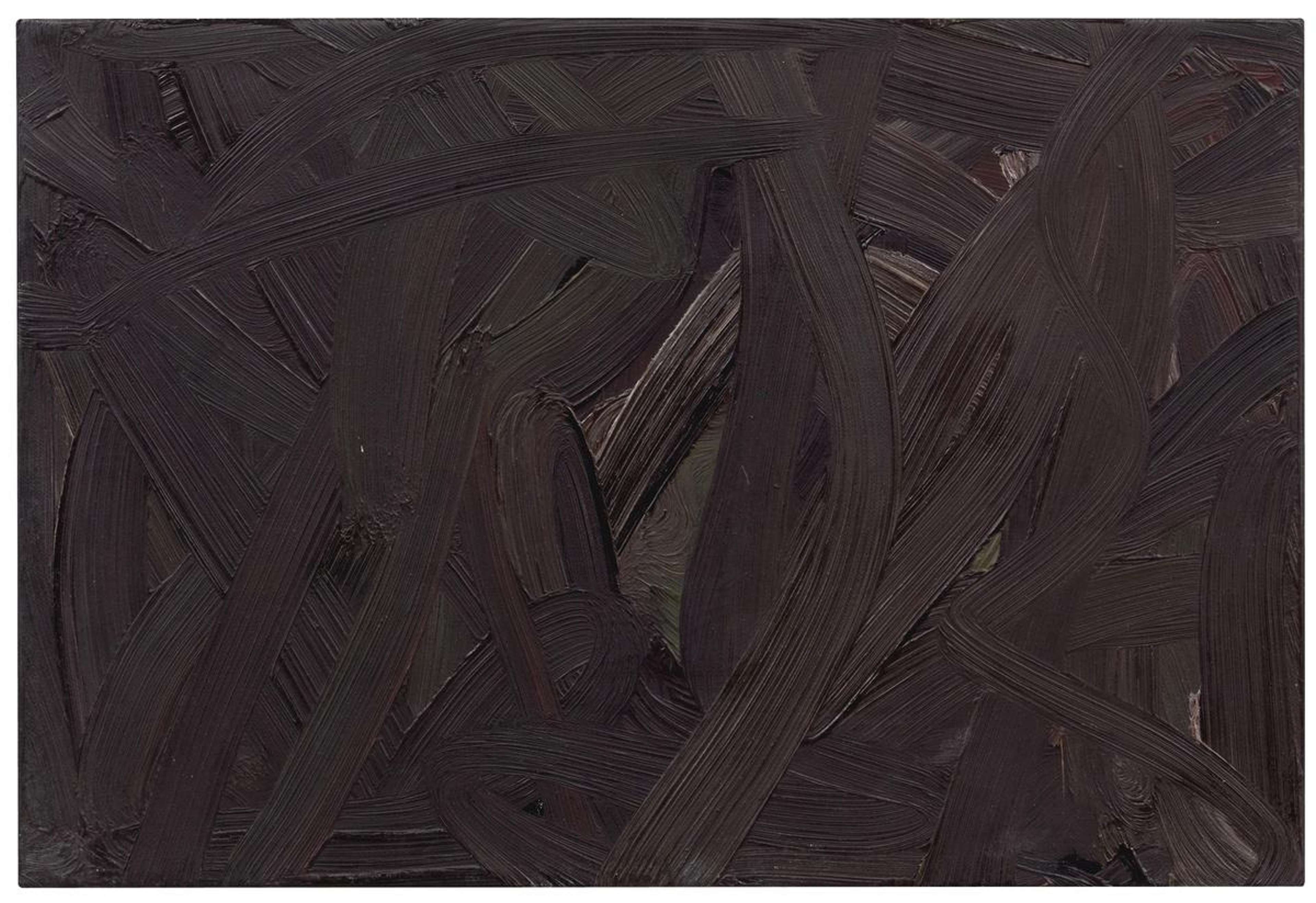
Vermalung (braun)
Signed Mixed Media
Gerhard Richter
27 x 40cm, Edition of 120, Mixed Media, 1972
£35,000-£50,000
$70,000-$90,000 Market Value Indicator
$70,000-$90,000 Market Value Indicator
¥320,000-¥450,000 Market Value Indicator
€40,000-€60,000 Market Value Indicator
$370,000-$530,000 Market Value Indicator
¥7,290,000-¥10,420,000 Market Value Indicator
$45,000-$70,000 Market Value Indicator
There aren't enough data points on this work for a comprehensive result. Please speak to a specialist by making an enquiry.
Track auction value trend
Meaning & Analysis
Vermalung (braun) (Painting-Over, Brown) is a mixed media work by Gerhard Richter, made in 1972. The work consists of very dark brown oil paint applied in broad, sweeping brushstrokes over printed paper, the marks overlapping and accumulating across the landscape-format surface until nothing beneath remains visible. Each copy in this signed edition of 120 is individually painted. Made a year after Vermalung (grau), it represents the more physically assertive variant of the series.
Where Vermalung (grau) erases with a degree of restraint – the grey retaining luminosity, the brushmarks legible within the tonal field – Vermalung (braun) applies a different pressure. The paint here is near-black: a very deep, heavily pigmented brown applied in wide strokes that traverse the surface in overlapping sweeps. The physical presence of the paint is substantially greater than in the grey version; individual bristle marks are visible within broader passages, and the accumulated surface carries a density that approaches total material opacity. Whatever was printed on the paper beneath is entirely gone.
The brown Vermalung was made in 1972, and the shift from cool grey-blue to near-black reads as an intensification of the same impulse. If the grey version stages erasure as a quiet, almost meditative act, the brown stages it as obliteration – more forceful, more final. Both works raise the same question about what painting is for when directed not at the creation of a new image but at the destruction of an existing one. In the Vermalung series, Richter turns painting against itself, and each individually painted copy in the edition carries that tension in its own particular arrangement of marks.