
The highest evening total belonged to Christie’s, which brought in $1.12 billion across the S.I. Newhouse collection and its 20th Century Evening Sale, marking the second-largest single evening auction total in history behind the Paul G. Allen sale of 2022. Sotheby’s also posted a significant improvement on last year’s equivalent series, achieving a 137% increase on its 2025 evening sale totals – a notable reversal given that last year’s figures had been strengthened by two additional offerings: the Im Spazio sale and material from the Barbara Gladstone collection. This season, Sotheby’s momentum was supported in part by works from the Robert Mnuchin collection. Phillips, meanwhile, delivered a white-glove $115 million evening sale, more than double its equivalent total from 2025.
Yet the lingering question persists: is this truly a market comeback?
How Guarantees & Auction Strategy Shaped New York Auction Week
The answer is more complicated than the headlines suggest. Many of the week’s strongest results – particularly at Christie’s and Sotheby’s – were underpinned by guarantees and irrevocable bids. But that in itself became part of the season’s narrative. The Newhouse collection was able to attract sweeping financial backing precisely because of its calibre, provenance, and institutional quality. Elsewhere, Phillips relied less heavily on guarantees and more on priority-bidding incentive structures to secure participation.
Even the pacing of the week felt theatrical. The Venice Biennale, Frieze, TEFAF, and the major evening sales collided within a narrow window, forcing collectors and advisors to navigate multiple fairs, cities, and auction houses at once. Since I began tracking the auction calendar, I cannot remember a May season unfolding over such an extended period. Sotheby’s opened on May 14, paused through the weekend, Christie’s resumed on Monday, and the cycle concluded with three overlapping day sales immediately before Memorial Day.
Reports from the salesrooms described prolonged bidding sequences, chopped increments, and specialists stretching pauses to coax reluctant buyers into one final advance after apparent limits had already been reached. Advisors moved between competing sales, bidding by phone in one room before rushing back into another to chase separate lots. The entire week operated like a performance of confidence – and somehow, the market absorbed it all.
May 2026 Day Sales & Edition Results: Where Genuine Demand Showed Up
But, in a more nuanced reading of the market, the clearest picture often emerges within the day sales, where the market is far harder to control. With hundreds of lots moving through multiple rooms, auction houses cannot fully pre-place every work or manufacture momentum across the board. Yet, Sotheby’s Contemporary Day Sale still closed at $79.9 million hammer, 11% above the low estimate, with a 91% sell-through rate. Christie’s Post-War and Contemporary Day Sale reached $80.8 million hammer, 29% above the low estimate, also with a 91% sell-through rate. Phillips achieved nearly $14 million hammer in its morning session, 17% above the low estimate, with a 91% sell-through, while its afternoon session contributed a further $9.7 million.
There was genuine depth of demand. But it was highly selective demand – concentrated around recognisable imagery, historically validated material, and works capable of generating emotional urgency rather than speculative excess.
Roy Lichtenstein Auction Results May 2026: Why the Market Reinforced Value Over Spectacle
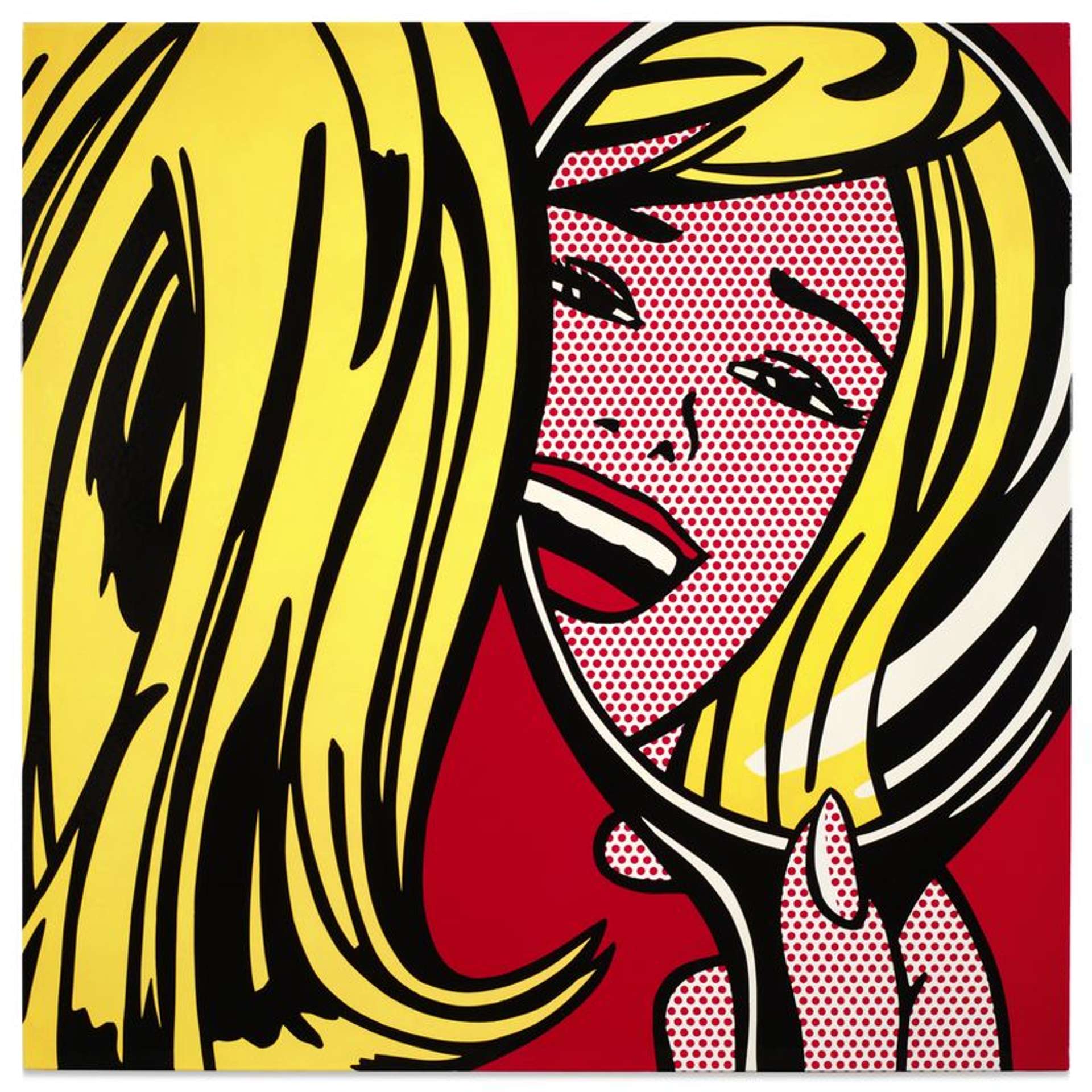
Roy Lichtenstein’s Girl in Mirror from 1964 was perhaps the clearest example of where the reality of the market diverged from the spectacle surrounding it. The work – an enamel-on-steel edition of just 10 – led Sotheby’s Contemporary Day Sale at $5 million hammer ($6.2 million with fees), selling directly at estimate.
On paper, this was exactly the kind of lot that should have generated dramatic momentum. The work sits within one of the most desirable categories of Lichtenstein’s edition market: rare, visually iconic, and deeply tied to the artist’s most recognisable Pop imagery. Combined with renewed institutional attention around Lichtenstein’s market, the conditions for a runaway result appeared to be there.
Instead, the bidding remained remarkably measured. Sotheby’s positioned the work conservatively relative to previous examples. In 2019, another Girl in Mirror sold for roughly £5.3 million with fees, while this exact example previously traded in 2012 for roughly £2.4 million. The category itself experienced its sharpest repricing phase more than a decade ago.
Anxious Girl at Christie's: $46 Million A Top Ten Entry
A similar dynamic quietly appeared in Christie’s 20th Century evening sale of Lichtenstein’s Anxious Girl from 1964, which achieved $46 million against a $40–60 million estimate in its first appearance at auction. Analysed aganist comparables, the result initially felt slightly restrained, particularly given the work’s presentation. Christie’s had installed the painting inside its own dedicated viewing room, emphasising both its theatricality and historical importance within one of the most pivotal years of Lichtenstein’s career. Yet despite the softer hammer relative to estimate, the work still entered the artist’s top ten highest auction prices – notably becoming the first Lichtenstein to break into that category since 2020. Christie’s had estimated the work more ambitiously than many of Lichtenstein’s top results achieved between 2011 and 2020, making the result all the more revealing of where the upper end of the market now sits.
Between billion-dollar evening totals, luxury-staged single-lot sales, guarantees, private clubs, and extended bidding theatrics, the season frequently projected the optics of a market pushing aggressively upward. The irony is that these sales, some of the rarest and most visually iconic Lichtenstein's, did something quieter: they reinforced established value.
Andy Warhol Endangered Species Trial Proofs Reach $4.5 Million at Christie's
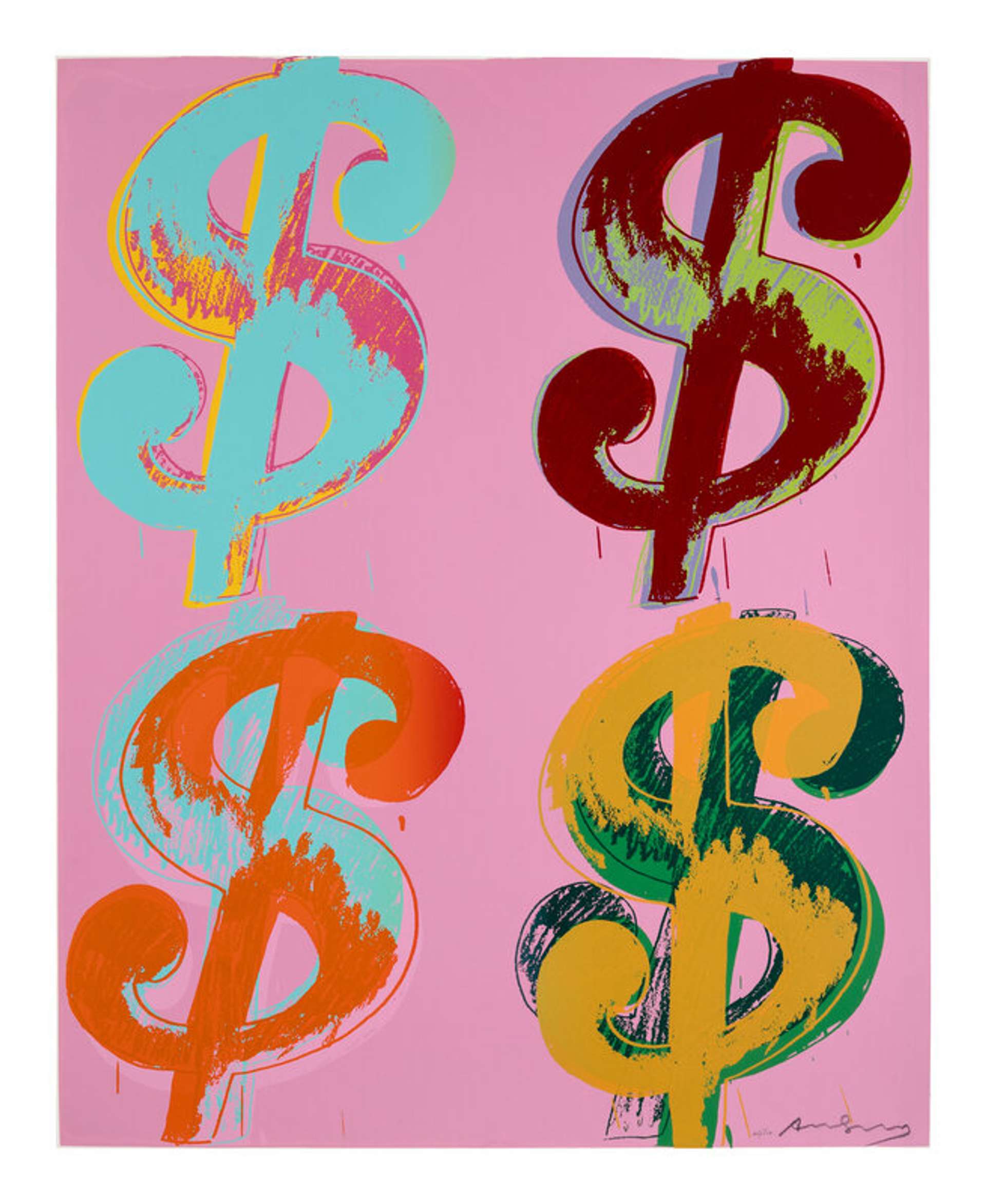
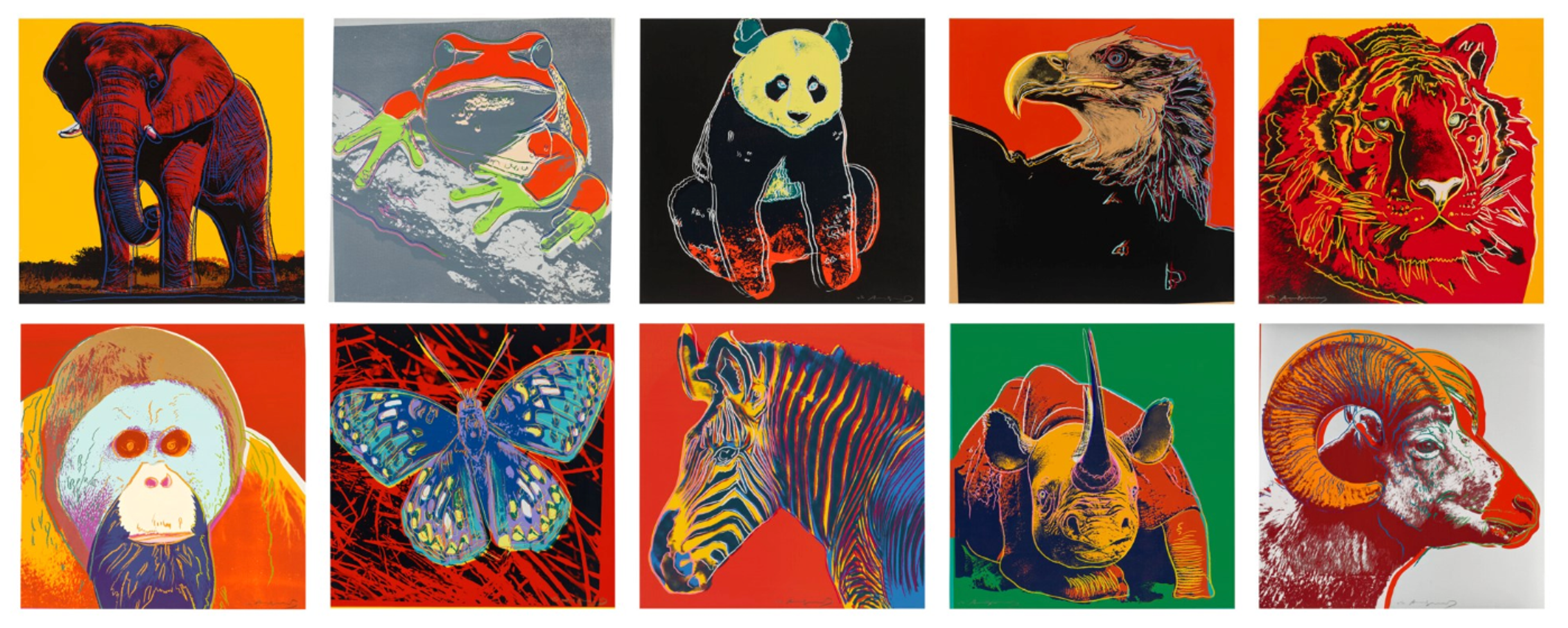
Andy Warhol presented a strong editioned performance in Christie’s Post-War & Contemporary Day Sale, where a complete trial proof set of Endangered Species achieved $4.5 million with fees against a $3–5 million estimate. The result narrowly surpassed the $4.3 million achieved for a standard edition set at Sotheby’s in November 2024. Both sales achieved the same $3.6 million hammer price, with the difference largely emerging through buyer’s premium structures, currency movement, and the additional rarity attached to the trial proof designation.
What made the set memorable was the colourway itself. The saturated reds, oranges, blacks, and acid tones gave the portfolio a darker, more aggressive visual identity than the standard edition – unmistakably singular and entirely in step with a week of emotionally charged palettes, from the black-and-red Rothkos of the Robert Mnuchin collection to Warhol’s almost radioactive green Bridgette Bardot (also at Sotheby's).
Ads Portfolio and the Evening-to-Edition Effect
The same confidence appeared in Warhol’s Ads portfolio (Sotheby's), which achieved $2.9 million with fees ($2.3 million hammer) against a $2–3 million estimate. Like Endangered Species, the result performed within a remarkably narrow margin of the category’s previous high, following the roughly $3 million result achieved in 2025 from a slightly stronger estimate range of $2–4 million. Again, the market was not radically repricing these portfolios upward. It was reaffirming already established value structures at the very top end of the edition market.
Warhol’s Details of Renaissance Paintings (Birth of Venus) series further reinforced the point. Christie’s evening sale canvas achieved $9.1 million with fees against a $5–7 million estimate, while an AP impression from the related print edition reached $241,300 only days later in the day sale. The print result itself was not a major repricing event – comparable trial proofs and artist’s proofs have consistently traded in the £230,000–325,000 range since 2019 – but the proximity of the two sales reinforced that strong evening-sale visibility increasingly strengthens confidence across the wider ecosystem surrounding a series.
I mention these results because they reveal where confidence currently sits within the upper end of the Warhol market – not in speculative leaps, but in the market’s willingness to repeatedly defend established pricing levels for the strongest material. For collectors, it gives clear evidence of where depth exists now: not just in Warhol’s name, but in the specific categories where scarcity and visual impact are working together.

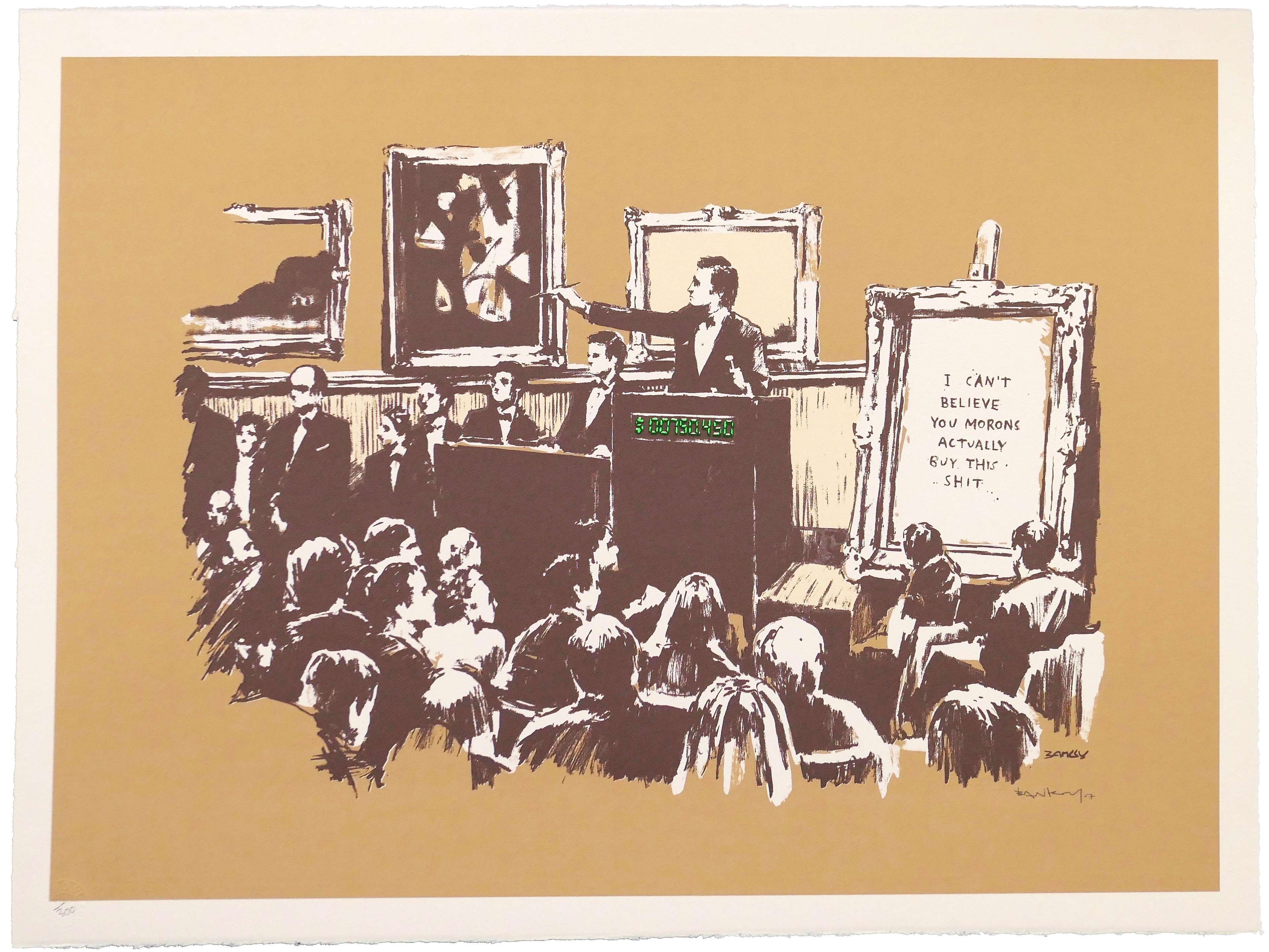
Banksy’s Girl With Balloon at Fair Warning: $18 Million Inside Tiffany & Co
While the major auction houses spent the week orchestrating theatre, Loïc Gouzer’s Fair Warning sale of Banksy’s Girl With Balloon On Found Landscape proved that the performance itself can now be part of the value proposition.
Staged inside Tiffany & Co.’s private tenth-floor club – an ultra-exclusive Peter Marino-designed space typically reserved for the jeweller’s top clients – the sale blurred the line between traditional auction and carefully choreographed luxury experience for Manhattan’s elite. The work ultimately sold for $18 million, sitting directly in line with the highest public auction prices ever achieved for Banksy.
The result however, was not without criticism. The estimate was widely viewed as ambitious relative to the broader Banksy market, particularly given the more selective conditions currently defining contemporary art sales. Yet, that was precisely what made the sale so interesting. Like much of the season itself, the result depended not simply on the object, but on the ecosystem constructed around it.
What the May 2026 New York Auctions Actually Reveal About Today’s Art Market
May’s auctions did not show a market returning to the liquidity-fuelled highs of 2021. They showed something more sober and arguably more important: buyers are participating, but they are doing so with sharper price memory.
Fresh supply performed. Major collections found buyers. Pop and editioned material remained highly liquid where image, provenance, rarity, and estimate aligned. The same selective confidence extended across other corners of the market too, from Basquiat portfolios to the quietly powerful repricing of surrealist women artists throughout the week. But the season also showed that buyers are no longer willing to underwrite every ambitious estimate simply because the name is blue chip.
The market is not back in the old sense. It is not euphoric or frictionless. But it is clearing – and in 2026, that may be the more meaningful signal.