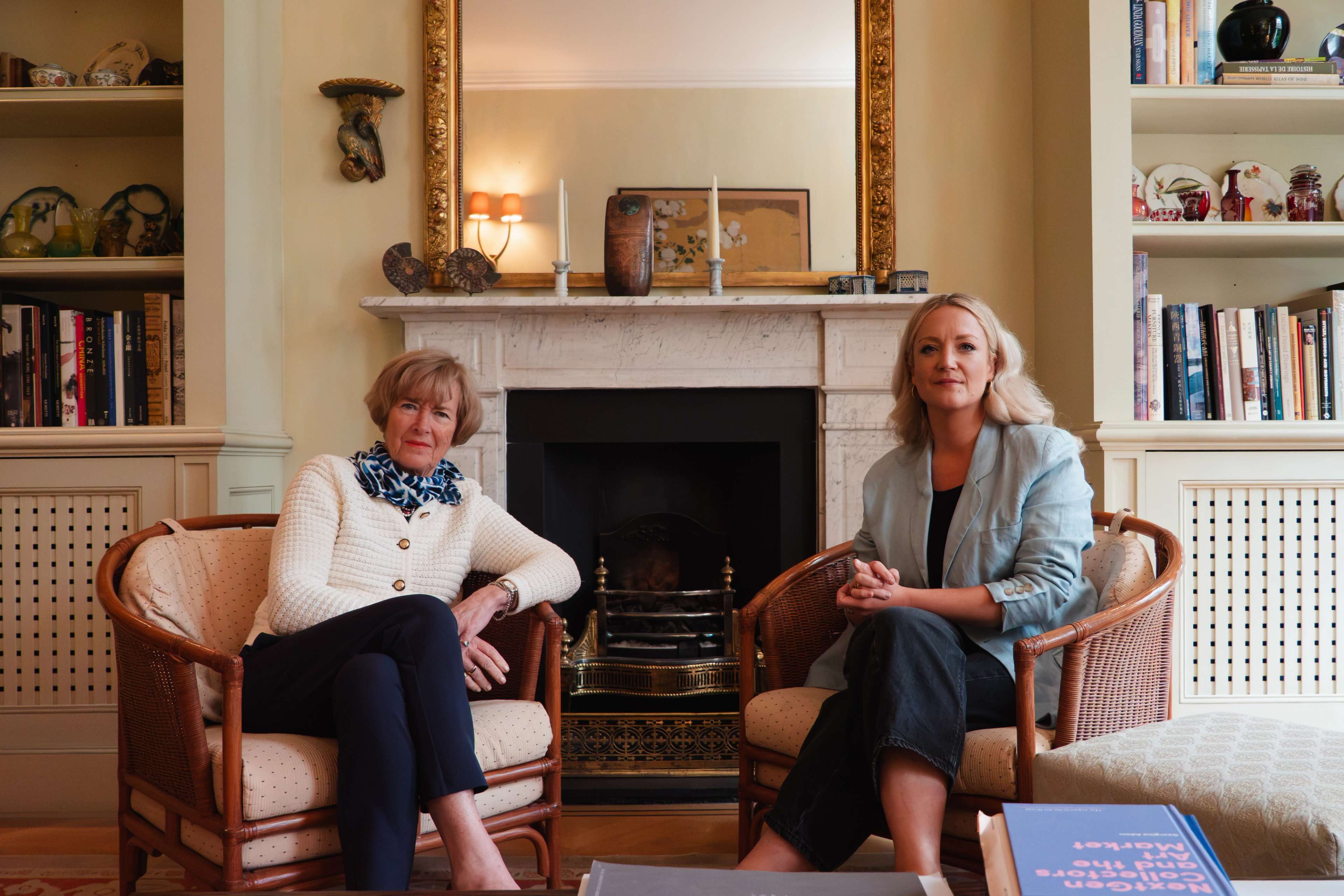
This month's No Reserve gave me the opportunity to sit down with someone I've wanted to interview for a very long time: Georgina Adam. As one of the art world's most respected journalists and authors, Georgina has spent more than three decades documenting the forces that have shaped the global art market. Through her long-running work at the Financial Times and a series of influential books including Big Bucks, Dark Side of the Boom, The Rise and Rise of the Private Art Museum and, most recently, NextGen Collectors and the Art Market, she has chronicled the people, politics, money and ambition behind some of the market's most defining moments. Few people have observed its evolution from such a privileged vantage point, and even fewer have managed to step back and make sense of it.
Perhaps that's why Georgina has become remarkably resistant to drama. She has lived through Japanese buying in the late eighties, the explosion of contemporary art, the financial crisis, the rise of private museums, the arrival of online sales, the NFT boom and the correction that followed. She has watched fortunes made, markets collapse and headlines proclaim the death of the art market more times than most of us can remember. When someone has spent that long observing the market, their value doesn't lie in predicting what comes next. It lies in recognising the patterns that most of us are too green to see.
Yet what struck me most, both from our conversation and from reading her books, is how little interest she has in making predictions. Georgina's writing has always felt different to me. So much art market non-fiction can become dense or overly academic, whereas her books read like gripping stories filled with extraordinary personalities, defining moments and dramatic shifts in power. They have all the pace of a great novel while remaining meticulously reported. Rather than trying to predict what comes next, Georgina watches patterns.
I think that's why I've always enjoyed her work. She doesn't mistake noise for change. She understands that the art market rarely transforms overnight. Instead, it shifts almost imperceptibly, one decision at a time, until eventually you look back and realise you're standing somewhere completely different.
Listening to her, I found myself wondering whether we've been asking the wrong questions. Over the past few years we've become preoccupied with whether the market is recovering, whether prices are rising or falling, and whether collectors are still buying. The more interesting question, I think, is not whether the market is healthy, but what kind of market we are becoming.
When Georgina published Big Bucks in 2014, she was documenting something many people inside the market could already feel but hadn't yet fully articulated. Art was no longer simply a cultural object. It had become part of a global wealth economy. Three years later, in Dark Side of the Boom, she explored the consequences of that transformation through freeports, guarantees, private museums, speculation and the increasing financialisation of collecting. Nearly a decade later, many of those same themes remain at the centre of the conversation. They have simply evolved.
One observation from our interview has stayed with me ever since. Georgina described auctions as "the visible face of the art market." It's such a simple phrase, but it perfectly captures something I've been thinking about for years. Visible isn't the same as complete.
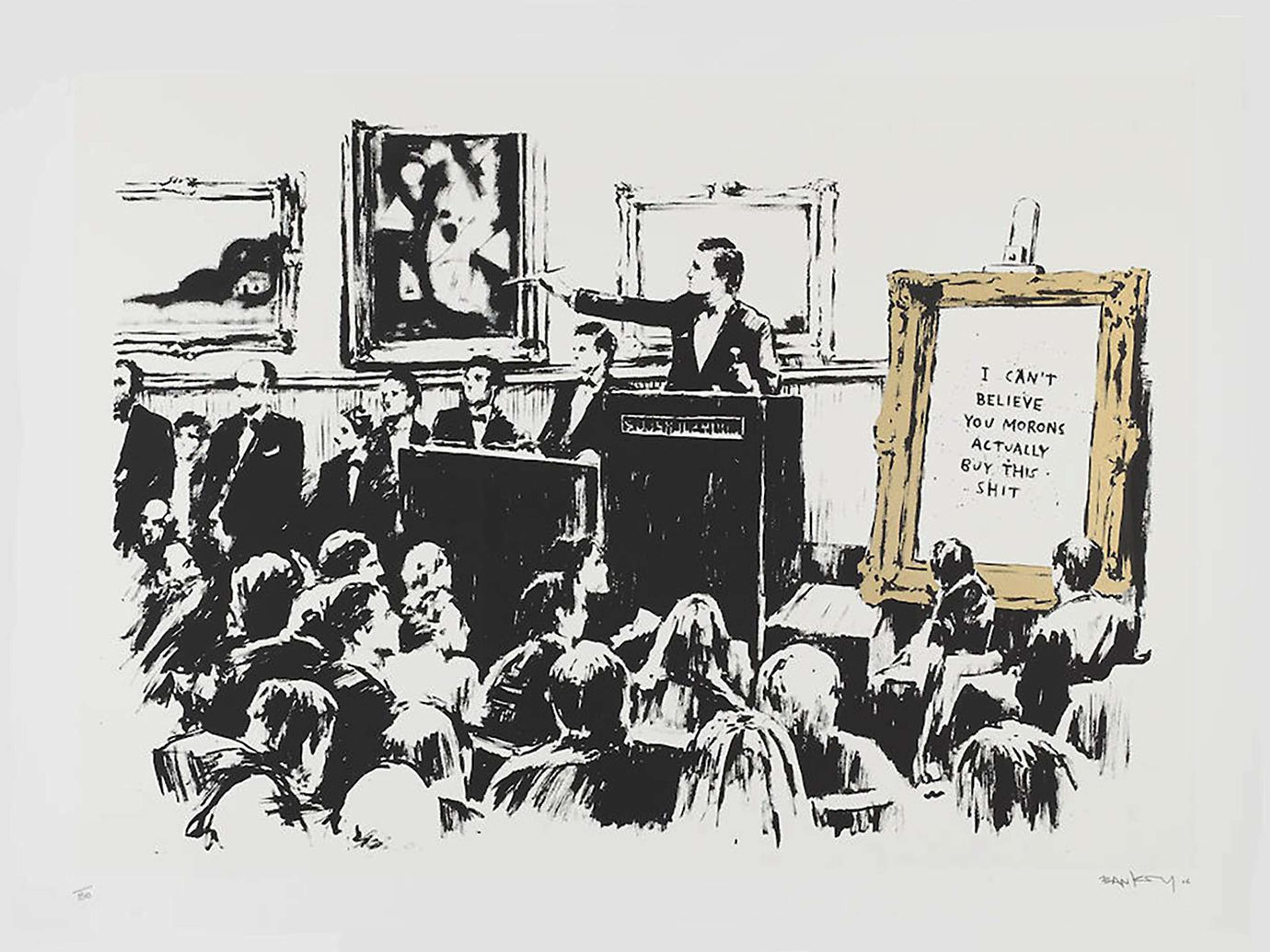
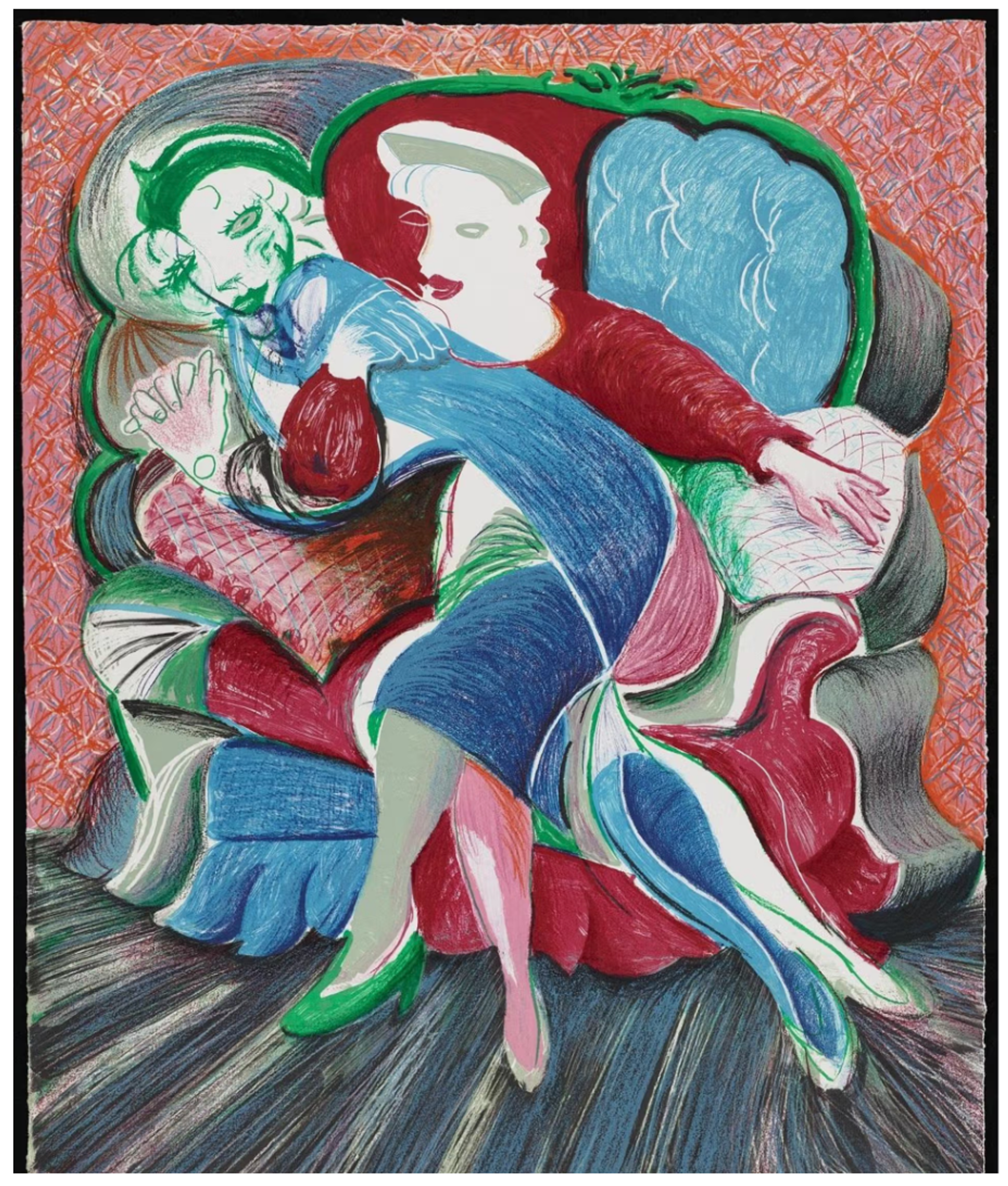
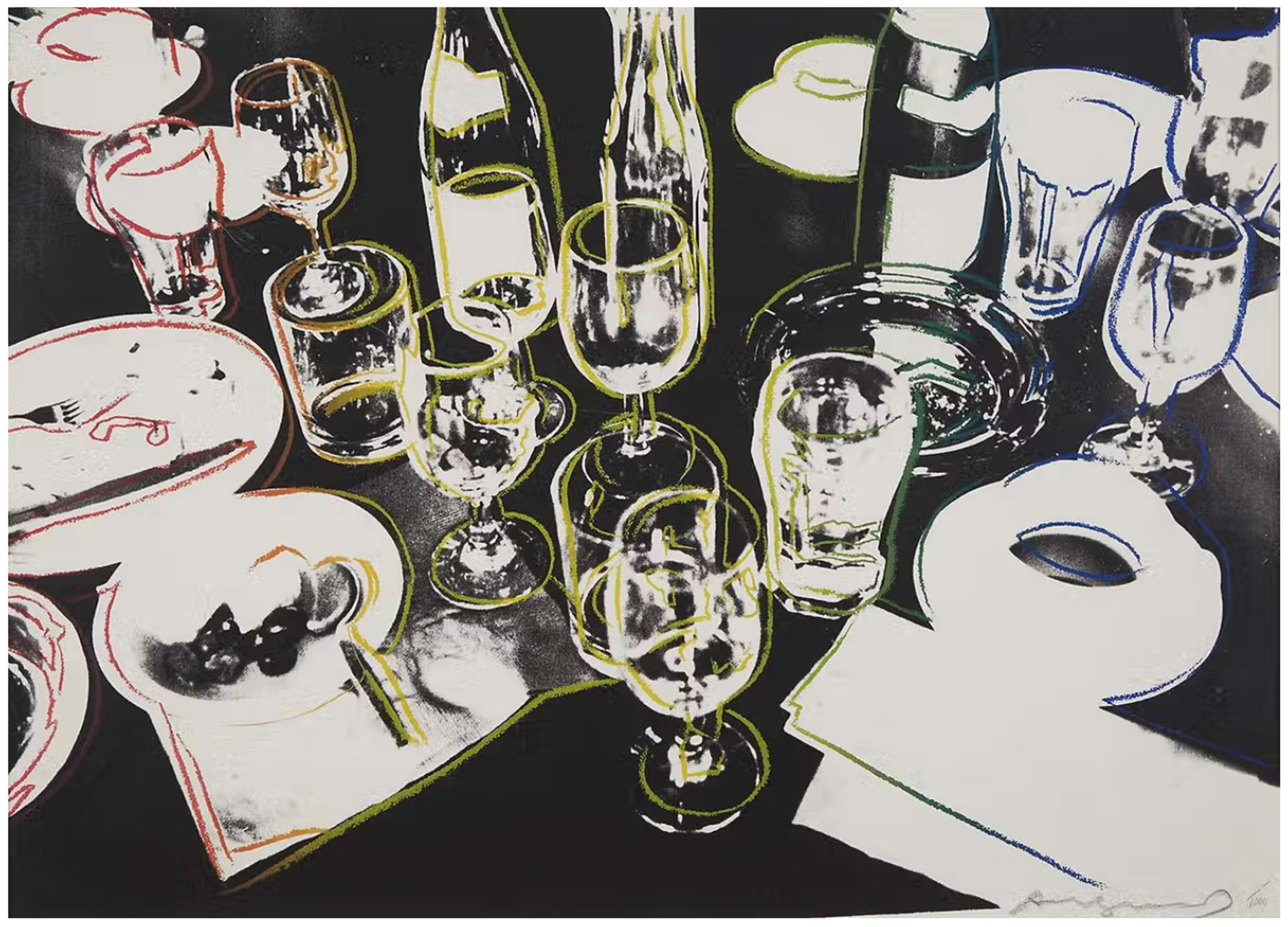
For decades, auctions were how we read the market. If you wanted to know whether Hockney was strengthening or Warhol was softening, you watched the evening sales. The hammer fell, the numbers were published and the market appeared to reveal itself. Those sales still matter enormously and remain some of the greatest theatre the art world has to offer. There is still nothing quite like sitting in a packed saleroom when two determined bidders decide they simply have to own the same work. Increasingly, though, they are only one part of the story.
Guarantees have transformed the way evening sales operate. Specialist advisers have become more influential. Private transactions have grown, online platforms have matured and independent brokers, niche dealers and digital marketplaces now occupy space that barely existed when Georgina began reporting. The market hasn't disappeared behind closed doors, but it has become far more fragmented and therefore much harder to read.
I found myself smiling when Georgina spoke about younger collectors because this is where she seems genuinely optimistic. She remembers a time when art wasn't mainstream, when magazines rarely devoted issues to it and contemporary artists weren't household names. Today someone who has never stepped inside an auction house will almost certainly know Banksy or Damien Hirst, and may well discover an artist on Instagram long before they visit a gallery.
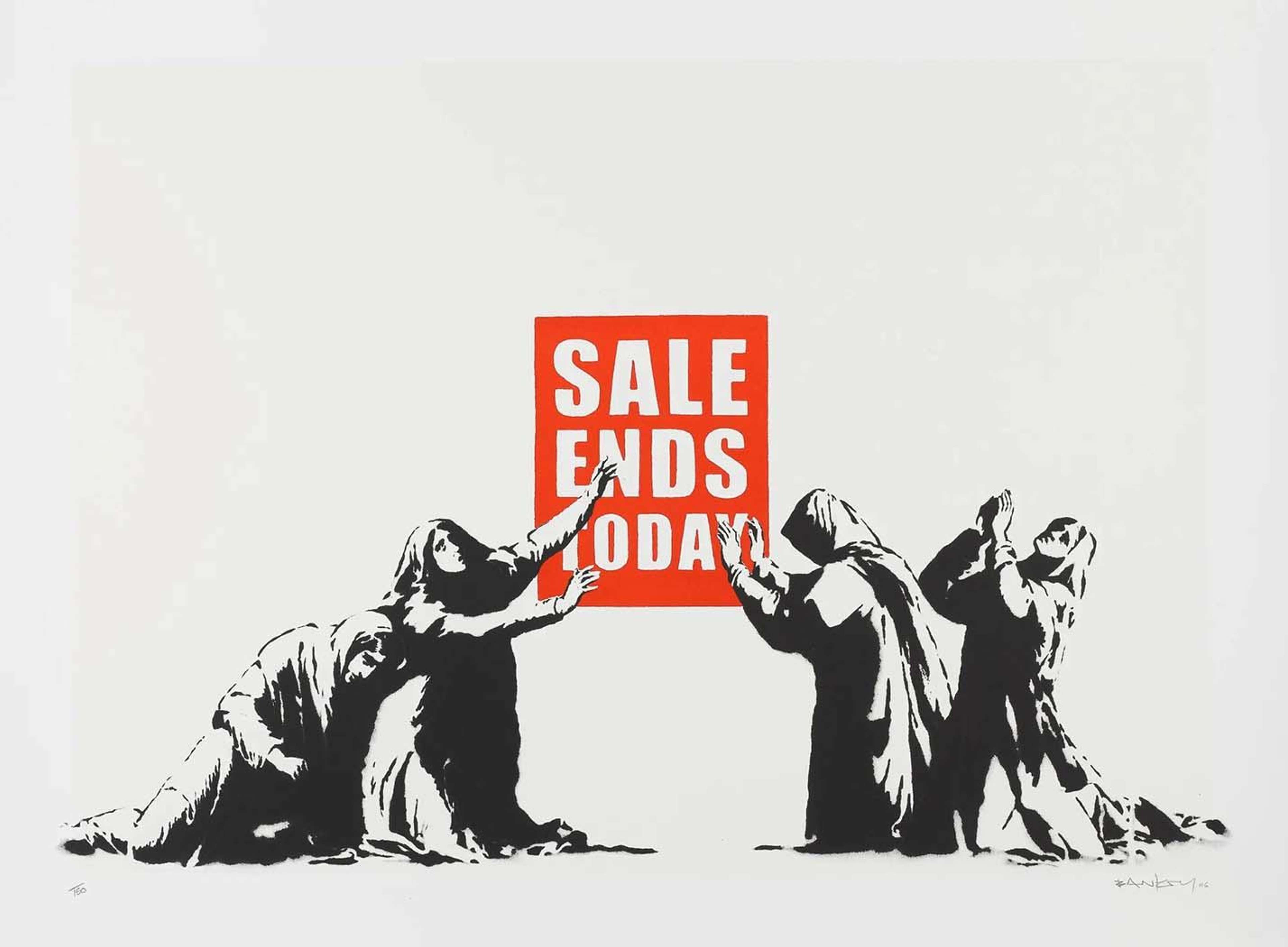
That democratisation is easy to dismiss if you focus only on the headlines around speculation, but I think it's one of the healthiest developments we've seen. It's also the central theme of Georgina's latest book, NextGen Collectors and the Art Market, which explores how a new generation is approaching collecting in very different ways.
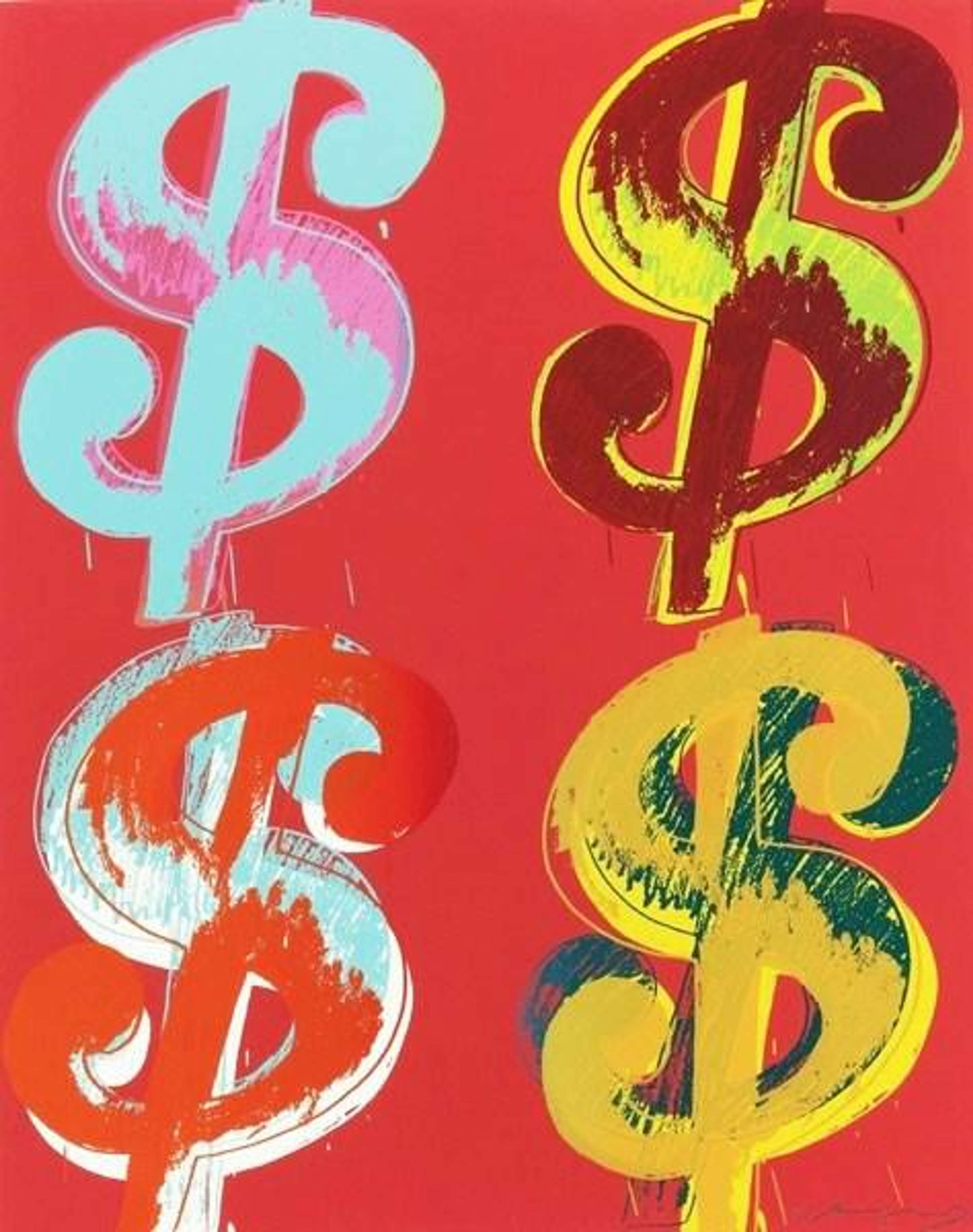
The editions market has demonstrated this for years. Collectors rarely begin with a £2 million painting. They begin with an image they connect with, a print they can afford or a work they simply want to live alongside. The relationship with the artwork comes first. The investment conversation usually follows later.
That brings me to the one place where Georgina and I perhaps see things slightly differently. She worries that art has become too much of a commodity, and I completely understand why. The language surrounding collecting has undoubtedly changed. Art is increasingly discussed alongside property, equities and alternative assets. Fractional ownership promises access to masterpieces, while luxury brands borrow the authority of artists and artists, in turn, increasingly borrow the language and machinery of luxury.
It's easy to understand why someone who has spent 30 years documenting the cultural importance of art would worry about where that leads. I do, however, think collectors deserve good information. Knowing what your artwork is worth doesn't diminish your relationship with it any more than knowing the value of your home changes what happens around the kitchen table. Understanding markets isn't the enemy of collecting. Reducing art to nothing more than an investment probably is.
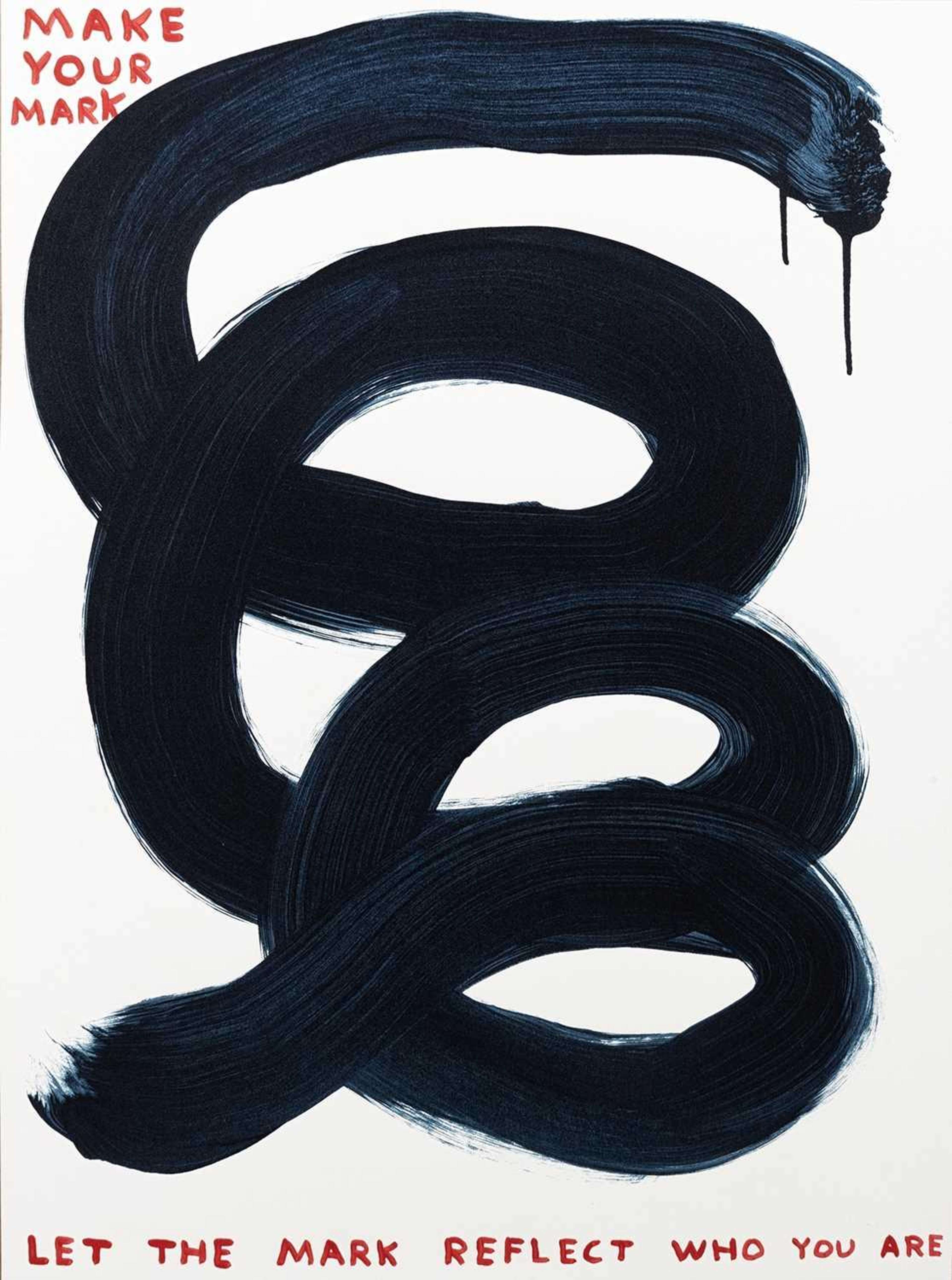
For me, there remains an important distinction between treating art as an asset and treating it as an asset class. One recognises that a work of art has financial value alongside its cultural value. The other risks forgetting why the work mattered in the first place.
Perhaps that's why expertise feels more valuable today than at any point I can remember. We have more data than ever before, more auction results, more dashboards, more indices and more commentary. Yet understanding the market has arguably become harder, not easier. Condition still matters. Provenance still matters. Supply still matters. Private demand still matters. Above all, human judgement still matters. Algorithms can tell us what happened yesterday, but they still struggle to explain why tomorrow might look different.
By the end of our conversation, I realised Georgina had never really answered my question about what comes next for the art market. Or perhaps she had, just not in the way I expected. Her view seems to be that the future rarely arrives as one dramatic event. It reveals itself quietly, patiently and one shift at a time. We usually only recognise that a chapter has ended once we've already started the next one.
That may not feel like the most satisfying prediction, but perhaps that's because Georgina has never seen prediction as her role. She told me that she has never really thought of what she's done as a career at all. Instead, she has simply wanted to spend her life documenting her time. When you think about it, that's a rather wonderful ambition, and one that has left the rest of us with a far better understanding of how the art market became what it is today.