
Key Takeaways
Keith Haring's print market divides into works that trade regularly and works that rarely come to auction. Pop Shop forms the core of regular trading, available across multiple formats and images. Rarer portfolios, special proofs, sculptural editions and select Untitled prints, where value is often tied to year of creation, sit in a much scarcer tier. Understanding where your work sits within that structure is central to achieving the strongest result.
Is Now a Good Time To Sell A Keith Haring Print?
Haring's print market has become increasingly selective over the past five years. Total auction sales value peaked in 2022–23 before cooling through 2024–25. In 2026, individual prints made $3.20 million (£2.38 million) between January and October, the highest for the period in a decade, but from only 74 sales, the lowest volume since 2017. Most of that increase came from seven prints hammering above $100,000. When the same prints returned to auction, they sold for a median of just 3% more than their recent results, so the stronger total reflects the rarer works that came to market rather than a broad rise in prices.
The current market is also notable for the range of works coming to auction. Complete portfolios, trial and artist's proofs, sculptural Dog editions, ceramics, tapestries and lower-edition prints have all appeared alongside more regularly traded works. Complete portfolios have become scarcer still. Only three sold at auction to the end of October 2026, the fewest in a decade. Buyers are rewarding rarity, condition and provenance rather than bidding up prices across the board. For sellers, understanding where a work sits within this hierarchy has become more important than simply choosing when to sell.
What Is Driving Value in Keith Haring's Market?
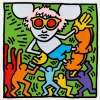
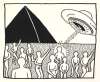
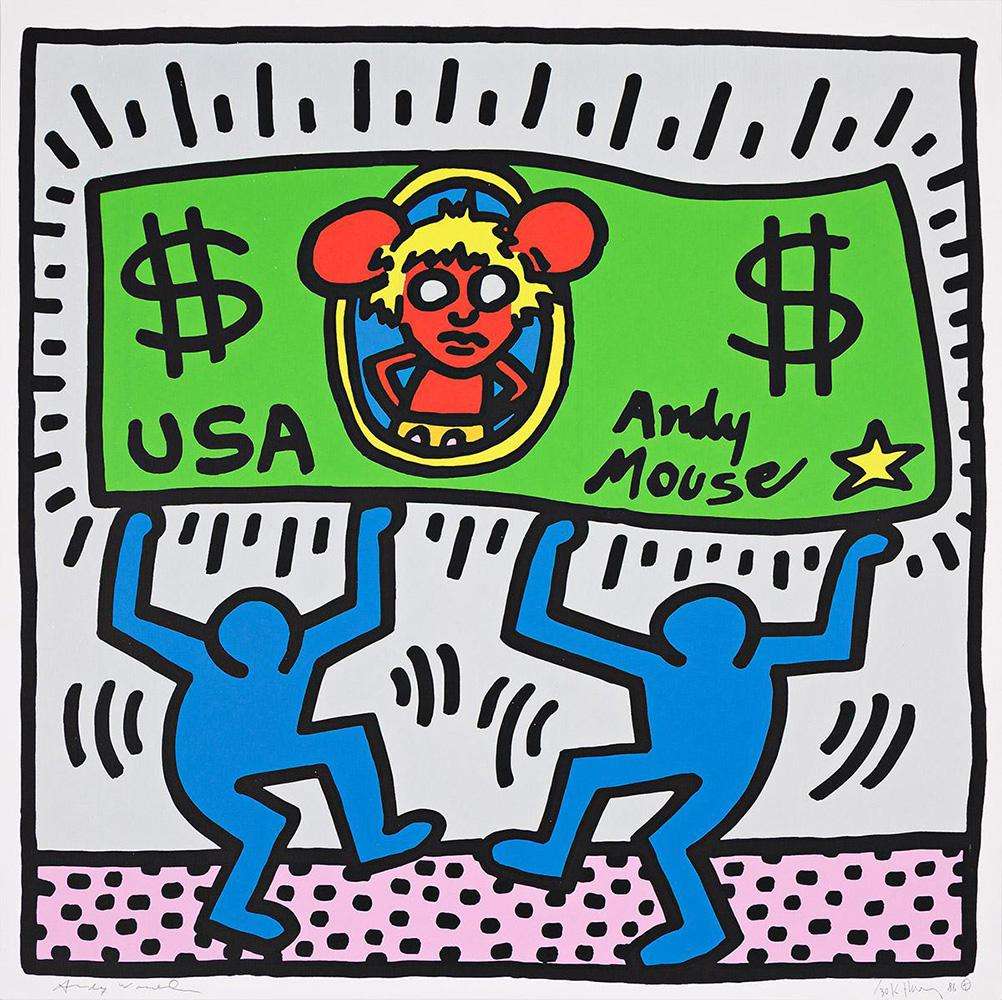
The strongest results in 2026 came from Andy Mouse, rare impressions and works with artist-connected provenance. Five Andy Mouse prints, issued in editions of 30 and signed by both Haring and Warhol, sold at auction this year, led by an artist's proof (AP) of Andy Mouse 4 at $280,000 (£206,354). Provenance shaped complete-set results too. A proof set of The Blueprint Drawings from the collection of Haring's childhood friend Kermit Oswald hammered at $380,000 (£285,134) in 2026, while four sets from Tony Shafrazi's collection made $1.15 million (£867,481) in 2025.
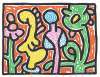
Growing had its busiest year at auction in a decade in 2026, with 12 sales to the end of October. Prices for each image remain around 30% below their 2022–23 peak, but the higher volume gives owners the clearest pricing evidence for the series in years.
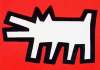
Sculptural Dog editions, produced in editions of approximately 10–15 per colour, have occupied the upper tier when they appear, particularly special proofs. A black Dog cut-out hammered at $320,000 (£241,386) at Sotheby's New York in May 2025.
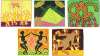
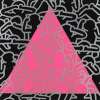
Thematic works such as Silence Equals Death, along with the Fertility Suite and Flowers portfolios, continue to draw steady interest because of their direct connection to Haring's activism. They are not always the highest priced, but they hold buyer attention across cycles. Silence Equals Death has hammered between $40,000 (£29,915) and $73,074 (£55,000) at auction since 2023.
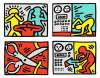
Pop Shop is the most regularly traded part of Haring's market, with 128 individual plates sold at auction since 2021, across individual prints, quads, complete sets and estate-stamped impressions. When each image is compared with its own earlier results, Pop Shop prices have held broadly level since 2024, and signed plates have sold at a median of between $22,310 and $24,000 (£16,681–£18,857) each year. Discover the confidence scoring of Haring's most sought-after works in our Collections Report 2026, and the full 2026 picture in the Keith Haring Report 2026.
How Much Is My Keith Haring Print Worth?
Pricing in Haring's market depends on where a specific work sits within its edition structure and the current supply of comparable works.
Low-edition works sit in the scarcest tier. Complete sets are relatively rare, and when they do appear, competition can be concentrated. Scarce individual prints can also rival complete portfolios at the top of the market, particularly exceptional examples from sought-after series such as Andy Mouse.
Individual works can also achieve strong results, particularly lower-edition Untitled prints, where value is often tied closely to year of creation. Early works linked to key moments in Haring's practice tend to anchor pricing more firmly than later material.
Larger-edition portfolios and Pop Shop works trade within more defined ranges. These works benefit from clear comparable results, but performance is shaped by timing, condition and configuration rather than rarity alone.
Results can also vary for the same image. The three Andy Mouse 3 prints sold in 2026 ranged from $160,000 (£120,056) to $200,518 (£149,568), with the auction house, the region and the impression all playing a part. For Pop Shop, signature is the clearest dividing line. Signed plates from Pop Shop I to IV have sold at a median of $24,000 (£18,395) since 2021, against around $13,600 (£10,157) for the unsigned plates from Pop Shop V and VI, which carry the estate stamp.
Value in Haring's market is tiered rather than uniform. Correctly positioning a work within its edition group, configuration and the current supply of comparable works shapes its price more than subject alone.
How to Prove Your Keith Haring Print Is Real Before Selling
Authentication in Haring’s market rests on documentation, publication history, and catalogue confirmation rather than foundation-issued certificates.
Keith Haring Foundation Authentication
The Keith Haring Foundation no longer provides authentication services. Its role is focused on preservation, scholarship and legacy management. As a result, sellers must rely on recognised reference material and verifiable provenance when preparing a work for market.
Keith Haring Catalogue Raisonné and Provenance Documentation
The primary reference for editioned works is Keith Haring: Editions on Paper 1982–1990 by Klaus Littmann, the catalogue raisonné covering Haring's authorised print output. Confirming edition number, size, publisher and signature format against this publication is essential before resale.
Forgery remains an ongoing issue in Haring's market. His continuous line and bold iconography have been widely imitated, and falsely signed impressions do circulate. Because the visual language appears deceptively simple, clean linework alone does not establish authenticity. Discrepancies in numbering, paper type, ink saturation or signature format can significantly affect value.
Documentation from recognised publishers and galleries, including Tony Shafrazi, Leo Castelli and Michael Kohn, strengthens a work's position before sale. Likewise, establishing catalogue alignment and clear provenance before going to market reduces delays during due diligence and protects the price.
How to Conserve Your Keith Haring Print to Retain Value
Haring's saturated, flat colour blocks and continuous black linework make fading, abrasion and surface disruption immediately apparent. Even minor light damage can dull reds, yellows and blues and reduce resale appeal.
UV-protective glazing and avoiding direct sunlight are essential. Unlike more textural printmakers, Haring's works offer little visual forgiveness, and colour loss is immediately visible to buyers.
Full margins are critical. Trimming to fit a frame significantly reduces value, particularly where signature, numbering or publisher details sit close to the edge.
Many Haring prints were produced on wove papers that can show foxing, staining or acid burn over time. Early framing materials are a common issue, and adhesive residue or backing-board staining on the reverse can affect desirability.
Restoration should only be undertaken with professional advice and full documentation. Over-cleaning, aggressive flattening or undocumented repair can reduce buyer confidence more than minor age-related wear.
Well-preserved colour, intact margins and a clean reverse remain the strongest signs of care.
Where Can I Sell My Keith Haring Print In 2026?
The right route to market depends on edition structure and how often comparable works come up for sale.
Auction or Private Sale, Weighing Risk and Control
Auction can create competition between buyers, including for Haring’s highest-value prints and complete portfolios. Recent comparable results help inform estimates, but sellers should also consider competing supply, fees and fixed sale dates. An unsold lot or a result below estimate becomes part of the public auction record.
Private sale offers greater control over pricing, timing and who is approached, whether you are selling a Pop Shop print, an Andy Mouse or a rare proof. A specialist can introduce the work to relevant collectors and negotiate an agreed price before you commit to the sale. Finding a buyer may take time, but there is no public auction deadline or estimate.
The right route depends on current demand, your preferred timeline and the amount you would receive after fees. A specialist can help weigh the potential benefits of competitive bidding against the control of a private sale.
Why Sell Your Keith Haring Print with MyArtBroker
Instant Valuation and Specialist Advice
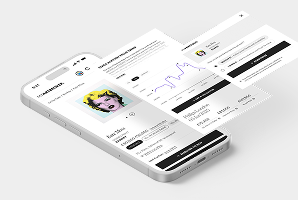
Start with an Instant Valuation for an initial indication of your Haring print’s value. Our specialists then assess its condition, edition type and ownership history, comparing private sale prices with public auction results to establish a fair market valuation.
Transparent Market Research
Transparency is central to our approach. Our market reports explain the trends behind the headlines, helping you understand what recent results mean for your work. We will be honest about its value, current demand and realistic selling prospects, including where the evidence is limited.
0% Seller’s Fees
Our private sale service charges no seller commission. You agree the amount you will receive before proceeding, giving you complete clarity over your net return.
Collection Management and a Global Buyer Network
Manage your collection through MyPortfolio, our collection management platform, and explore buying and selling opportunities through our live Trading Floor. Our specialists connect your work with a global network of trusted buyers, identify relevant demand and negotiate a sale on your behalf.
Advice on the Right Route to Sale
Private sale is not always the best option for every print. If we believe your Haring could perform better at auction, we will explain why and can arrange its consignment through our auction-house partners. Our advice considers the likely outcome, timing and fees, so you can make an informed choice about where to sell.