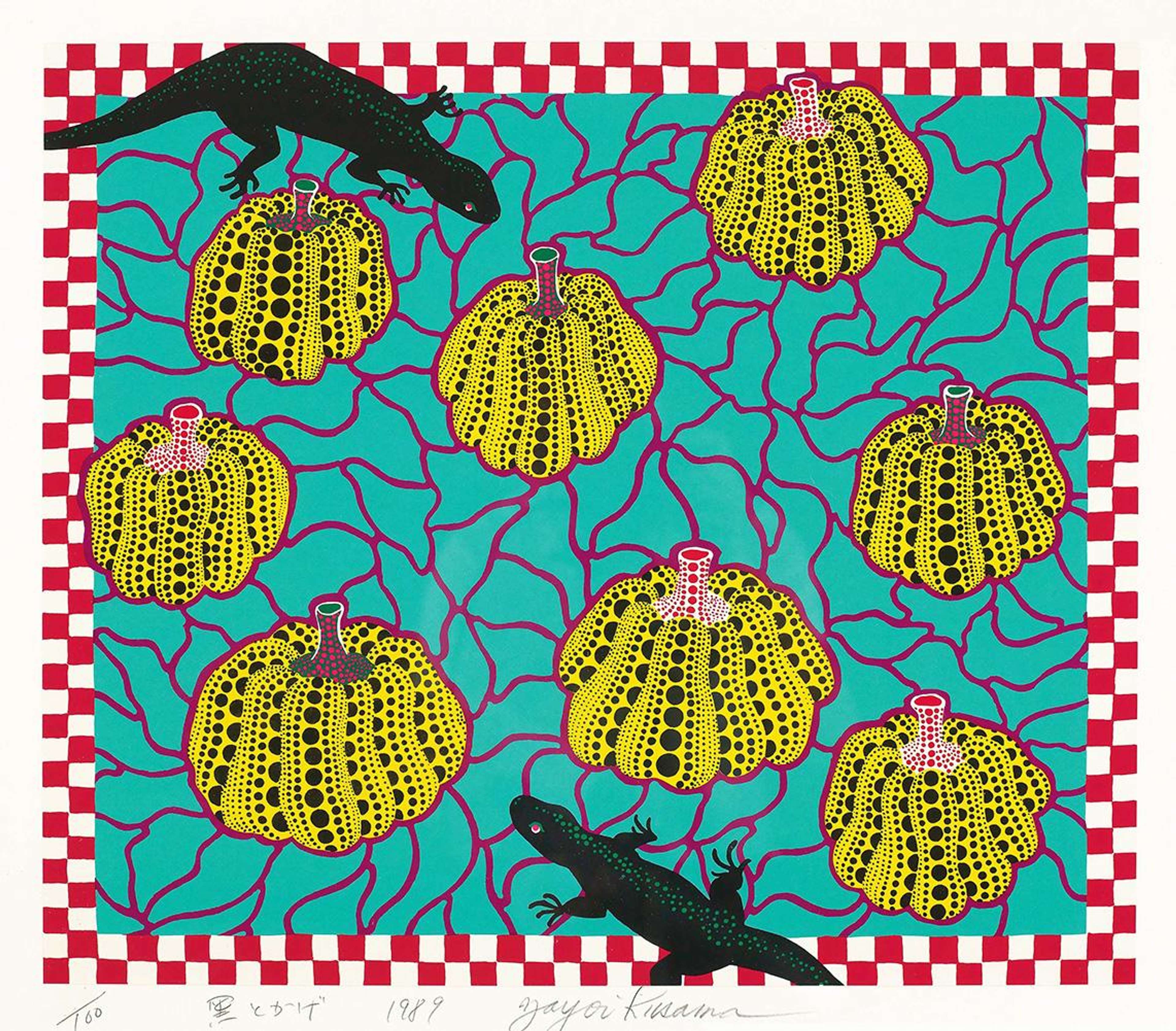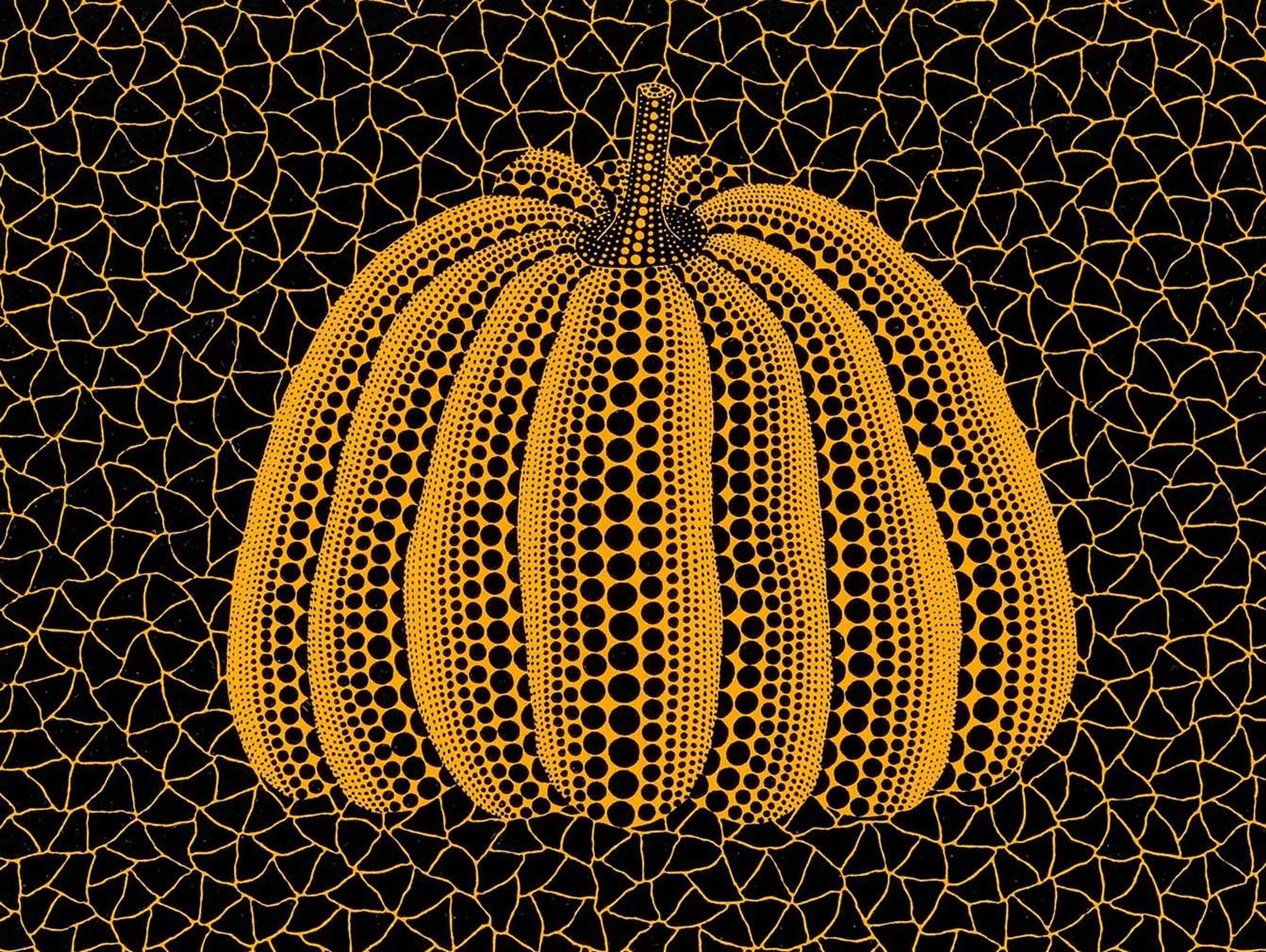

Les éditions de Yayoi Kusama permettent d'accéder à bon nombre des images qui ont marqué sa carrière, des « Pumpkins » et « Infinity Nets » aux fleurs, fruits, vagues et au mont Fuji. Les prix s'échelonnent de quelques milliers de livres sterling pour les œuvres les plus accessibles à des montants approchant les 100 000 livres sterling pour certaines estampes individuelles, tandis que des portefeuilles complets et rares peuvent dépasser les 200 000 livres sterling.
Il s'agit également d'un marché au sein duquel des œuvres très similaires peuvent se négocier à des niveaux de prix disparates. Un même motif est décliné à travers différentes dates, palettes de couleurs, dimensions et structures d'édition, tandis que des affiches et des produits dérivés sous licence peuvent être confondus avec des estampes de collection dans les annonces en ligne.
Suite au décès de Kusama en août 2026, les acheteurs doivent s'attendre à un regain d'intérêt et potentiellement à une arrivée plus importante d'œuvres sur le marché. Si cela peut créer des opportunités, une identification précise, ainsi qu'une attention particulière portée à l'état, à la provenance et au coût total d'acquisition, s'avèrent indispensables.
Quel est le prix d'une estampe de Yayoi Kusama ?
Sur le segment le plus accessible, les œuvres fréquemment échangées telles que « Nets Infinity » ont récemment atteint des prix marteau compris entre environ 5 000 et 10 500 livres sterling. Les éditions figuratives, notamment les fleurs, les fruits et les chaussures, se négocient couramment dans une fourchette allant de 10 000 à 50 000 livres sterling environ.
Certaines « Pumpkins » atteignent des niveaux nettement plus élevés. Des éditions régulièrement échangées, comme « Pumpkin (Yellow Y) » et « Pumpkin 2 », ont enregistré des prix marteau allant d'environ 35 000 à 65 000 livres sterling depuis 2024, tandis que « Shanghai Pumpkin » a atteint 94 321 livres sterling en décembre 2025. Les œuvres individuelles de la série « Mount Fuji » se sont généralement vendues dans une fourchette basse à moyenne de 10 000 à 50 000 livres sterling.
En 2024, 256 estampes et ensembles de Kusama ont généré 5,77 millions de livres sterling au marteau. Ce montant a reculé à 4,91 millions de livres sterling pour 240 ventes en 2025. Au cours de l'année 2026, jusqu'à fin août, 130 ventes ont totalisé 3,30 millions de livres sterling.
Le prix marteau moyen est passé d'environ 20 440 livres sterling en 2025 à 25 365 livres sterling en 2026. Cela ne signifie pas pour autant que la valeur de chaque estampe de Kusama a progressé. Moins d'œuvres ont été vendues et le total de 2026 inclut un portefeuille complet majeur ; les acquéreurs doivent donc privilégier le marché spécifique à chaque édition plutôt que la moyenne annuelle.
Quelles sont les estampes de Yayoi Kusama les plus recherchées ?
La mesure la plus pertinente de la demande ne repose pas uniquement sur les résultats les plus élevés. Les ventes répétées permettent de déterminer si une édition suscite l'intérêt des acquéreurs à travers différentes ventes aux enchères et diverses conjonctures de marché.
Entre janvier 2024 et août 2026, trois éditions se sont distinguées par leur fréquence de passage en vente et une demande établie.
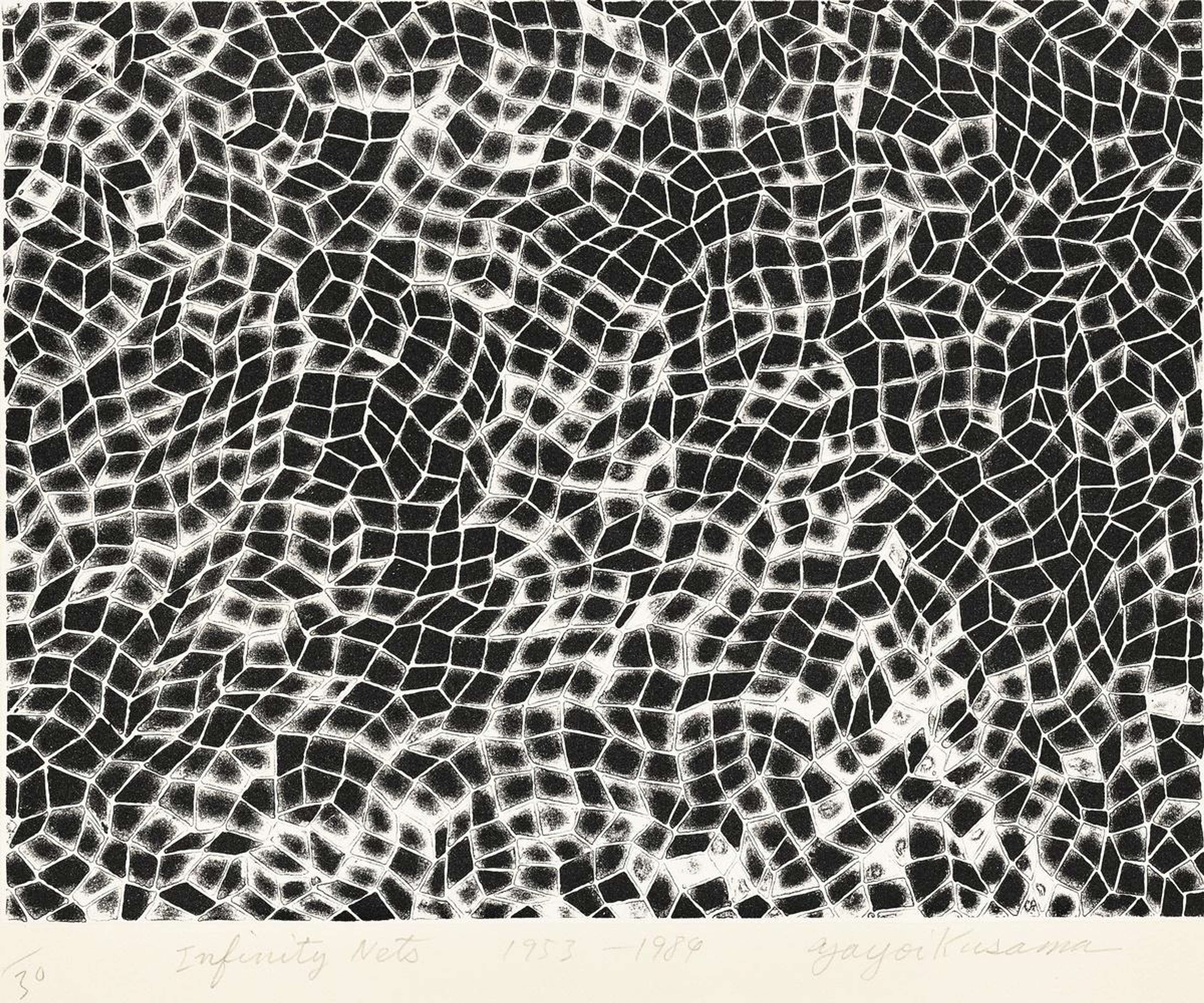
Yayoi Kusama, Nets Infinity
Nets Infinity a été l'estampe de Kusama la plus fréquemment échangée au cours de cette période, apparaissant à dix reprises aux enchères. Les prix marteau se sont échelonnés d'environ 5 100 à 10 500 livres sterling.
Cette édition offre une porte d'entrée comparativement accessible à l'imagerie associée aux peintures Infinity Net de Kusama. Sa fréquence aux enchères fournit aux acquéreurs un corpus substantiel de données de prix et davantage d'opportunités de comparer l'état de conservation entre les différentes estampes.
Cette disponibilité limite toutefois la rareté. Les acheteurs ne sont pas contraints de considérer chaque apparition comme une opportunité unique et peuvent faire preuve de sélectivité concernant l'état et le prix.
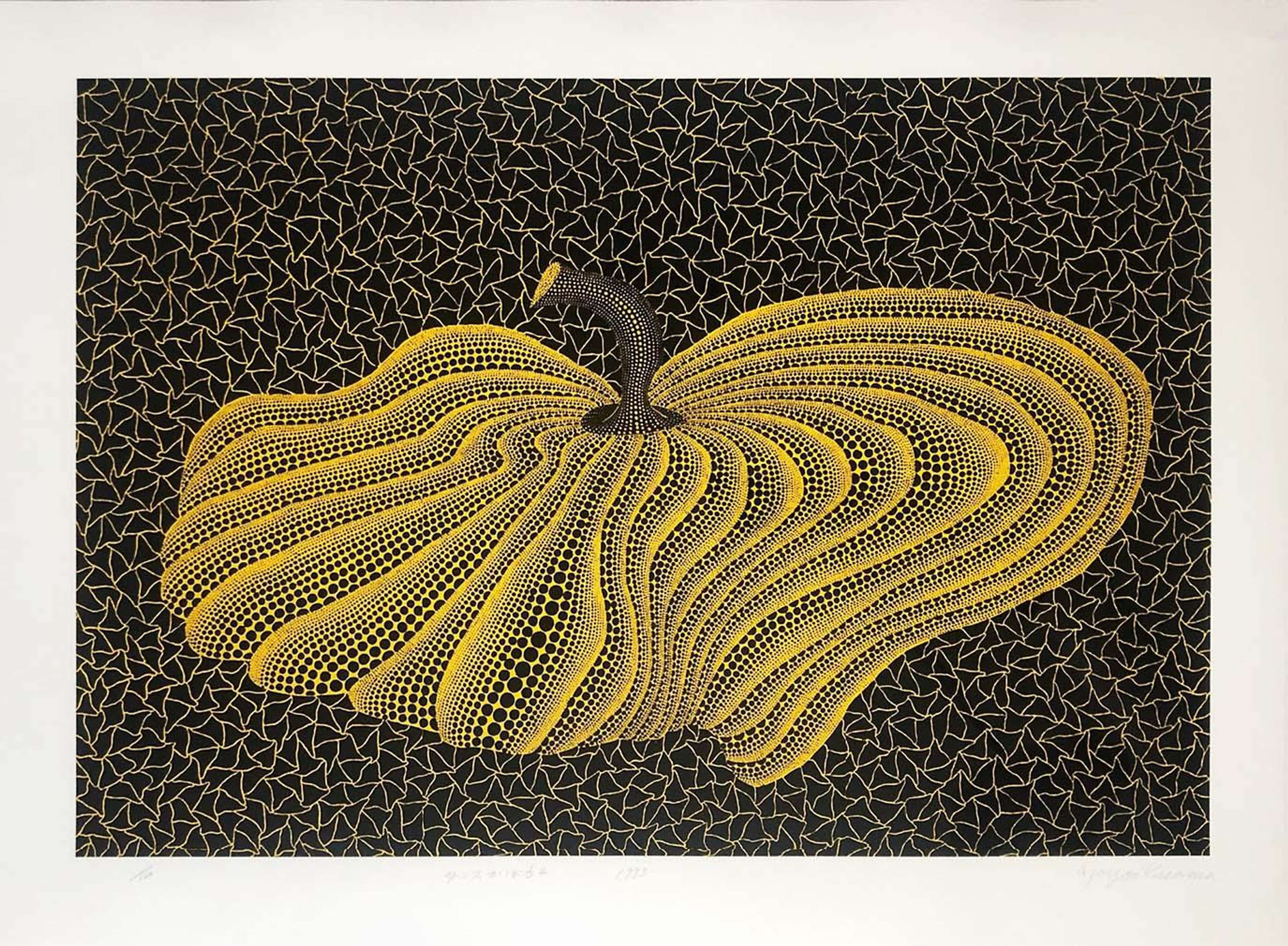
Yayoi Kusama, Pumpkin (Yellow Y)
Pumpkin (Yellow Y) est apparue neuf fois entre janvier 2024 et août 2026, avec des prix marteau oscillant approximativement entre 39 000 et 64 500 livres sterling. Sa dernière vente enregistrée a atteint 61 375 livres sterling en juin 2026.
L'œuvre associe le sujet le plus reconnaissable de Kusama à la palette jaune et noire étroitement liée à ses installations et sculptures Pumpkin. Elle a démontré une demande à un niveau de prix sensiblement plus élevé que beaucoup d'autres éditions de l'artiste.
L'éventail des prix souligne également pourquoi les acheteurs doivent examiner chaque estampe en particulier. La maison de vente, l'état de conservation, la provenance et l'offre concurrente peuvent engendrer des variations substantielles pour une même édition.
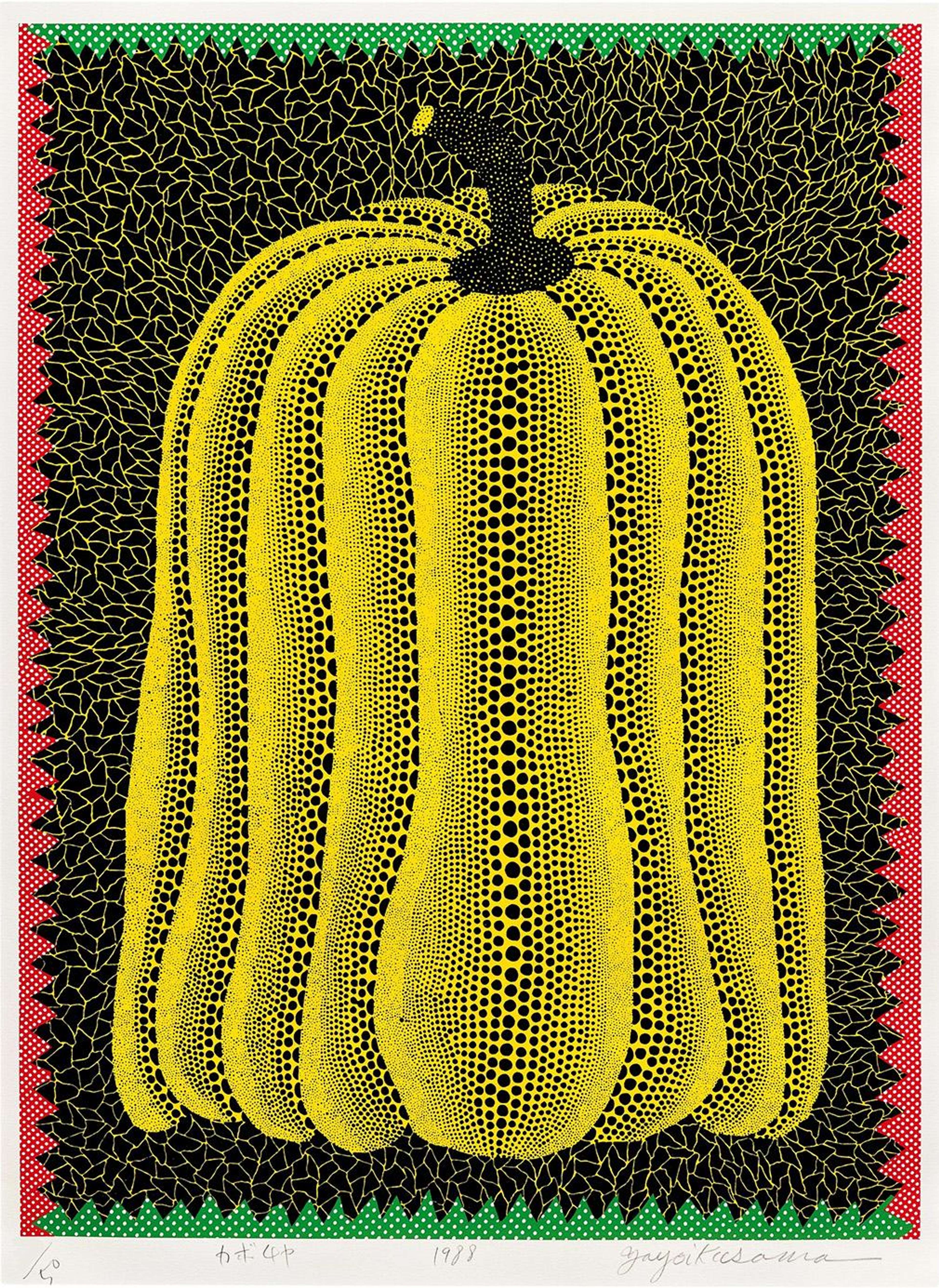
Yayoi Kusama, Pumpkin 2
Pumpkin 2 a enregistré huit ventes aux enchères entre janvier 2024 et août 2026, avec des prix marteau s'échelonnant approximativement de 35 000 à 53 500 livres sterling. Produite en 1990 à 150 exemplaires, elle combine l'un des sujets les plus identifiables de Kusama avec un historique de ventes récentes bien établi.
Cette profondeur de marché offre aux acquéreurs une base utile pour évaluer un prix de vente. L'œuvre est régulièrement échangée sans pour autant être aussi largement disponible que les éditions les plus accessibles de Kusama, ce qui la place parmi les segments les plus consolidés de son marché dédié aux Pumpkin.
Quelle est la première estampe de Yayoi Kusama que je devrais acquérir ?
Un premier achat d’une œuvre de Kusama ne nécessite pas nécessairement d’acquérir l’un de ses « Pumpkins » les plus onéreux. Le marché de ses éditions propose des œuvres établies couvrant divers sujets et niveaux de prix.
Les estampes « Infinity Net » constituent un point de départ logique pour les collectionneurs s'intéressant à la pratique abstraite de Kusama. Elles s'inscrivent directement dans l'un de ses corpus les plus importants et demeurent, en règle générale, plus accessibles que certaines éditions « Pumpkin » ou « Mount Fuji ».
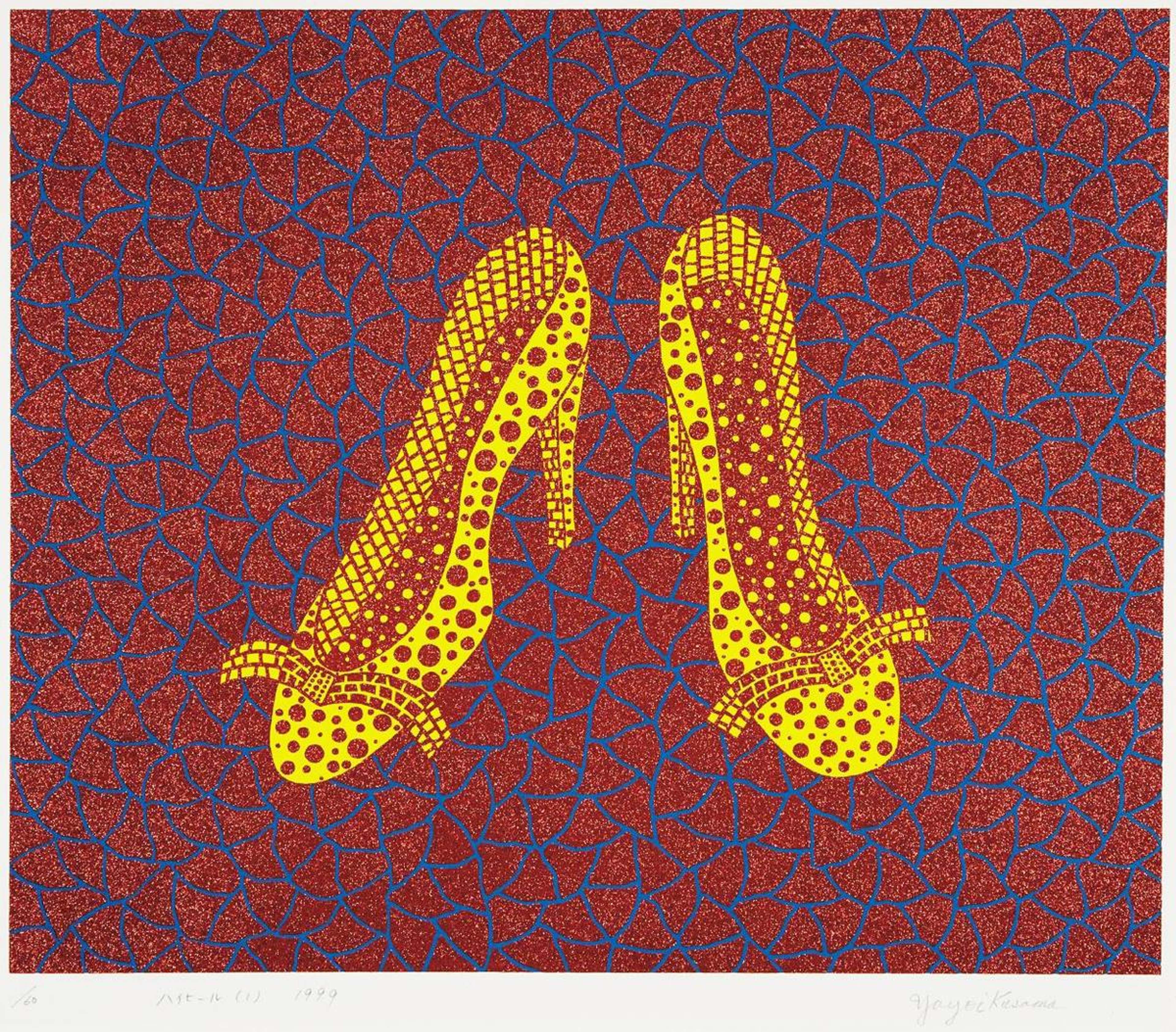
Les fleurs, les fruits, les chaussures, les chapeaux et les papillons offrent une autre porte d'entrée dans son œuvre gravé. Ces travaux marient les pois et les réseaux récurrents de l'artiste à des sujets reconnaissables et bénéficient d'un historique d'adjudications dynamique. Nombre d'entre eux s'échangent dans une fourchette allant de 10 000 à 50 000 dollars environ, bien que les prix varient selon les compositions.
Les acquéreurs disposant d'un budget plus conséquent privilégieront peut-être un « Pumpkin » ayant fait l'objet de ventes répétées ou une feuille individuelle issue de la série Mt. Fuji in Seven Colours. L'œuvre idéale pour un premier achat est celle qui allie une image marquante à un bon état de conservation, une documentation fiable et un prix étayé par les données actuelles du marché.

Est-il judicieux d'acquérir un portfolio complet d'estampes de Yayoi Kusama ?
Les portefeuilles complets de Kusama sont bien plus rares aux enchères que les estampes individuelles. Parmi les œuvres pouvant être collectionnées sous forme de séries complètes, citons « Mt. Fuji in Seven Colours », « Amour Pour Toujours » et « Pumpkin 2000 ».
En mars 2026, la série de sept estampes « Mt. Fuji in Seven Colours » a atteint un prix marteau de 212 810 livres sterling chez Sotheby’s Hong Kong. L'ensemble était complet en termes d'images, bien que six feuilles soient numérotées 29/120 et l'œuvre orange, 85/120. Les séries complètes qui arrivent sur le marché ne présentent pas toujours des numéros d'édition concordants, mais celles qui en sont dotées possèdent une valeur supérieure.
Avant tout achat, assurez-vous que chaque image requise est présente et examinez chaque feuille individuellement. L'état de conservation d'une œuvre ne saurait présager celui du reste de la série. Les numéros d'édition, la provenance et l'historique de l'encadrement doivent également être consignés pour l'ensemble du groupe.
Les boîtes d'origine, les chemises, les pages de titre, les colophons et les certificats de publication doivent rester associés au portefeuille lorsqu'ils ont été fournis à l'origine. Un groupe constitué d'estampes acquises séparément n'occupe pas nécessairement la même place sur le marché qu'un ensemble conservé intact.
Les estampes de Yayoi Kusama conservent-elles leur valeur ?
Kusama dispose d'un marché dynamique et substantiel pour ses éditions, bien que les performances varient considérablement d'une œuvre à l'autre. Les citrouilles représentent la plus grande part de la valeur et du volume en vente aux enchères, tandis que d'autres sujets s'échangent sur des marchés plus restreints.
Le déclin du nombre de ventes depuis 2024 n'a pas engendré une baisse proportionnelle du prix moyen. Cela suggère que la demande s'est maintenue autour des éditions établies, même si moins d'exemplaires ont été présentés aux enchères. Cela ne signifie pas pour autant une croissance uniforme des prix.
La liquidité est un facteur déterminant de la conservation de la valeur. Des éditions telles que Nets Infinity, Pumpkin (Yellow Y) et Pumpkin 2 font l'objet de ventes répétées qui permettent aux acheteurs d'évaluer le marché. Une œuvre rare, connue par une unique apparition, peut atteindre un montant plus élevé, mais elle offre moins de points de comparaison sur ce qu'une autre estampe pourrait réaliser.
Les acheteurs ne doivent pas supposer que la disparition de Kusama entraînera une appréciation de chaque édition. Une attention accrue pourrait élargir la demande au-delà des marchés asiatiques qui ont historiquement soutenu ses ventes d'estampes, mais elle pourrait également encourager davantage de propriétaires à vendre. Les œuvres les plus solides continueront de se distinguer par leur sujet, leur état de conservation, leur disponibilité et leur prix d'entrée.
Comment éviter de payer trop cher une estampe de Yayoi Kusama ?
Comparez le prix demandé avec les ventes récentes de l'édition exacte. Les résultats obtenus pour une autre « Pumpkin », « Infinity Net » ou « Wave » peuvent offrir un contexte, mais des estampes de Kusama étroitement apparentées peuvent atteindre des niveaux de prix très différents.
Comparez toujours les coûts totaux d'acquisition. Un résultat d'adjudication peut n'indiquer que le prix marteau, avant l'ajout de la prime de l'acheteur, de la TVA, du droit de suite et des frais de livraison. Les prix en galerie et en vente privée peuvent déjà inclure les commissions et autres services ; ils doivent donc être évalués en fonction du montant total d'une acquisition aux enchères, et non du seul prix marteau.
Comment authentifier une estampe de Yayoi Kusama avant de procéder à l'achat ?
Les éditions de Yayoi Kusama sont répertoriées dans l'ouvrage Yayoi Kusama Prints 1979–2017, publié par Abe Publishing. Ce catalogue raisonné révisé recense 452 œuvres et constitue la référence principale pour vérifier les titres, les dates, les dimensions et la structure des éditions.
L'estampe doit correspondre à la notice reconnue, incluant les dimensions de l'image et du papier, la signature, la numérotation, le papier, l'imprimeur et l'éditeur, lorsqu'ils sont mentionnés. La provenance, les factures, les étiquettes de galerie et les résultats d'enchères antérieurs doivent venir appuyer l'examen physique de l'estampe.
Il n'existe aucun comité d'authentification reconnu pour les estampes de Yayoi Kusama. Le programme d'enregistrement de Yayoi Kusama Inc. exclut les estampes et les éditions, tandis que la Yayoi Kusama Foundation précise qu'elle n'est pas en mesure d'authentifier les estampes.
La Fondation a également mis en garde contre la circulation internationale d'estampes contrefaites et de faux certificats. Un certificat ne doit jamais être accepté sans vérification de son émetteur et de sa parfaite correspondance avec l'œuvre.
Les acquéreurs doivent faire preuve d'une vigilance particulière lorsqu'une édition signée est proposée sur une place de marché en ligne sans référence au catalogue, sans provenance vérifiable ni examen par un spécialiste. Les affiches, les reproductions et les produits sous licence peuvent utiliser des images authentiques de Yayoi Kusama, mais ils ne sont en aucun cas équivalents à ses estampes signées et numérotées.
Comment vérifier l'état d'une estampe de Yayoi Kusama ?
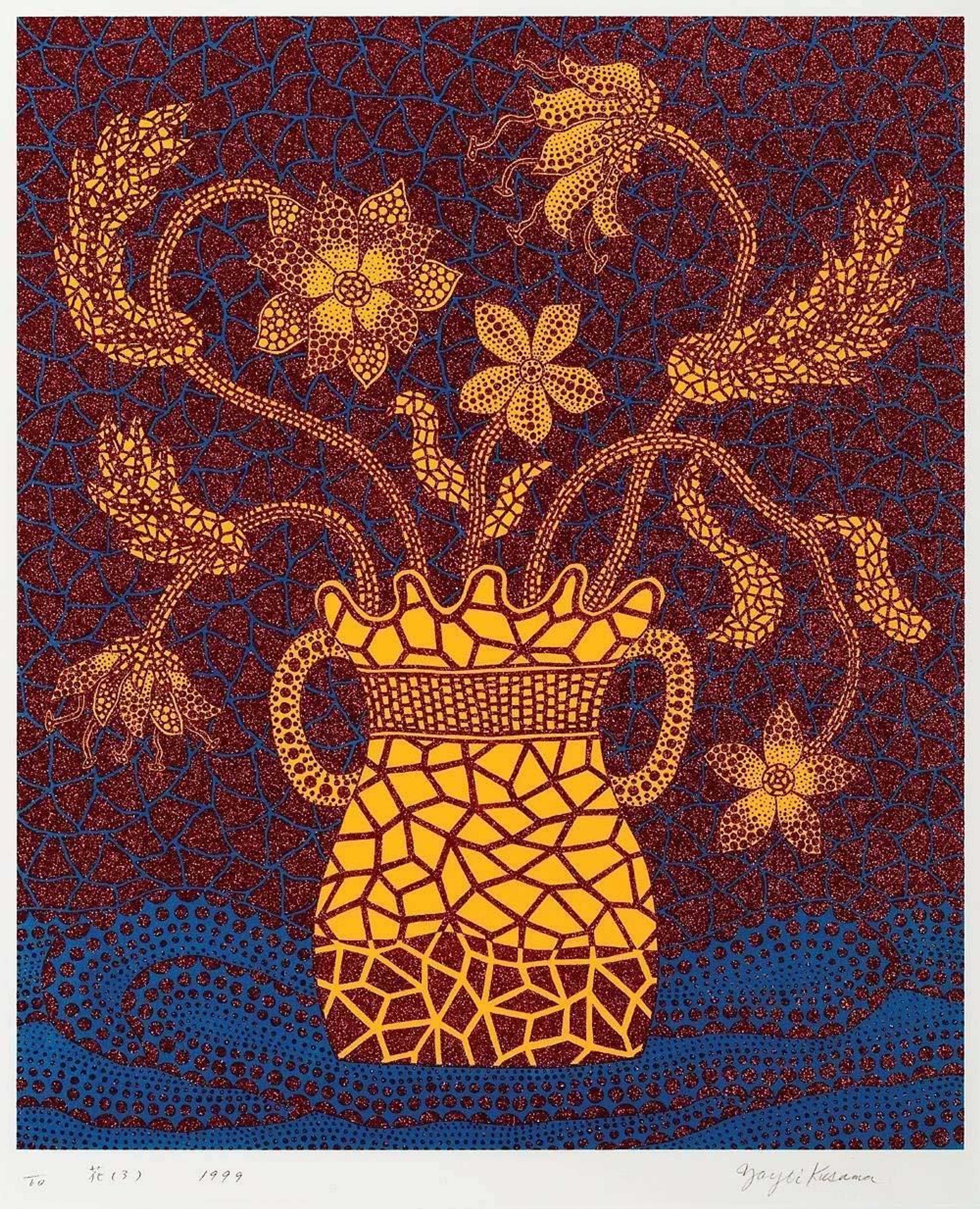
La plupart des éditions de Kusama sont des sérigraphies. Leurs aplats de couleurs saturées et leurs motifs répétitifs rendent la décoloration, l'abrasion et l'irrégularité des pigments immédiatement visibles. Comparez l'œuvre avec des visuels de référence de la même édition et demandez, si possible, des photographies prises sans verre protecteur réfléchissant.
Les œuvres sur papier doivent faire l'objet d'un examen attentif pour déceler toute trace de rousseurs, de taches, de plis, de marges rognées ou de dommages liés aux charnières ou aux adhésifs. L'examen du verso peut révéler des problèmes de montage ou de conservation invisibles depuis l'avers.
Les gravures sur bois de Kusama, notamment les œuvres de la série « Mt. Fuji in Seven Colours », nécessitent une attention particulière quant à la décoloration, aux traces de manipulation et aux altérations du papier japonais. Les éditions en relief peuvent perdre en netteté si elles ont été comprimées, tandis que les œuvres en collage et techniques mixtes peuvent présenter des éléments qui se décollent, des taches d'adhésif ou un vieillissement irrégulier.
Pour un portfolio complet, chaque feuille et élément associé doit être inspecté. Les acheteurs doivent également s'enquérir de toute restauration antérieure et vérifier si l'œuvre a été examinée hors de son cadre.

Comment vérifier l'état des estampes de Yayoi Kusama ?
L'évaluation de l'état des estampes de Yayoi Kusama est une étape nécessaire pour garantir leur qualité et leur préservation. Portez une attention particulière à la colorimétrie de l'estampe. Les œuvres de Yayoi Kusama sont réputées pour leurs couleurs vibrantes et saturées ; ainsi, tout signe de décoloration, de rousseurs, d'altération chromatique ou de jaunissement peut affecter significativement la valeur de l'œuvre. Examinez attentivement le papier pour détecter toute variation de couleur ou perte d'intensité.
Assurez-vous d'examiner le papier pour déceler tout signe de déformation, de gondolement ou de détérioration. Recherchez toute trace de rousseurs (petites taches brunes) ou de moisissures, car celles-ci peuvent compromettre l'état de l'œuvre à long terme.
Lors de l'achat d'une estampe de Yayoi Kusama, il est essentiel de privilégier les œuvres en excellent état, car elles conservent non seulement leur attrait esthétique, mais tendent également à mieux préserver leur valeur au fil du temps.
Où puis-je acheter des estampes de Yayoi Kusama ?
Les estampes de Yayoi Kusama sont disponibles auprès de maisons de vente aux enchères, de galeries, de marchands spécialisés et dans le cadre de ventes privées, mais le marché n'est pas réparti de manière uniforme. Le Japon et la Corée du Sud ont représenté environ 85 % de la valeur totale enregistrée en vente aux enchères entre janvier 2024 et août 2026, avec une activité à haute valeur ajoutée également notable à Hong Kong.
Acheter des estampes de Yayoi Kusama en vente aux enchères
L'essentiel du marché des enchères pour les œuvres de Yayoi Kusama se concentre au Japon, en Corée du Sud et à Hong Kong. Ces ventes offrent la plus grande profondeur d'offre publique, tandis que Londres et New York ne représentent qu'une part beaucoup plus restreinte de l'activité. Les acheteurs enchérissant au-delà des frontières doivent également prendre en compte les devises, les frais acheteurs, les taxes, le transport et les exigences d'importation lors du calcul du coût total.
L'estimation ne doit pas être considérée comme une évaluation. Des éditions de Yayoi Kusama très proches peuvent atteindre des niveaux de prix différents, tandis que la compétition autour des célèbres « Pumpkins » peut faire grimper le prix final au-delà des comparables récents. Les acheteurs doivent également vérifier si l'œuvre a été examinée hors de son cadre, car le niveau de détail fourni dans les rapports d'état varie d'une maison à l'autre.
Acheter des estampes de Yayoi Kusama de gré à gré
Le marché privé peut rendre l'offre internationale de Yayoi Kusama plus accessible aux acheteurs qui ne sont pas basés en Asie ou qui ne souhaitent pas dépendre du calendrier des ventes aux enchères. Plutôt que d'attendre qu'une estampe spécifique apparaisse dans le catalogue régional adéquat, un spécialiste peut contacter des propriétaires sur différents marchés afin de trouver une pièce correspondant à un titre, une variante colorée, un état de conservation ou un budget précis.
Cette approche est particulièrement utile pour les éditions apparaissant rarement sur le marché public et pour les portfolios complets. Elle permet également d'évaluer l'état de conservation, la provenance et le prix avant toute échéance, le coût d'acquisition total étant fixé par la négociation.
Acheter des estampes de Yayoi Kusama en galerie
Les galeries ont joué un rôle important dans la distribution des éditions de Yayoi Kusama, et de nombreuses estampes reviennent sur le marché secondaire par l'intermédiaire de marchands. Elles constituent des sources précieuses pour les œuvres accompagnées de documents d'éditeur ou bénéficiant d'une provenance établie.
Les prix demandés par les galeries sont moins transparents que les prix d'adjudication et peuvent inclure l'encadrement, la marge du marchand et d'autres services. Les acheteurs doivent s'assurer de ce qui justifie le prix, savoir si la galerie possède l'œuvre ou agit pour le compte d'un tiers, et comparer l'exemplaire en question avec les ventes récentes de la même édition.
Acheter une estampe de Yayoi Kusama avec MyArtBroker
MyArtBroker se spécialise dans les estampes et multiples d'artistes blue chip. Notre équipe conjugue une expertise pointue à l'échelle de l'édition avec des données issues des ventes publiques, des preuves de transactions privées et une analyse de la demande en temps réel pour aider les collectionneurs à identifier et acquérir l'estampe de Kusama qui leur correspond.
Notre Trading Floor en direct connecte plus de 30 000 collectionneurs internationaux et présente les éditions de Kusama actuellement disponibles, détenues au sein de collections privées ou recherchées par des acheteurs. Vous pouvez manifester votre intérêt pour une œuvre spécifique même lorsqu'elle n'est pas répertoriée publiquement, permettant ainsi à nos spécialistes de contacter les propriétaires et de sourcer des estampes au-delà des limites d'un catalogue de vente aux enchères traditionnel.
Chaque acquisition fait l'objet d'un examen approfondi au niveau de l'édition. Nos spécialistes analysent les informations du catalogue raisonné, l'état de conservation et la provenance, fournissent les photographies et la documentation disponibles, et vous conseillent sur la cohérence du prix par rapport au marché actuel. Le prix d'achat total et la commission acheteur sont convenus avant tout engagement de votre part.
Une fois l'achat finalisé, notre équipe gère le paiement, l'emballage et la livraison sécurisée. La gestion de collection via MyPortfolio vous permet ensuite de suivre la valeur de l'œuvre au sein de votre collection globale et d'observer l'évolution de son activité sur le marché au fil du temps.