
La valeur des estampes de Roy Lichtenstein en 2026 varie considérablement en fonction de la série, du médium, du type d'édition et de l'état de conservation. La demande actuelle reste particulièrement soutenue pour des séries majeures telles que « Nudes », « Reflections » et « Water Lilies », tandis que les épreuves rares et les œuvres provenant de la succession Lichtenstein ont également enregistré des résultats exceptionnels. Une reconnaissance institutionnelle récente et des ventes aux enchères de premier plan ont renforcé la confiance sur l'ensemble du marché.
Le moment est-il opportun pour vendre une estampe de Roy Lichtenstein ?
Pour de nombreux propriétaires, 2026 s'avère une période propice à la vente d'une estampe de Roy Lichtenstein. Roy Lichtenstein possède depuis longtemps l'un des marchés de l'estampe les plus actifs et les mieux établis, mais des libérations récentes d'œuvres provenant de sa succession, l'intérêt accru des musées et des ventes aux enchères majeures ont recentré l'attention sur l'étendue de ses éditions.
Entre novembre 2024 et septembre 2025, Sotheby's a organisé une série de ventes issues de la famille et de la succession de Roy Lichtenstein, point d'orgue étant une vente aux enchères dédiée à un propriétaire unique en septembre 2025. Loin de concentrer la demande sur une poignée d'images iconiques, ces vacations ont démontré un vif intérêt des collectionneurs pour de multiples séries et médiums. Cette dynamique s'est poursuivie en 2026. Lors des ventes d'estampes d'avril 2026, des œuvres provenant de la succession, notamment « Bull VII » et « Nude in the Woods (Black State) », se sont chacune vendues plus du double de leurs estimations hautes, atteignant respectivement 70 735 livres sterling (96 000 dollars) et 47 156 livres sterling (64 000 dollars).
Au-delà de la salle des ventes, la reconnaissance institutionnelle continue de renforcer l'héritage de Roy Lichtenstein. La rétrospective au Whitney qui ouvrira ses portes en octobre 2026 apportera une visibilité accrue au travail de l'artiste et, contrairement aux ventes issues de la succession, a le potentiel d'élargir la demande sans pour autant augmenter l'offre sur le marché.
Les ventes de la succession ont établi de nouveaux points de référence tarifaires importants sans affaiblir le marché global. Les estampes ne provenant pas de la succession ont continué de s'échanger dans une fourchette de prix cohérente tout au long de cette période. La provenance liée à une succession peut ajouter du prestige et susciter la concurrence, mais les vendeurs ne doivent pas considérer ces résultats comme des comparables directs. Il reste à vérifier si cette provenance continuera de justifier une prime une fois que ces œuvres commenceront à revenir sur le marché ; les exemplaires appartenant à des collections privées pourraient enregistrer des performances différentes, hors de la publicité concentrée des ventes initiales de la succession.
Combien vaut mon estampe de Roy Lichtenstein en 2026 ?
Lichtenstein laisse derrière lui un corpus d'œuvres vaste, et la valeur des estampes individuelles peut varier considérablement. Même des estampes étroitement apparentées peuvent atteindre des prix très différents.
Le médium est l'un des principaux déterminants de la valeur. Les éditions sur émail sur acier de Lichtenstein comptent parmi les plus ambitieuses sur le plan technique au sein de sa production. Produites en nombre beaucoup plus restreint que ses sérigraphies, elles figurent systématiquement parmi ses œuvres les plus précieuses. Au-delà du médium lui-même, la demande des collectionneurs varie également en fonction des séries ; ainsi, les œuvres issues des séries « Nudes », « Reflections » et « Water Lilies » ont attiré les prix les plus élevés ces dernières années.
Les caractéristiques de l'édition peuvent engendrer des écarts de valeur supplémentaires. Les épreuves d'artiste, les épreuves d'imprimeur et les premiers états peuvent bénéficier de primes lorsque leur rareté est dûment documentée, bien que le statut d'épreuve ne garantisse pas à lui seul un prix plus élevé. L'état de conservation, la provenance, les références au catalogue raisonné et les récentes ventes comparables doivent tous être pris en compte pour établir une estimation précise.
Quelles sont les estampes de Roy Lichtenstein les plus cotées ?
L'imagerie joue un rôle prépondérant dans la valeur d'une estampe de Roy Lichtenstein. Les représentations de femmes comptent parmi les segments les plus recherchés de son marché, bien que les prix puissent varier considérablement en fonction du médium, de la structure de l'édition, de la signature, de l'état de conservation et de la rareté de chaque œuvre.
Les représentations de femmes de Roy Lichtenstein
Les représentations de femmes issues des bandes dessinées des années 1960 restent parmi les estampes les plus identifiables de Roy Lichtenstein. Des œuvres telles que Crying Girl et The Melody Haunts My Reverie sont généralement valorisées en dessous de ses séries ultérieures comme les Nudes ou ses éditions sur émail sur acier, ce qui s'explique en partie par leurs caractéristiques d'édition et leur état de conservation. Crying Girl, par exemple, est signée mais non numérotée, tandis que les exemplaires subsistants peuvent présenter des écarts de qualité significatifs après des décennies de manipulation, d'encadrement et d'exposition à la lumière.
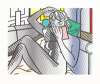
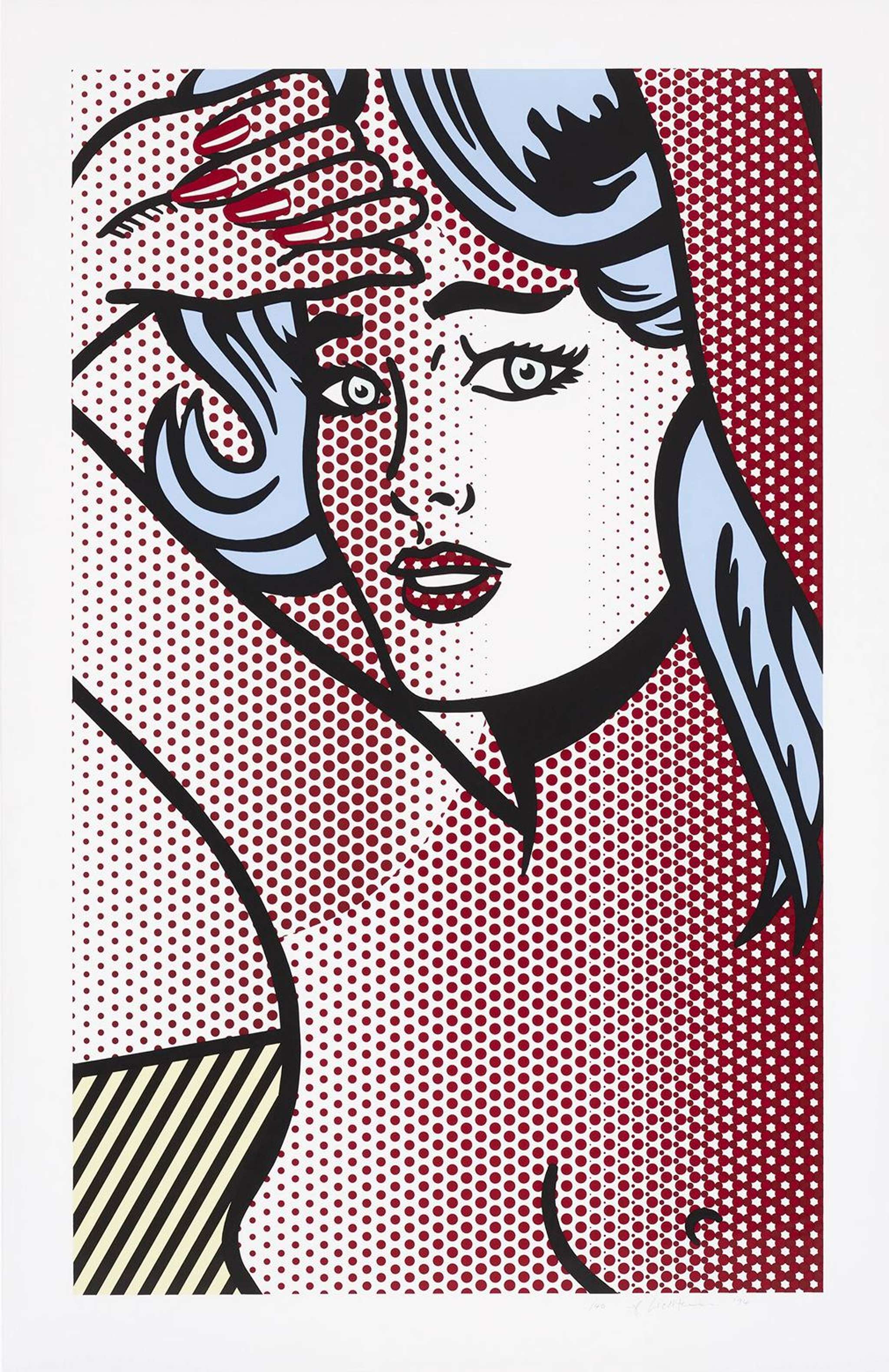
Roy Lichtenstein est revenu aux représentations féminines dans les années 1990 avec ses Nudes, devenus l'une des sérigraphies les plus prisées de son marché. La demande et les prix ont considérablement augmenté, en particulier pour les premiers états et les épreuves rares. Toutefois, leur popularité implique également que ces œuvres apparaissent relativement fréquemment sur le marché. Le calendrier et la stratégie de vente doivent donc être mûrement réfléchis afin d'éviter de présenter une œuvre à la vente alors que plusieurs exemplaires comparables sont déjà disponibles.
Les éditions sur acier et porcelaine de Roy Lichtenstein
Les éditions en émail sur porcelaine et acier de Roy Lichtenstein figurent parmi les œuvres les plus précieuses de son marché de l'estampe. Produites en très petit nombre et combinant fabrication industrielle et techniques d'impression, elles occupent une place unique dans son corpus édité. En mai 2026, Girl in Mirror a fait son retour aux enchères et a été adjugée 6,2 millions de dollars chez Sotheby's New York. Il s'agissait de la première représentation féminine en émail sur porcelaine et acier à apparaître aux enchères depuis 2023, soulignant la rareté et la valeur de ces œuvres lorsqu'elles arrivent sur le marché.
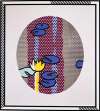
Parallèlement, les sérigraphies sur acier inoxydable de Roy Lichtenstein constituent également certaines des éditions les plus recherchées de son marché. La série Water Lilies, inspirée des peintures iconiques de Claude Monet, illustre l'ambition technique de l'artiste tout en instaurant une hiérarchie claire entre les différentes images. Water Lily Pond With Reflections a historiquement été l'œuvre la plus valorisée de la collection, tandis que Water Lilies With Cloud a établi un nouveau record aux enchères à 768 077 livres sterling (1 024 000 dollars) en mai 2026, rejoignant la liste des éditions de Roy Lichtenstein à franchir le seuil du million de dollars. Les résultats récents suggèrent que la demande des collectionneurs s'étend de plus en plus au-delà d'une image phare au sein de la série.
Autres segments du marché de l'estampe de Roy Lichtenstein à suivre
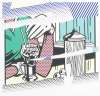
Si les collections les plus établies de Roy Lichtenstein continuent de dominer le marché, la mise en vente provenant de la succession (Estate) a démontré que la demande des collectionneurs s'étend bien au-delà des Water Lilies et des Nudes. Reflections demeure l'un des segments les plus régulièrement échangés sur le marché de l'estampe de l'artiste, alliant une liquidité soutenue à une tarification relativement stable, tandis que des collections telles qu'Interior, Bulls, et Landscapes, Moonscapes and Seascapes ont également suscité une vive concurrence lors des ventes de la succession.
Plus largement, la mise sur le marché d'œuvres issues de la succession de Roy Lichtenstein a renforcé la confiance dans l'étendue de sa carrière d'estampeur. En proposant plus de 100 éditions issues de 19 collections, la succession a démontré l'existence d'une demande couvrant un spectre beaucoup plus large de l'œuvre de Roy Lichtenstein. Si les Water Lilies, les Nudes et Reflections sont restés les principaux moteurs de valeur, la vigueur des enchères ailleurs suggère que les collectionneurs s'intéressent de plus en plus au-delà des images les plus familières de l'artiste.
Comment authentifier une estampe de Roy Lichtenstein avant de la vendre
Avant d'établir la valeur d'une estampe de Lichtenstein ou de la mettre sur le marché, il est essentiel d'en confirmer l'authenticité. Les acheteurs attendent des œuvres qu'elles soient étayées par des références de catalogue reconnues, des archives d'éditeurs et des détails d'édition cohérents, faisant d'une documentation rigoureuse un aspect primordial du processus de vente.
La première étape consiste à identifier l'estampe dans le catalogue raisonné Corlett, référence standard pour les œuvres éditées de Lichtenstein. L'entrée du catalogue doit correspondre à l'image, au tirage, aux dimensions et aux détails de publication. Les vendeurs doivent également vérifier si l'estampe est signée, numérotée ou désignée comme épreuve d'artiste ou épreuve d'imprimeur, et s'assurer que ces mentions sont conformes à l'édition publiée. Bien que de nombreuses estampes de Lichtenstein soient signées et numérotées au crayon, certaines œuvres légitimes ont été diffusées sans signature, en particulier dans les éditions plus larges ou tardives ; l'absence de signature n'indique donc pas nécessairement un défaut d'authenticité si les autres éléments concordent.
Une provenance documentée peut également renforcer la confiance des acheteurs. Les factures de galeries, les certificats, les anciens résultats d'adjudication et l'historique des expositions contribuent tous à établir un historique de propriété clair, bien que de nombreuses estampes authentiques de Lichtenstein aient changé de mains à plusieurs reprises et ne soient plus nécessairement accompagnées de leurs documents d'origine.
En cas d'incertitude concernant l'authenticité ou les détails d'édition d'une estampe, il est conseillé de solliciter l'avis d'un expert avant de la proposer à la vente. Lever ces interrogations avant que l'œuvre n'arrive sur le marché permet d'éviter les retards et offre aux acheteurs une plus grande assurance lors de la formulation d'une offre.
État de conservation et restauration des estampes de Roy Lichtenstein
L'état de conservation joue un rôle majeur dans la détermination de la valeur d'une estampe de Roy Lichtenstein. Les collectionneurs prêtent une attention particulière à des facteurs tels que la fraîcheur des couleurs, la qualité du papier, l'état des marges et la présentation générale, en particulier pour les œuvres précoces et les éditions rares.
La plupart des estampes de Roy Lichtenstein ont été réalisées sur des papiers de haute qualité, notamment le vélin d'Arches, le Rives BFK et des papiers japonais. Bien que ces matériaux soient durables, une exposition prolongée à la lumière du soleil, des variations d'humidité et un encadrement inadapté peuvent entraîner une décoloration, un jaunissement, des rousseurs ou une altération du support, autant d'éléments susceptibles de réduire la désirabilité et la valeur d'une estampe.
Les collectionneurs privilégient généralement l'état d'origine à toute restauration inutile. Le rognage des marges, le blanchiment du papier, un nettoyage excessif ou des interventions de conservation non documentées peuvent nuire à la valeur de l'œuvre. À l'inverse, un léger jaunissement dû à l'âge ou des marques de manipulation superficielles sont souvent jugés plus acceptables lorsqu'ils sont stables et dûment signalés.
Si vous envisagez des mesures de conservation avant une vente, demandez conseil à un restaurateur d'œuvres sur papier qualifié. Dans bien des cas, un rapport d'état précis et une présentation professionnelle inspireront davantage confiance aux acheteurs qu'un traitement esthétique altérant l'œuvre originale.
Où puis-je vendre mon estampe de Roy Lichtenstein en 2026 ?
Pour les collectionneurs vendant sur le marché secondaire, le choix du canal de vente influence directement le produit net, le contrôle du prix et le positionnement de l'œuvre face à une offre comparable. Les deux voies principales – les enchères et la vente privée – diffèrent considérablement en termes de risques, de frais et de visibilité sur le marché.
Vendre une estampe de Roy Lichtenstein aux enchères : frais et visibilité publique
Un résultat solide peut redéfinir les références et consolider les prix des estampes de Roy Lichtenstein dans les archives publiques. Cette option impose toutefois des dates de vente fixes, des fourchettes d'estimations publiques, ainsi que des commissions acheteur et vendeur. Un lot invendu ou un résultat inférieur aux estimations devient une donnée permanente du marché, avec des conséquences sur la valorisation future. Lorsque des exemplaires comparables sont déjà disponibles au cours de la même saison, cette offre concurrente peut limiter le potentiel de progression des prix.
Vendre une estampe de Roy Lichtenstein via la vente privée
La vente privée garantit discrétion, flexibilité temporelle et un accès direct à des acheteurs qualifiés, activement à la recherche d'éditions spécifiques. La tarification s'appuie sur les données actuelles du marché sans exposer l'œuvre à une découverte publique du prix ou au risque qu'un invendu ne soit consigné dans les archives. Pour les œuvres appartenant aux segments les plus liquides du marché de Roy Lichtenstein, la vente privée offre systématiquement un meilleur contrôle sur le calendrier et le résultat.
Pourquoi vendre votre estampe de Roy Lichtenstein avec MyArtBroker ?
MyArtBroker est le spécialiste du marché secondaire des estampes de Roy Lichtenstein. Nos spécialistes dédiés achètent, vendent et estiment quotidiennement les œuvres de l'artiste – quels que soient le type d'édition, l'état ou la qualité de l'estampe – et nous suivons en temps réel la demande des collectionneurs pour l'ensemble de son corpus d'estampes à l'échelle mondiale. Cette combinaison d'intelligence de marché et de relations directes avec les acheteurs nous permet de positionner chaque œuvre avec précision et de conclure des transactions directement via notre plateforme privée.
Évaluation et positionnement sur le marché des estampes de Roy Lichtenstein
Chaque œuvre est évaluée individuellement au regard des résultats d'enchères récents, de la structure de l'édition, de son état de conservation et de comparables en vente privée. Le prix reflète la demande actuelle, et non des références générales liées à la succession ou des estimations globales. Les vendeurs peuvent débuter avec notre outil d'« Instant Valuation », qui fournit une fourchette de prix en temps réel basée sur des données d'enchères vérifiées et des informations de vente privée. Une analyse par un spécialiste affine ensuite la stratégie de placement en fonction de l'œuvre et des conditions de marché actuelles.
0 % de commission vendeur
Nous ne prélevons aucune commission vendeur. Aucun frais n'est déduit du prix final, aucune estimation publique n'est associée à l'œuvre et il n'existe aucun risque que celle-ci demeure publiquement invendue, contrairement au système des enchères. Notre objectif est de restituer à nos vendeurs l'équivalent d'un prix marteau qui aurait été obtenu aux enchères. Nous facturons à l'acheteur une commission compétitive sur la vente. Combiné à un accès direct à notre réseau mondial de collectionneurs, ce modèle permet systématiquement de maximiser le rendement pour les vendeurs d'œuvres de Roy Lichtenstein par rapport à toute autre solution sur le marché.
Réseau mondial d'acheteurs et placement privé
Grâce à notre réseau international de collectionneurs et à notre Trading Floor, les estampes de Roy Lichtenstein sont présentées directement à des acheteurs en quête d'éditions précises. L'offre est corrélée à une demande vérifiée, ce qui réduit les risques d'exposition et raccourcit les délais de transaction.
Prenez contact avec nos spécialistes pour discuter de la vente de votre estampe de Roy Lichtenstein.

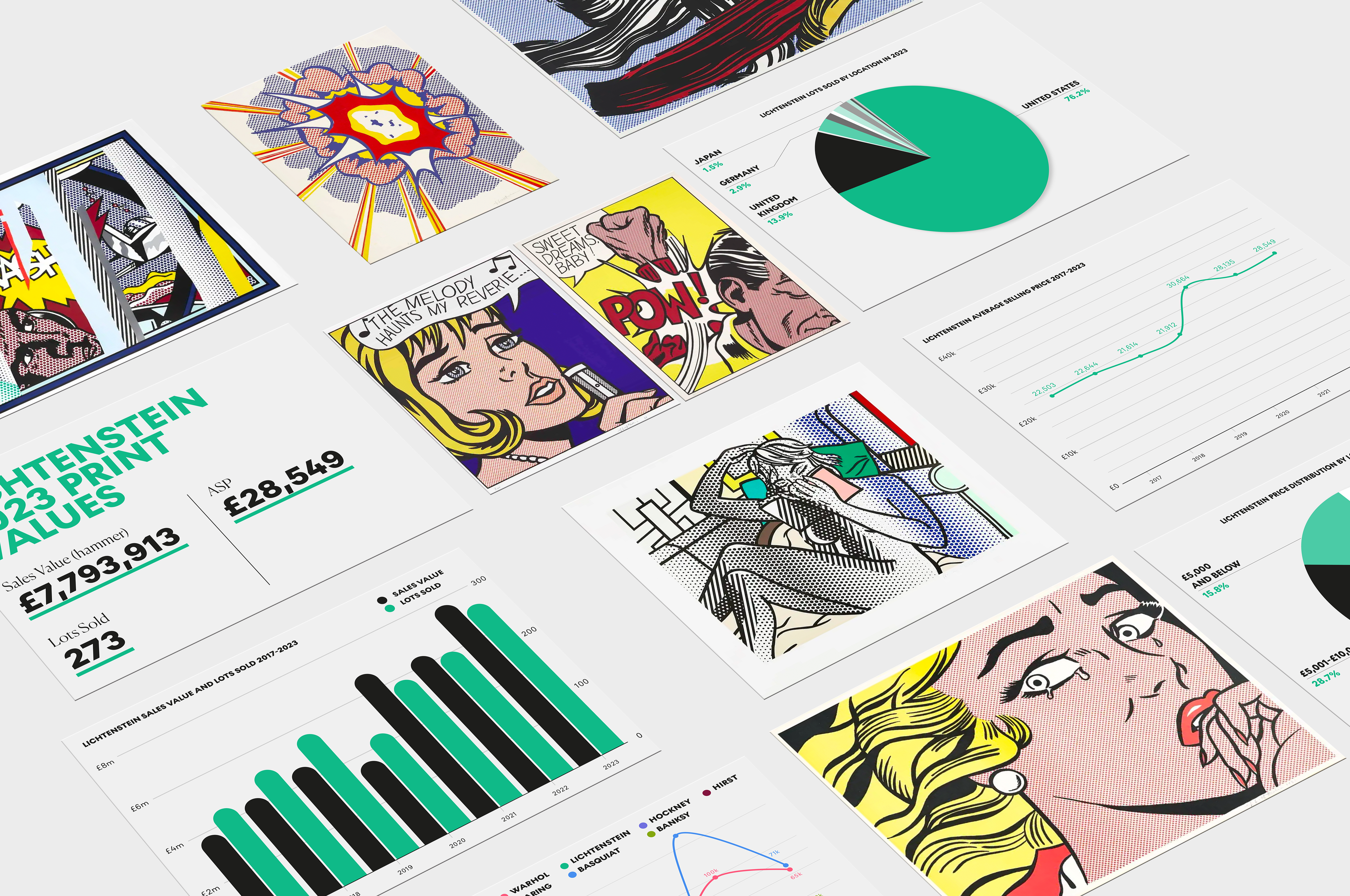
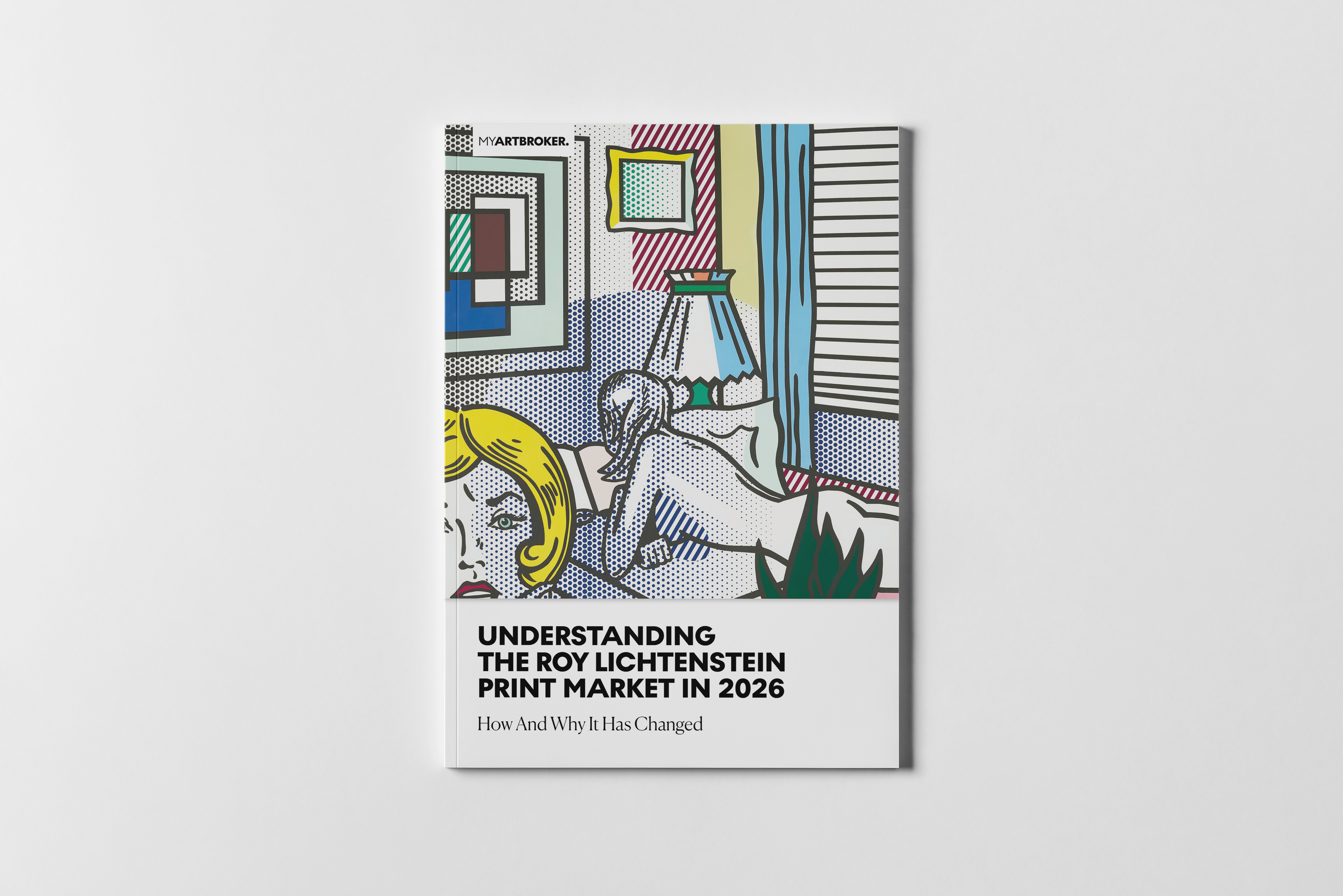
The Roy Lichtenstein Print Market Report 2026
How and Why the Market Has Changed: A 10-Year Analysis (2017–H1 2026)
This report analyses Roy Lichtenstein's print market over the past decade, examining auction performance, pricing trends, collector demand, the strongest-performing series, the growing premium for Artist's Proofs and the key developments shaping the market in H1 2026.