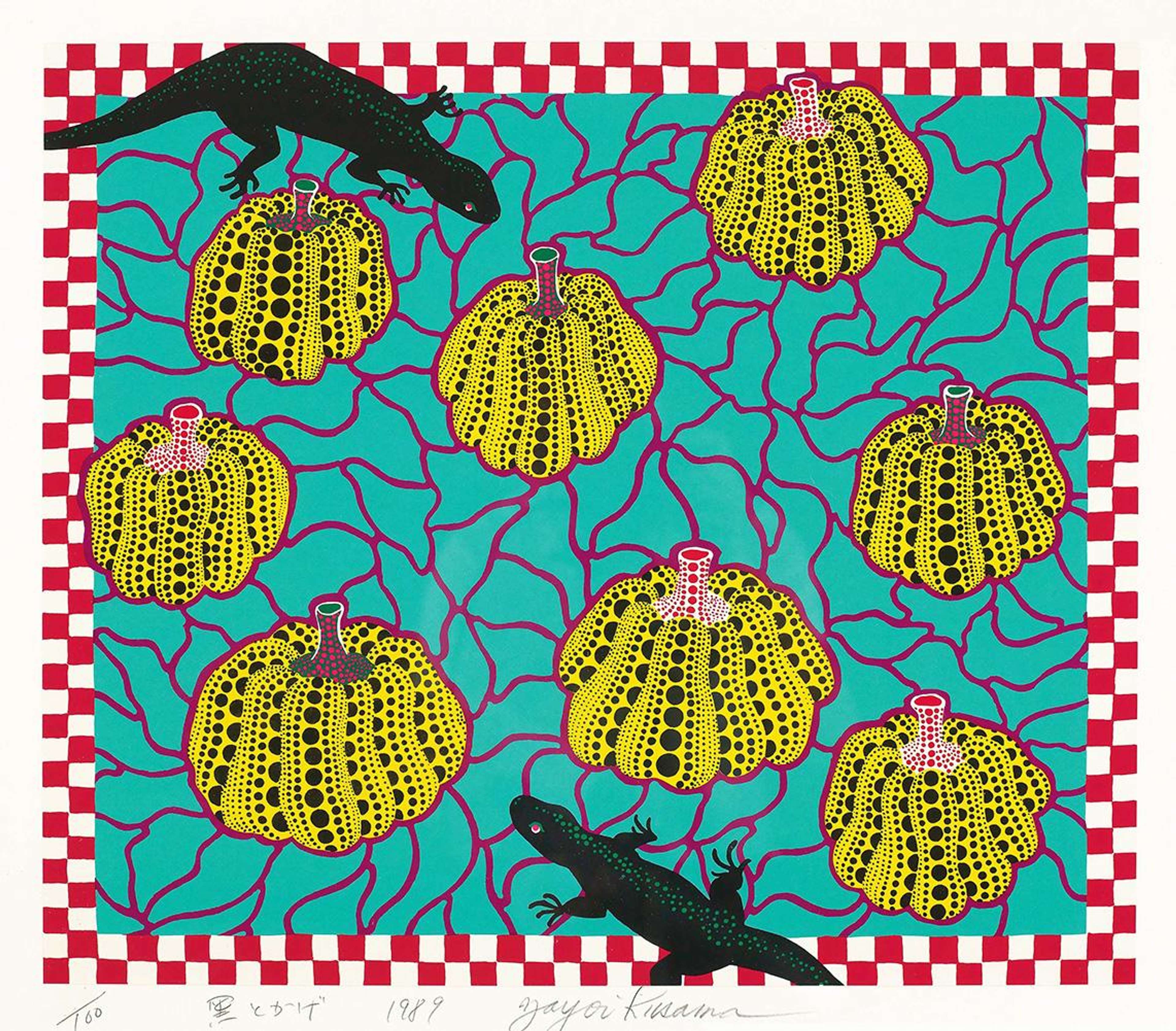


Yayoi Kusama a créé l’un des marchés d’estampes les plus vastes et les plus dynamiques parmi tous les artistes contemporains. Ses éditions couvrent des motifs tels que les citrouilles, les Infinity Nets, les fleurs, les fruits, les chaussures, les vagues et le mont Fuji, avec des valeurs allant de quelques milliers de livres sterling pour les œuvres les plus accessibles à plus de 200 000 livres sterling pour un portfolio complet et rare.
Cette diversité rend une identification précise essentielle. Deux estampes présentant le même motif peuvent différer par leur titre, leur date, leur composition, leur coloris, leur format et leur structure d'édition. Une feuille isolée issue d’un portfolio occupe également une position différente sur le marché par rapport à l’ensemble complet.
Le décès de Kusama en août 2026 a suscité un regain d’intérêt pour son œuvre, sans pour autant instaurer de prime posthume sur ses éditions. Les propriétaires envisageant une vente doivent identifier avec précision l'œuvre qu'ils détiennent, son état de conservation et l'importance de la demande pour cette édition spécifique avant de décider du moment et du lieu de sa mise en vente.
Quelle est la valeur d'une estampe de Yayoi Kusama ?
Le marché des estampes de Kusama demeure substantiel malgré une baisse du nombre d'œuvres proposées en vente aux enchères. En 2024, 256 estampes et ensembles ont généré 5,77 millions de livres sterling en prix marteau. Le volume d'affaires a chuté à 4,91 millions de livres sterling pour 240 ventes en 2025. À ce jour, en 2026, 130 ventes ont totalisé 3,30 millions de livres sterling.
Le prix marteau moyen pour le premier semestre 2026 s'établit à environ 25 365 livres sterling, contre 20 440 livres sterling en 2025. Cela ne témoigne pas d'une appréciation uniforme. Le volume de ventes plus restreint et l'inclusion d'un portfolio complet majeur ont tiré la moyenne vers le haut, tandis que les résultats continuent de varier considérablement d'une édition à l'autre.
Le marché est donc plus étroit qu'à son pic de 2021 et 2022, mais n'est pas uniformément moins onéreux. Les œuvres bénéficiant d'un historique de ventes aux enchères établi continuent de s'échanger, tandis que les prix les plus élevés se concentrent sur certaines éditions de « Pumpkin », les œuvres de la série « Mount Fuji » et les ensembles complets rares.

Quelles sont les estampes de Yayoi Kusama les plus recherchées ?
Les éditions les plus prisées de Kusama tendent à associer une imagerie consacrée à une offre publique limitée, à des dimensions importantes ou à une certaine exhaustivité. Les citrouilles dominent le marché des estampes individuelles, tandis que les portfolios complets peuvent atteindre une valeur absolue supérieure lorsque l'ensemble des éléments est préservé.
Shanghai Pumpkin compte parmi les éditions individuelles les plus significatives de ces dernières années. Elle a atteint 94 321 livres sterling chez Mallet Japan en décembre 2025. Réalisée pour l'Exposition universelle de Shanghai en 2010, cette œuvre associe le sujet le plus emblématique de Kusama à des particules de verre.
Parmi les autres estampes individuelles à forte valeur, citons certaines compositions de citrouilles jaunes ainsi que des œuvres moins fréquemment proposées, telles que Waking Up in the Morning. Lorsqu'une œuvre n'est apparue qu'une seule fois récemment, les données peuvent s'avérer insuffisantes pour établir une fourchette de prix actuelle fiable. Les éditions ayant fait l'objet de ventes répétées offrent une mesure plus précise de la demande.
Les ensembles complets occupent le sommet du marché actuel des portfolios. En mars 2026, Mt. Fuji in Seven Colours a totalisé 212 810 livres sterling au prix marteau chez Sotheby’s Hong Kong.
Valeur des estampes « Pumpkin » de Yayoi Kusama
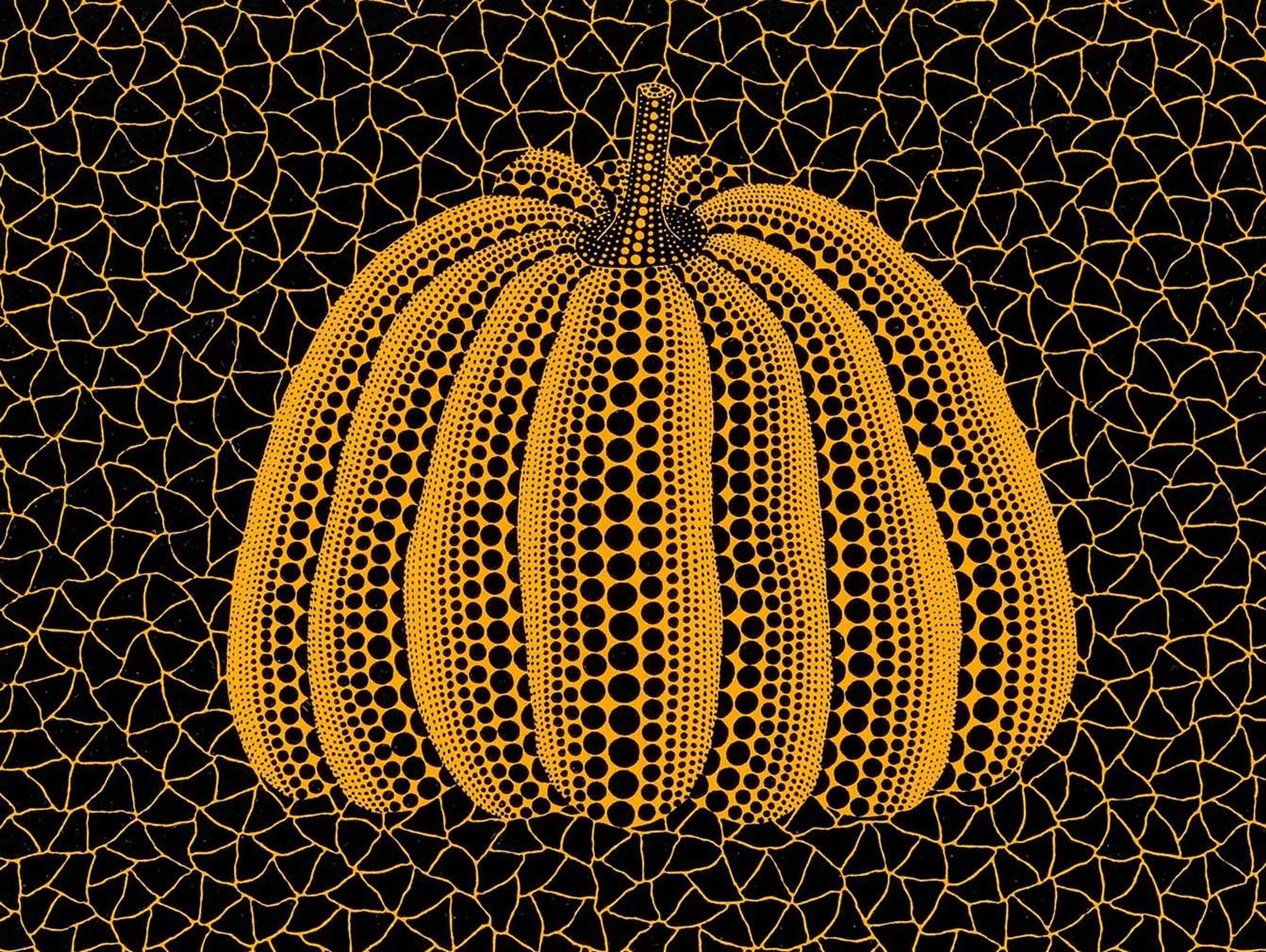
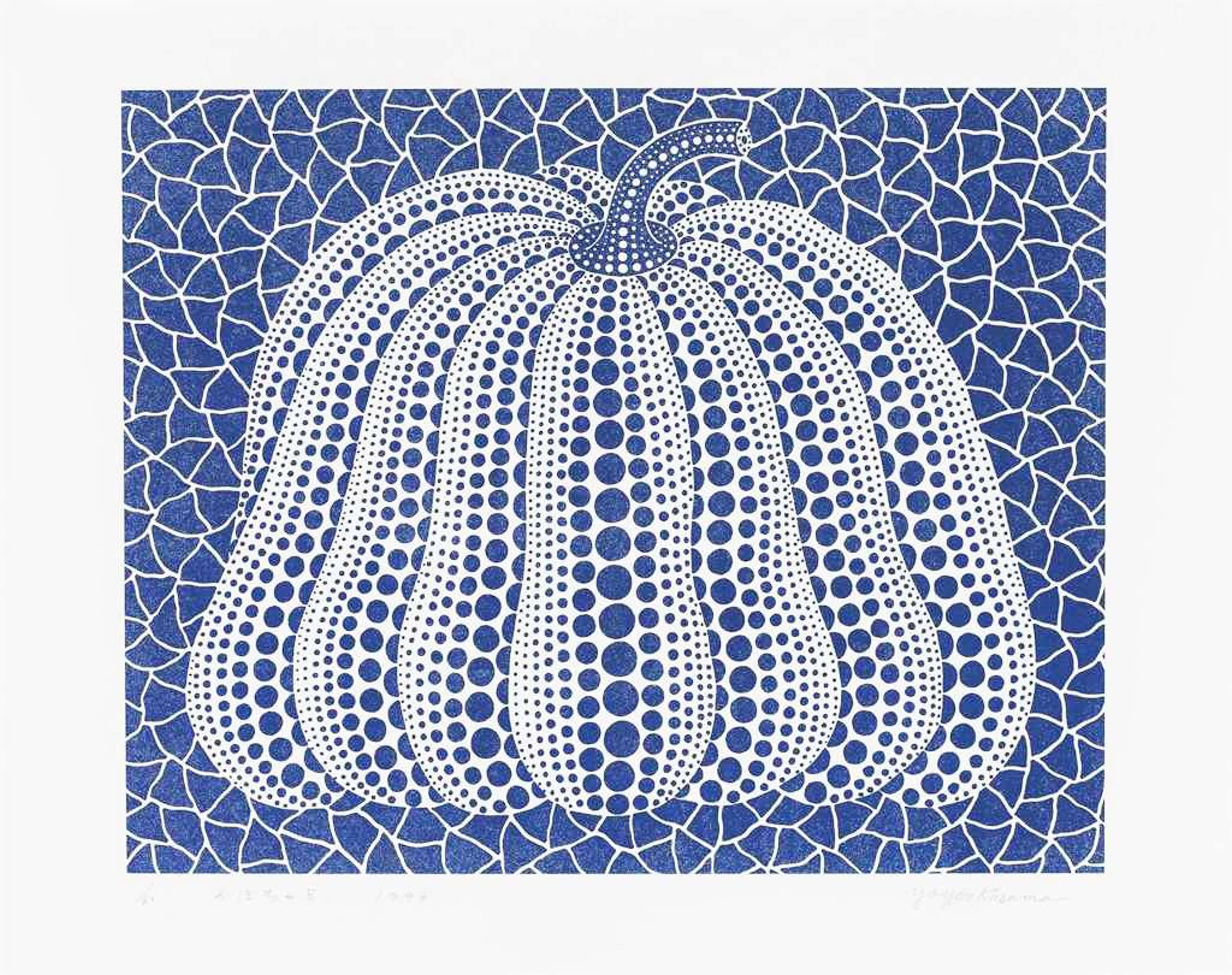
Les « Pumpkins » constituent le segment le plus vaste et le plus valorisé du marché des estampes de Kusama. Entre janvier 2024 et août 2026, plus de 200 ventes enregistrées de « Pumpkin » ont généré environ 6,7 millions de livres sterling en prix marteau. Les prix individuels se sont échelonnés de quelques milliers de livres sterling à plus de 90 000 livres sterling.
La demande la plus forte concerne généralement les compositions de grande taille, immédiatement identifiables, en particulier certaines images jaunes et noires. « Pumpkin (Yellow Y) » et « Pumpkin 2 » sont apparues à plusieurs reprises depuis 2024. Il existe également une demande marquée pour des couleurs spécifiques. Si les citrouilles jaunes sont étroitement associées aux installations publiques de Kusama et à son identité visuelle globale, différentes éditions jaunes se négocient pourtant à des niveaux sensiblement distincts. La date, la composition, l'échelle, la structure de l'édition et la disponibilité actuelle contribuent toutes à cette hiérarchie.
La liquidité varie également. Certaines éditions de « Pumpkin » ont changé de mains entre six et neuf fois depuis le début de l'année 2024, tandis que d'autres compositions ne sont apparues qu'une seule fois. Une œuvre régulièrement négociée offre des preuves plus claires et un bassin d'acheteurs démontré plus large. Une image plus rare peut atteindre un prix supérieur, mais sa valeur est moins prévisible en l'absence de points de comparaison récents.
Les épreuves d'artiste sont plus rares que les éditions standards, mais l'historique des ventes aux enchères de Kusama ne montre aucune prime systématique à leur égard.
Valeur de l'estampe « Mt. Fuji » de Yayoi Kusama
La série « Mt. Fuji in Seven Colours » de Kusama se compose de sept gravures sur bois reliant son langage visuel à la tradition japonaise de l'estampe. Depuis 2024, les feuilles individuelles se sont généralement négociées entre 10 000 et 50 000 dollars, bien que les résultats varient selon les sept compositions.
Cette série est nettement moins présente sur le marché que les « Pumpkins ». Cela se traduit par un corpus de ventes comparables plus restreint, mais son prix moyen est demeuré comparativement élevé. Certaines œuvres sélectionnées, dont « Mt. Fuji, I Love » et « Where Our Soul Sets In », ont enregistré une amélioration de leurs résultats lors de ventes successives entre 2024 et le premier semestre 2026.
L'ensemble des sept œuvres constitue une proposition différente. La série vendue par Sotheby's en mars 2026 comprenait les sept images, bien que six d'entre elles soient numérotées 29/120 et l'œuvre orange, 85/120. L'ensemble était donc complet en termes d'images, mais ne présentait pas de numéros d'édition concordants.
Cette distinction influe sur la valeur de la série. Un groupe complet n'a pas nécessairement besoin de numéros concordants pour être reconnu en tant que tel, mais une numérotation cohérente peut renforcer sa valeur lorsqu'elle est disponible. Les certificats de publication, la provenance et la présence des sept œuvres doivent être documentés avant toute vente.
La valeur des estampes Infinity Nets de Kusama
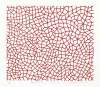
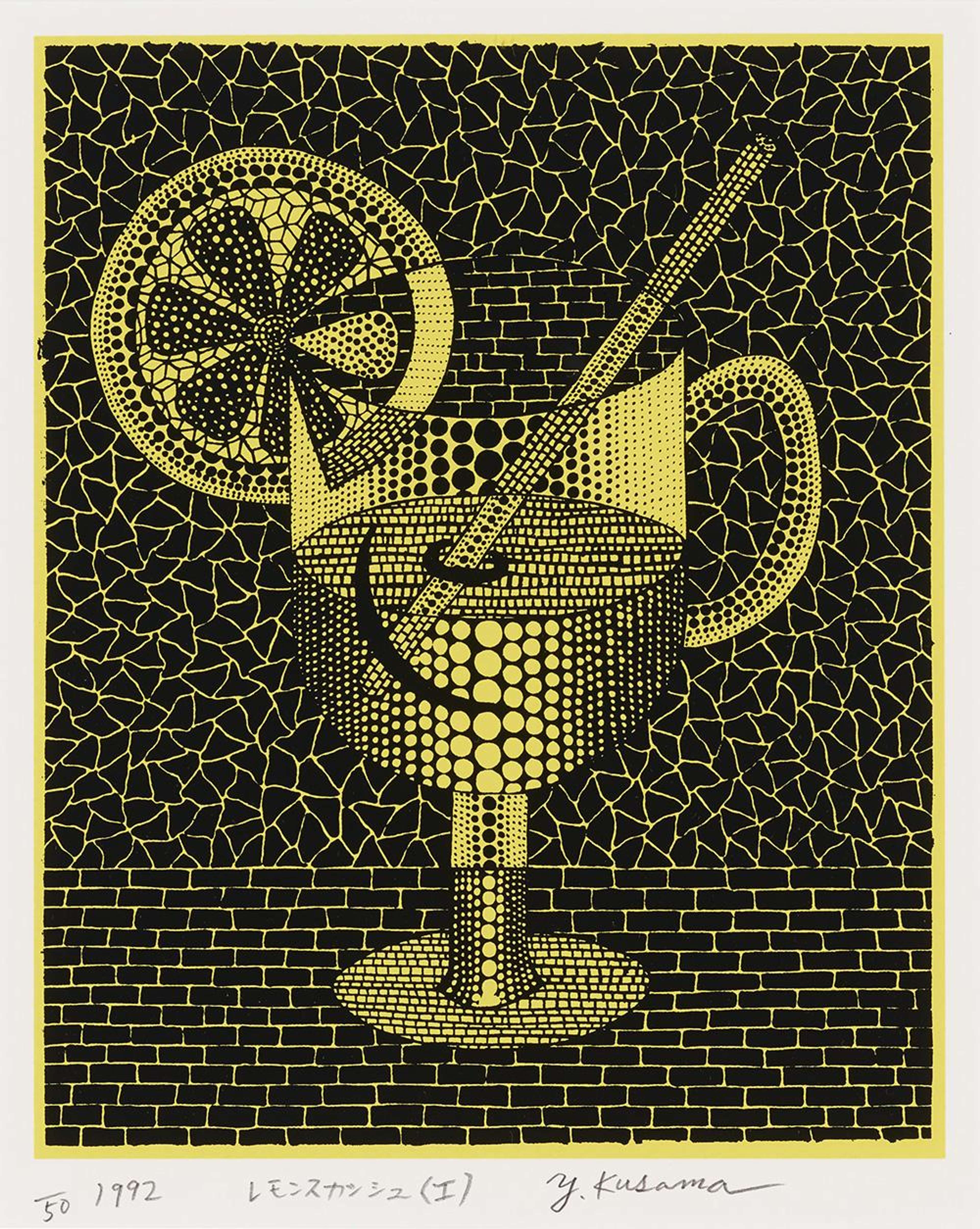
Les Infinity Nets occupent une place centrale dans la pratique de Kusama, et ses estampes offrent un moyen relativement accessible de collectionner l'imagerie associée à ses peintures Infinity Net, dont la cote est extrêmement élevée. Ces œuvres se négocient généralement à des prix inférieurs aux éditions les plus cotées des séries Pumpkin et Mount Fuji, tout en bénéficiant d'un marché secondaire actif et bien établi.
Nets Infinity a été l'estampe exacte de Kusama la plus fréquemment vendue entre janvier 2024 et août 2026, avec dix transactions enregistrées. Cette profondeur de marché témoigne d'un large bassin d'acheteurs et fournit aux vendeurs une base substantielle de données récentes sur les prix.
Valeur des estampes de fleurs, de fruits et de vagues de Yayoi Kusama
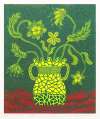
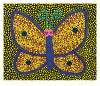
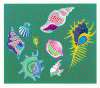
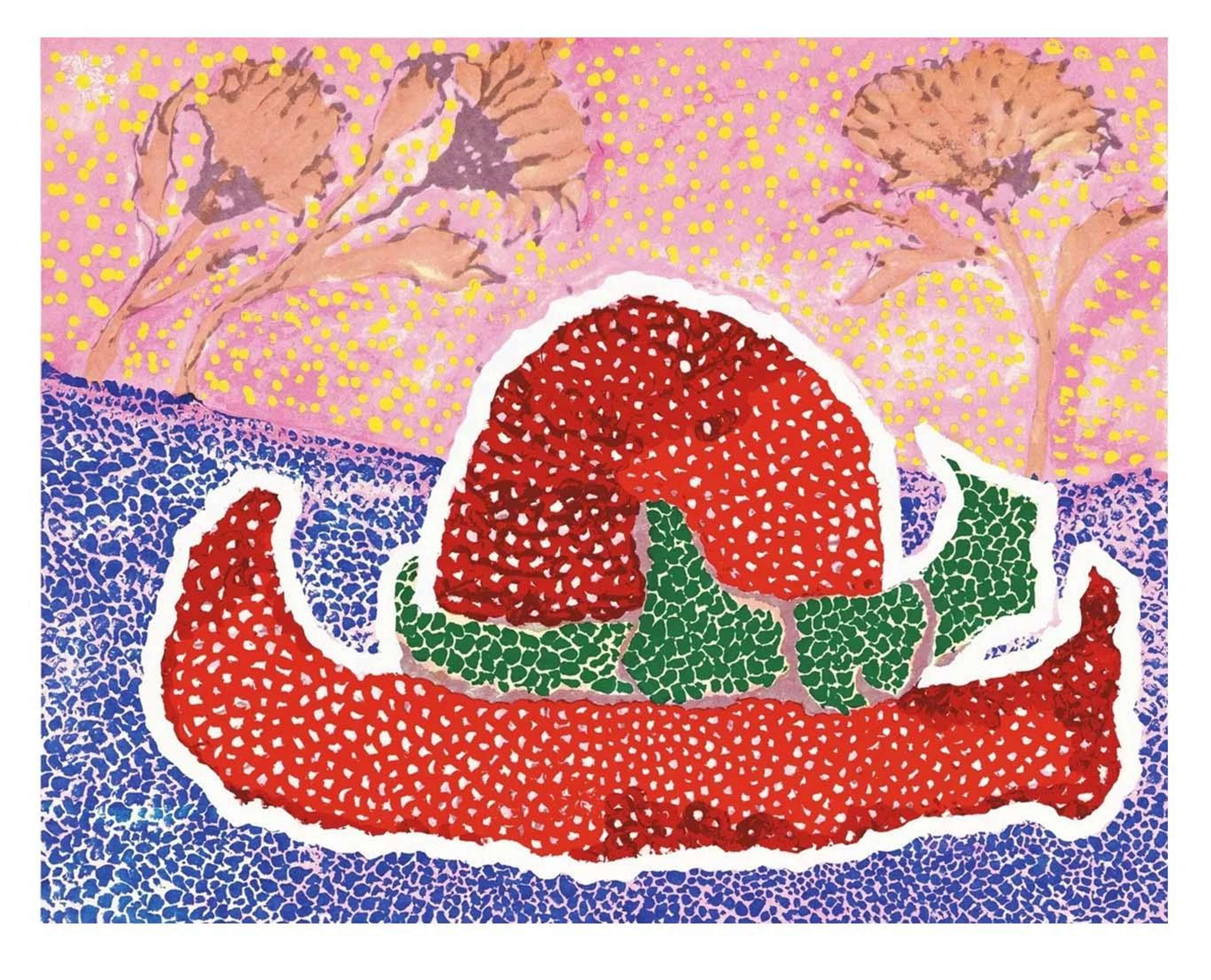
Le marché secondaire de Kusama s'étend bien au-delà des citrouilles et des réseaux. Les images de fleurs, de fruits, de chaussures, de chapeaux, de papillons et de créatures marines possèdent toutes un historique de ventes aux enchères établi, généralement à des niveaux plus accessibles que ses éditions de citrouilles les plus emblématiques.
Les estampes de fleurs se sont négociées régulièrement, avec des prix récents se concentrant majoritairement dans une fourchette allant de quelques milliers à dix mille et quelques dizaines de milliers de dollars. Les exemplaires les plus recherchés tendent à allier des couleurs franches, une composition reconnaissable et un bon rapport d'état. Les fruits, les chaussures et les chapeaux occupent des segments similaires du marché, bien que le nombre de transactions varie d'une œuvre à l'autre.
Les vagues nécessitent un examen plus attentif. Le titre apparaît au sein de différentes éditions plutôt que dans un portfolio uniforme, et les résultats varient considérablement. Un vendeur ne devrait pas utiliser le résultat exceptionnel d'une composition de vague comme preuve de la valeur de chaque estampe contenant ce motif.
Ces œuvres peuvent toucher des acheteurs différents de ceux qui s'intéressent aux citrouilles, pourtant plus reconnaissables. Leur attrait peut résider dans un sujet, une période ou une composition particulière plutôt que dans leur position au sein des séries les plus onéreuses de Kusama. Cela confère à ce vaste marché des éditions une certaine ampleur, mais rend également une identification précise indispensable.
Les portfolios complets d'estampes de Yayoi Kusama ont-ils plus de valeur ?
Les portfolios complets de Kusama sont rares aux enchères et doivent être évalués comme des ensembles cohérents avant toute décision de les dissocier. Cela s'applique aux portfolios incluant Mt. Fuji in Seven Colours, Amour Pour Toujours et Pumpkin 2000.
Démembrer un portfolio modifie durablement l'œuvre proposée aux collectionneurs. Un ensemble constitué ultérieurement à partir d'estampes acquises individuellement n'occupe pas nécessairement la même position sur le marché qu'un lot conservé dans son intégralité, notamment lorsque les numéros d'édition, la provenance ou l'état diffèrent.
Les chemises, boîtes, pages de titre, colophons et certificats d'origine doivent rester joints au portfolio. Ces éléments permettent d'établir l'exhaustivité de l'ensemble et font partie intégrante du matériel qu'un acquéreur est en droit d'attendre.
Le décès de Yayoi Kusama a-t-il eu une incidence sur la valeur de ses estampes ?
Kusama nous a quittés le 14 août 2026. Le décès d'un artiste attire inévitablement une attention accrue sur son œuvre, incitant les collectionneurs actuels à réévaluer leurs avoirs et introduisant de nouveaux acheteurs sur le marché.
Avant sa disparition, le marché des estampes de Kusama était majoritairement concentré en Asie. Entre janvier 2024 et août 2026, le Japon et la Corée du Sud ont représenté environ 85 % de la valeur totale aux enchères, le reste de l'activité se partageant entre Hong Kong, Londres, New York et l'Europe continentale, où la part de marché était bien plus modeste.
Le regain de couverture médiatique internationale autour de la carrière de Kusama pourrait élargir la participation au-delà des marchés asiatiques qui ont historiquement soutenu ses éditions. La traduction de cet intérêt en une hausse des prix dépendra des œuvres proposées sur le marché et de la capacité de la nouvelle demande à absorber une éventuelle augmentation de l'offre. Les ventes aux enchères d'automne donneront une première indication : l'intérêt s'élargit-il à un nouveau vivier d'acheteurs ou reste-t-il concentré sur ses images les plus emblématiques ?
Comment authentifier une estampe de Yayoi Kusama ?
Les éditions de Yayoi Kusama sont documentées dans l'ouvrage Yayoi Kusama Prints 1979–2017, publié par Abe Publishing. Ce catalogue raisonné révisé recense 452 œuvres et constitue la référence principale pour vérifier le titre, la date, les dimensions et la structure d'édition d'une estampe.
L'œuvre doit correspondre à sa notice dans le catalogue, notamment en ce qui concerne les dimensions de l'image et de la feuille, la signature, la numérotation, le papier, l'imprimeur et l'éditeur, lorsqu'ils sont mentionnés. La provenance, les factures, les étiquettes de galerie et les résultats d'enchères antérieurs doivent étayer l'examen physique de l'estampe.
Il n'existe aucun comité d'authentification reconnu pour les estampes de Yayoi Kusama. Le programme d'enregistrement de Yayoi Kusama Inc. exclut les estampes et les éditions, tandis que la Yayoi Kusama Foundation précise qu'elle ne peut authentifier les estampes. La fondation a par ailleurs mis en garde contre la circulation d'éditions contrefaites et de faux certificats. Un examen par un spécialiste est donc indispensable pour distinguer une édition originale signée d'une reproduction, d'une affiche ou d'une copie non autorisée.
Dans quelle mesure l'état de conservation influence-t-il la valeur d'une estampe de Yayoi Kusama ?
La plupart des éditions de Kusama sont des sérigraphies, dont les aplats de couleurs saturées et les pois récurrents rendent toute décoloration, abrasion ou irrégularité chromatique aisément visible. Pour les œuvres sur papier, il convient également de vérifier l'absence de rousseurs, de taches, de plis, de rognages des marges ainsi que de dommages liés aux charnières ou aux adhésifs.
Ses gravures sur bois, notamment la série Mt. Fuji in Seven Colours, nécessitent une inspection attentive afin de détecter tout signe de décoloration, de traces de manipulation ou d'altération du papier japonais. Les éditions en relief peuvent perdre en précision si elles sont aplaties ou encadrées sans une profondeur suffisante, tandis que les collages et les œuvres mixtes peuvent présenter des éléments qui se décollent, des taches d'adhésif ou un vieillissement irrégulier.
Chaque feuille d'un portefeuille complet doit être examinée individuellement, tout comme ses chemises, certificats et autres documents annexes. Aucune restauration ne doit être entreprise sans l'avis d'un spécialiste, car une intervention inappropriée pourrait altérer davantage l'œuvre et nuire à sa valeur sur le marché.
Quel est le meilleur moment pour vendre une estampe de Yayoi Kusama ?
L'offre en vente publique pour les œuvres de Kusama est passée de 256 estampes et ensembles en 2024 à 240 en 2025, avec 130 unités recensées fin août 2026. Son décès pourrait entraîner l'arrivée sur le marché de davantage d'œuvres durant la saison automnale, en particulier des éditions faisant l'objet de transactions fréquentes, dont les propriétaires espèrent tirer profit d'une attention accrue.
Le timing doit donc être évalué au regard de l'offre actuelle pour l'édition spécifique concernée. Les portefeuilles rares et les estampes de grande valeur peuvent nécessiter une préparation plus longue, tandis que les œuvres régulièrement échangées peuvent être sujettes à une plus grande sensibilité des prix lorsque plusieurs exemplaires sont proposés simultanément.
Où puis-je vendre une estampe de Yayoi Kusama ?
Les estampes de Yayoi Kusama sont vendues par le biais de maisons de ventes aux enchères, de galeries, de marchands d'estampes spécialisés et de ventes privées, mais son marché public est fortement concentré en Asie. Le Japon et la Corée du Sud ont représenté environ 85 % de la valeur totale enregistrée aux enchères entre janvier 2024 et août 2026, avec une activité à plus forte valeur ajoutée observée à Hong Kong. Londres et New York ne représentent qu'une part nettement plus restreinte.
Faut-il vendre une estampe de Yayoi Kusama aux enchères ou de gré à gré ?
La profondeur du marché des enchères de Yayoi Kusama en Asie, associée à sa popularité en Occident, confère à ses estampes un marché international large et liquide. Les vendeurs optant pour la vente aux enchères doivent déterminer quel centre régional est le mieux adapté à l'édition concernée. Un dépôt à l'étranger peut offrir un accès à un vivier d'acheteurs plus important, mais peut également entraîner des frais d'expédition internationale, d'assurance, de conversion de devises et de taxes, ainsi que des délais supplémentaires avant la vente. Les vendeurs doivent également s'adapter au calendrier des ventes et s'engager sur une estimation publiée et un prix de réserve.
La vente privée peut offrir une portée internationale similaire, avec une plus grande flexibilité en termes de prix et de calendrier. Une œuvre peut être proposée directement à des collectionneurs de différentes régions sans attendre la vente aux enchères appropriée ni l'expédier à l'étranger au préalable. Cela permet aux vendeurs de réagir rapidement là où la demande existe déjà ou d'attendre une offre répondant à leurs attentes.
Vendre une estampe de Yayoi Kusama avec MyArtBroker
MyArtBroker propose une estimation immédiate gratuite, tandis que notre outil de gestion de collection MyPortfolio vous permet de suivre l'évolution de la valeur d'une œuvre individuelle ou de l'ensemble de votre collection dans le temps.
Nos spécialistes sont experts en estampes et multiples d'artistes blue chip. Ils peuvent vous aider à identifier votre édition de Kusama, examiner son état de conservation et sa provenance, et vous éclairer sur la demande actuelle. Cette évaluation s'appuie sur des résultats de ventes aux enchères publiques récents ainsi que sur des données du marché privé, vous offrant une vision plus précise que les seuls relevés d'enchères.
Grâce à notre Trading Floor en temps réel et à notre réseau international de collectionneurs, votre œuvre peut être présentée directement à des acheteurs ciblés, sans être contrainte par une date de vente aux enchères ou une saisonnalité spécifique. Vous bénéficiez ainsi d'une grande flexibilité, que vous souhaitiez agir rapidement ou attendre une offre à la hauteur de vos attentes.
MyArtBroker opère sans commission vendeur. Le prix que vous souhaitez percevoir est convenu dès le départ, et nos frais sont intégralement réglés par l'acheteur. Nous prenons ensuite en charge la négociation et la transaction, incluant le rapport d'état, la documentation, le paiement, l'emballage et l'expédition assurée, vous épargnant ainsi les frais de vendeur additionnels associés à un dépôt en vente aux enchères traditionnelle.